Automatic window shades for tall windows can make daily light control simpler when a window is difficult to reach, spans a high ceiling, or has several shades that you want to operate together. Motorization is not the only answer: the right choice depends on window size, how often you adjust the shade, the available power and controls, and the look you want in the room.
Contact Vineyard Blind & Shutter to plan a free in-home consultation.
Why can tall windows be harder to cover?
A high window can be awkward to operate from the floor, especially when furniture blocks access or the opening is above a stair landing. A long manual cord or wand may be difficult to reach and guide evenly. If a room has multiple tall windows, repeating the same adjustment at each one can also become inconvenient.
Motorization lets a shade move using an electric motor, with operation through a remote, wall control, or compatible smart-home setup depending on the system selected. That convenience can be useful even when a window is technically reachable. For example, someone may want to adjust shades from a sofa, lower them before a room becomes bright, or operate a group of shades with one control.
It is still worth separating ease of use from performance. A motor does not by itself make a shade block more light, insulate a window, or reduce heat. Those results depend on the shade fabric, fit, mounting, and documented product specifications. Choose the covering for the light and privacy behavior you need, then decide whether motorization improves how you use it.
When does motorization help most?
Automatic operation is especially worth considering when a manual shade would be hard to reach or when you expect to adjust it often. It can also help when several window coverings need to move together. The best fit is personal; a tall window alone does not mean every shade needs a motor.
- High or obstructed windows: Consider a motor when the head of the shade is beyond comfortable reach or access is blocked by a stairwell, built-in feature, or furniture.
- Large window groups: A control can operate selected shades together, reducing the need to visit each window individually.
- Frequent daily adjustments: If you regularly change the shade for glare, privacy, or changing daylight, a control within reach may make the routine easier.
- Accessibility needs: Remote or wall operation can reduce the need to reach, pull, or bend. Discuss the specific user and room so controls are placed sensibly.
- Hard-to-reach specialty windows: A motor may be useful for tall, angled, or otherwise awkward openings, subject to product and installation suitability.
By contrast, a shade that is lowered once and left in place may work well with a simple manual control if it is safely reachable. Ask about cordless manual alternatives, too, when the main concern is avoiding dangling cords rather than adding powered operation.
Which shade and control options should you compare?
Start by choosing the covering based on what the room needs. Roller shades offer a clean, simple profile. Cellular shades have a structured fabric with cells, while solar shades are commonly selected when managing view and daylight is a priority. The exact light filtering, privacy, and other performance depend on the chosen fabric and product. You can compare available styles on the custom shades page before discussing a specific window.
Next, compare the operating approach. Some systems use a handheld remote; others can have a wall control or smart-home compatibility. Vineyard offers motorization and smart-home integration, including compatibility with Alexa and Google Assistant as described in the company information. Compatibility can depend on the selected motor and system, so confirm it for the exact configuration rather than assuming every shade works with every device.
| Option | How it operates | Useful when | Questions to ask |
|---|---|---|---|
| Manual shade | Hand-operated with the product's specified control | The shade is reachable and adjusted occasionally | Is the control comfortable to reach? Is a cordless configuration available? |
| Motor with remote | Operated by a handheld transmitter | You want to control a high shade from elsewhere in the room | How many shades can one remote operate? Can groups be set up? |
| Motor with wall control | Operated from a fixed control location | A consistent, easy-to-find control point is preferred | Where should the control go, and what installation is required? |
| Smart-home-connected motor | Operated through a compatible home system or app | You want to include shades in an existing smart-home routine | Which hub, network, app, or voice platform is supported by this exact motor? |
These are control categories, not a promise that every product offers every feature. Ask for the motor's supported controls, power requirements, and any setup limitations before selecting it. If you are comparing motorized roller options, the motorized roller shades page is a useful place to explore the style.
What should you check before ordering a tall shade?
Correct measuring and mounting matter on any custom shade, and tall openings make planning especially important. A small error can affect how a shade sits, clears a handle, or aligns with neighboring treatments. Note the window's width and height, frame depth, trim, obstructions, and whether you prefer an inside or outside mount. A professional measurement can account for details that are easy to miss from a quick tape measure.
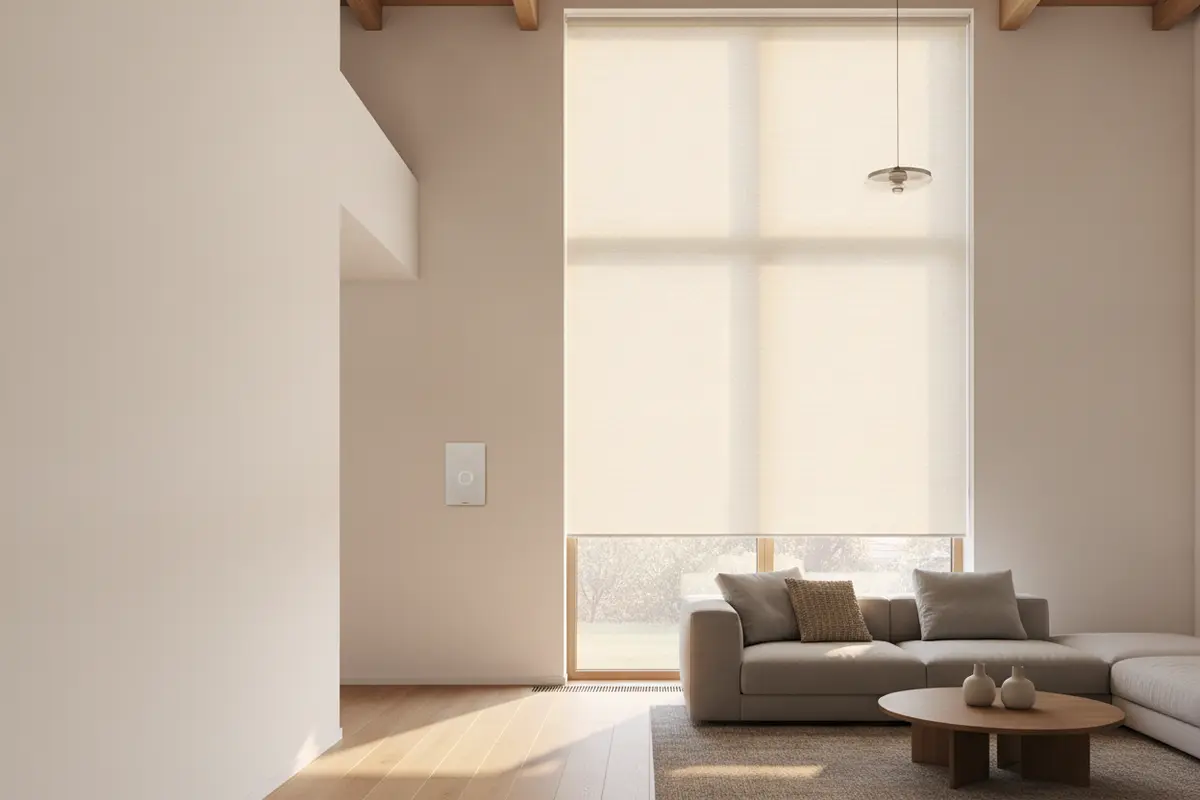
Think about the full path of the shade. Will it clear a window crank, door handle, molding, or nearby ceiling feature? Does the shade need to cover the glass alone, or should it extend beyond the frame? For a tall window, also discuss the location of the motor and how it will be accessed if service is needed. Do not assume a single large shade is always preferable; multiple shades may make operation or alignment more practical, depending on the window and product.
Power is another early decision. Motorized products can have different power arrangements. Ask what is offered for the shade you are considering, where components will sit, and whether wiring or charging is part of the installation. These are product-specific questions, so get the answer for the exact motor rather than relying on a general description of motorized shades.
Think through the everyday routine as well. If the shade will be raised and lowered several times a day, ease of operation may matter more than it would for a window that stays in one position. If you want to operate the shades while away from the window, make sure the control is kept in a predictable place and that everyone in the household knows how to use it. A remote can be misplaced, while a wall control needs to be positioned where it is convenient without being hidden behind furniture.
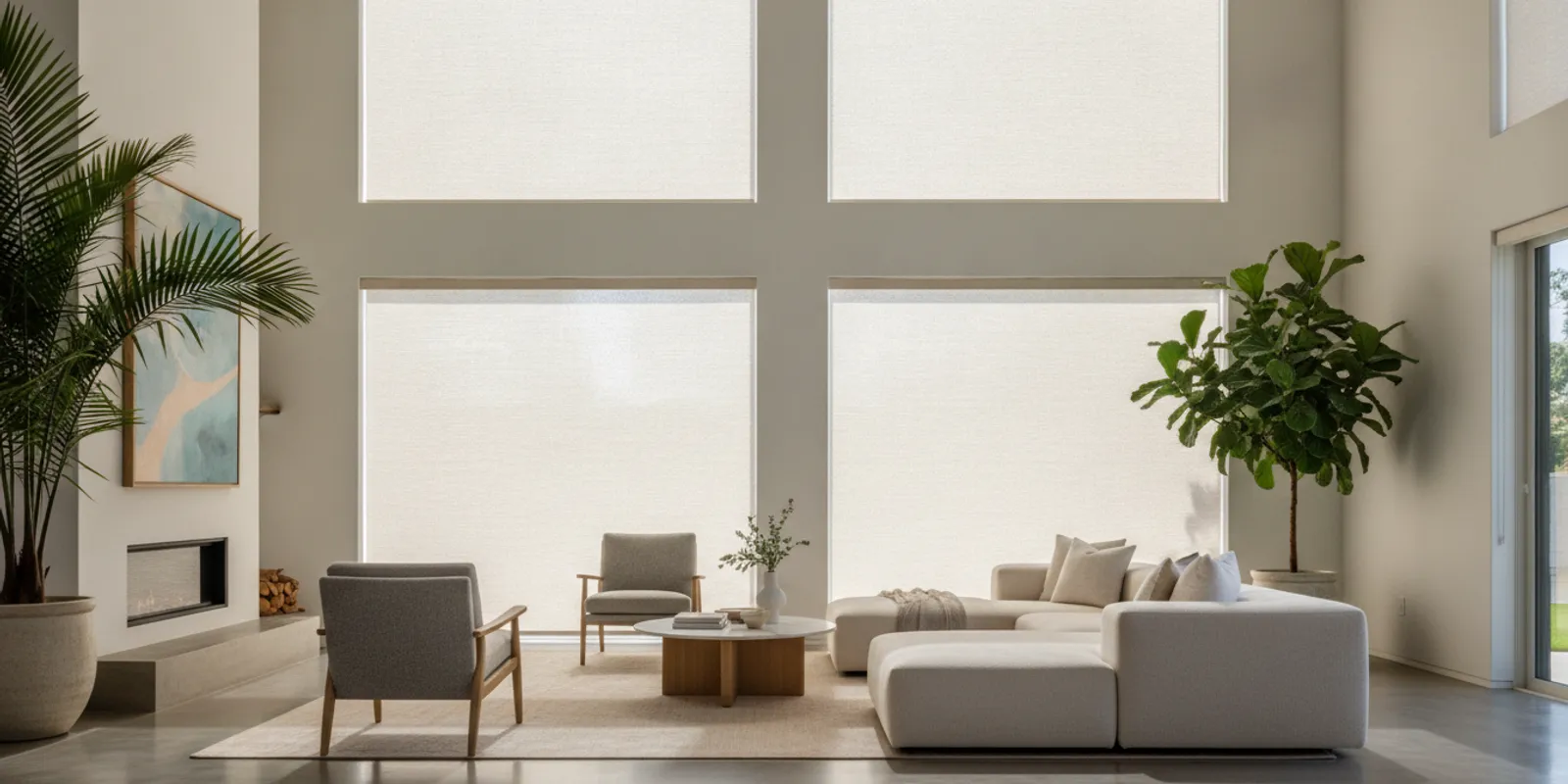
For a bank of tall windows, decide whether the same light conditions apply to every opening. If one window gets direct sun while another faces a shaded side of the house, separate control may be more useful than grouping all the shades together. Conversely, if the windows are side by side and usually adjusted at the same time, operating them as a group may simplify the routine. Confirm which configuration the selected motor supports and whether individual operation remains possible.
Consider the appearance of the installation, too. A treatment can be mounted inside the frame for a streamlined look when the opening allows it, or outside the frame when greater coverage is preferred. The frame depth, trim, ceiling, and adjacent windows affect what is practical. For particularly high or wide openings, take a whole-room view: matching headrail heights and consistent fabric can help neighboring shades feel intentional, even when the windows have different dimensions.
Q: Are automatic window shades for tall windows a good choice when the window is hard to reach? A: They can be a practical choice because a remote or other compatible control lets you operate the shade without reaching its headrail. Confirm the control type, power arrangement, and shade fit for your window before deciding.
How do you match the shade to each room?
Consider how people use the space, not only the window's height. In a living room, you may want to reduce direct glare at certain times while keeping the room comfortable to use. A bedroom may call for a fabric and fit selected for the desired level of darkness and privacy. In a home office, view, screen glare, and the direction of incoming daylight may guide the choice. A bathroom or kitchen also calls for attention to the product's care and suitability for its surroundings.
Motorization changes the operating experience, not the shade's basic light behavior. A room-darkening fabric should not be assumed to provide a specific amount of heat reduction. If energy performance is a priority, ask for documentation on the selected product and consider the window, frame, and installation as part of the larger picture. For broad background on home energy use, consult the U.S. Department of Energy; it is not a product specification for any particular shade.
For a tall window in a dining area or great room, think about whether all shades should move at once or whether different sides of the room need separate control. A west-facing window may have different glare patterns from a north-facing one, for instance, so independent operation could be more useful than a single group. This is a practical preference to discuss, not a guarantee that a particular layout will produce a measured temperature change.
Window shape can also influence the decision. A tall narrow window may be easy to cover with one shade, while a broad opening made up of several sections may call for more than one treatment. Dividing the coverage can make it possible to adjust only the section that needs attention, though the right approach depends on the frame layout and product limits. Discuss how the shades will line up when raised and lowered, especially when neighboring windows have different widths or sill heights.
Think about view and privacy at different times of day. A shade that softens incoming light may preserve more of the outside view than a heavier fabric, but the view changes with lighting conditions and the particular material. At night, interior lighting can affect privacy through many shade fabrics. If privacy is a primary need, ask to see the fabric sample and talk through the view from outside as well as from inside. Avoid choosing from a tiny swatch alone when the window is a major feature of the room.
It can help to rank each room's needs rather than expecting one fabric to do everything. Write down whether glare control, daylight, privacy, appearance, or ease of operation matters most. Then compare the choices against that priority. For instance, someone who wants to preserve a daytime view may make a different fabric choice from someone who wants a darker bedroom. The motor can still be selected separately as the operating method.
How can you prepare for a consultation?
A short list of priorities makes it easier to compare suitable combinations. Before an in-home visit, note which windows are hard to reach, when glare or privacy is a concern, and how you want to operate the shades. Photos can help identify nearby furniture and trim, but they do not replace professional measuring.
- List the tall windows and note which ones are difficult to reach or used most often.
- Decide whether you prefer a remote, a fixed wall control, or smart-home operation, while staying open to product compatibility.
- Describe the light, view, and privacy you want in each room instead of requesting a fabric by name alone.
- Point out handles, trim, stairs, built-ins, and other obstructions around each opening.
- Ask about motor power, control grouping, installation, and the specific product details that matter to you.
Vineyard Blind & Shutter brings a mobile showroom to customers' homes and provides free measurements and installation. Seeing samples in the room can help you judge color and texture against your own furnishings and light. You can also review the company's mobile window treatment service, explore custom blinds, or browse the window treatment gallery for ideas. Service areas referenced here are San Diego County, Riverside County, and Orange County.
Call Vineyard Blind & Shutter at (951) 757-4188 to compare tall-window shade options.
Frequently Asked Questions
Can automatic shades cover very tall windows?
Many motorized shade systems are designed for custom applications, but allowable dimensions depend on the specific product, fabric, and motor. Have the window professionally measured and confirm the product's size limits before ordering.
Can one control operate several tall shades?
Some systems allow shades to be grouped, but grouping options vary by motor and control. Ask whether the shades can operate together and whether you can also control them separately.
Do motorized shades need a smart-home system?
No. A motorized shade may use a dedicated remote or wall control. Smart-home operation is an additional option only when the selected motor and home system are compatible.
Does a motorized shade automatically block heat?
No. Motorization controls movement. Light and thermal performance depend on the shade product, fabric, fit, mounting, and documented specifications. Ask for product-specific evidence if heat performance is important.
Tall windows do not all need the same solution, but a careful look at reach, controls, fabric, and fit can make the choice much clearer. Compare the options in your own rooms and confirm the details before selecting a custom shade.