If you have been searching "window blinds near me," you are probably tired of scrolling through big box store websites and wondering if the product you see online will actually look good in your home. Choosing the right blinds is a decision that affects your comfort, your energy bills, and the look of every room. The good news: Southern California homeowners have better options than settling for off-the-shelf blinds from a chain store.
Schedule a free in-home consultation with Vineyard Blind & Shutter and see custom blinds in your own lighting before you buy.
This guide walks you through what to look for when shopping for window blinds locally, how a mobile showroom experience works, and why custom-fitted blinds outperform store-bought options every time.
Why "Near Me" Matters When Shopping for Window Blinds
Window blinds are not like ordering a book online. Every window in your home has slightly different measurements, and natural light changes throughout the day depending on your room's orientation. A blind that looks perfect under fluorescent store lighting might wash out or clash with your walls at home. That disconnect between the showroom and your living room is the number one reason homeowners end up disappointed with window treatment purchases.
Working with a local window treatment provider gives you several advantages:
- Accurate measurements - A professional measures each window individually, accounting for depth, frame irregularities, and mounting style. This prevents the gaps, uneven edges, and ill-fitting panels that come with self-measuring for online orders.
- Color matching in your space - You see samples against your actual walls, flooring, and furniture, not under artificial showroom lighting.
- Expert guidance - A local specialist understands the Southern California climate and can recommend products that handle direct sun exposure, reduce heat gain, and hold up over time.
- Professional installation included - No YouTube tutorials, no stripped screws, no crooked blinds. A local provider installs them correctly the first time.
- Ongoing support - If something breaks or you want to update a room later, your provider is a phone call away, not a customer service queue in another state.
According to the National Association of Home Builders, window treatments rank among the top features homebuyers look for in a finished home. Poorly installed or mismatched blinds stand out immediately during home tours and appraisals.
What Types of Window Blinds Are Available?
Before choosing a provider, it helps to know what options are on the table. Here is a breakdown of the most popular blind types for Southern California homes:
Faux Wood Blinds
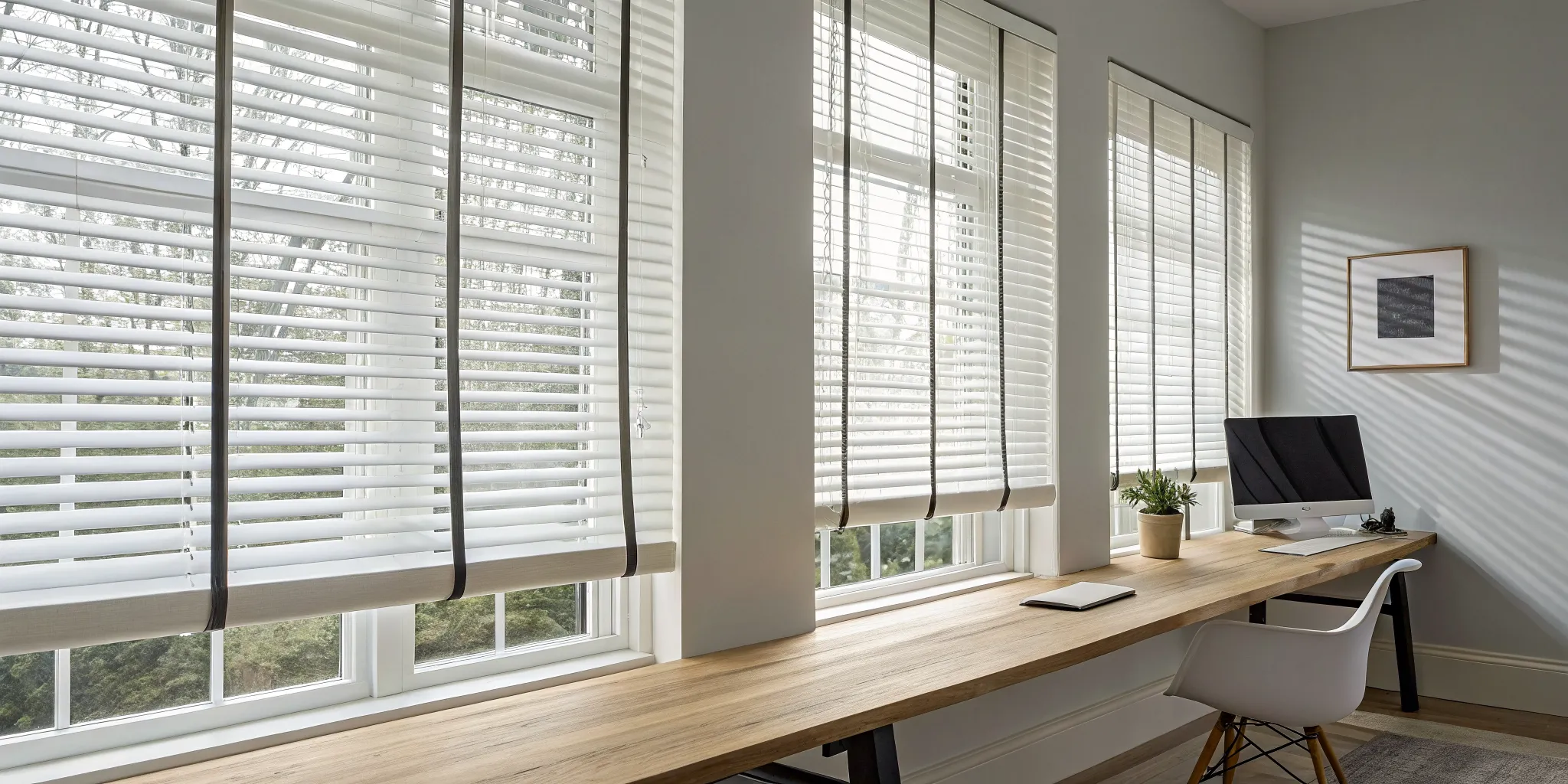
Faux wood blinds are the most popular choice across the region. Made from a durable plastic composite, they mimic the look of natural wood at a lower price point. They resist moisture and warping, which makes them a solid fit for kitchens, bathrooms, and laundry rooms. Most are available with 2-inch slats in light, medium, and dark finishes. Cordless lift options are available for households with children and pets.
Natural Wood Blinds
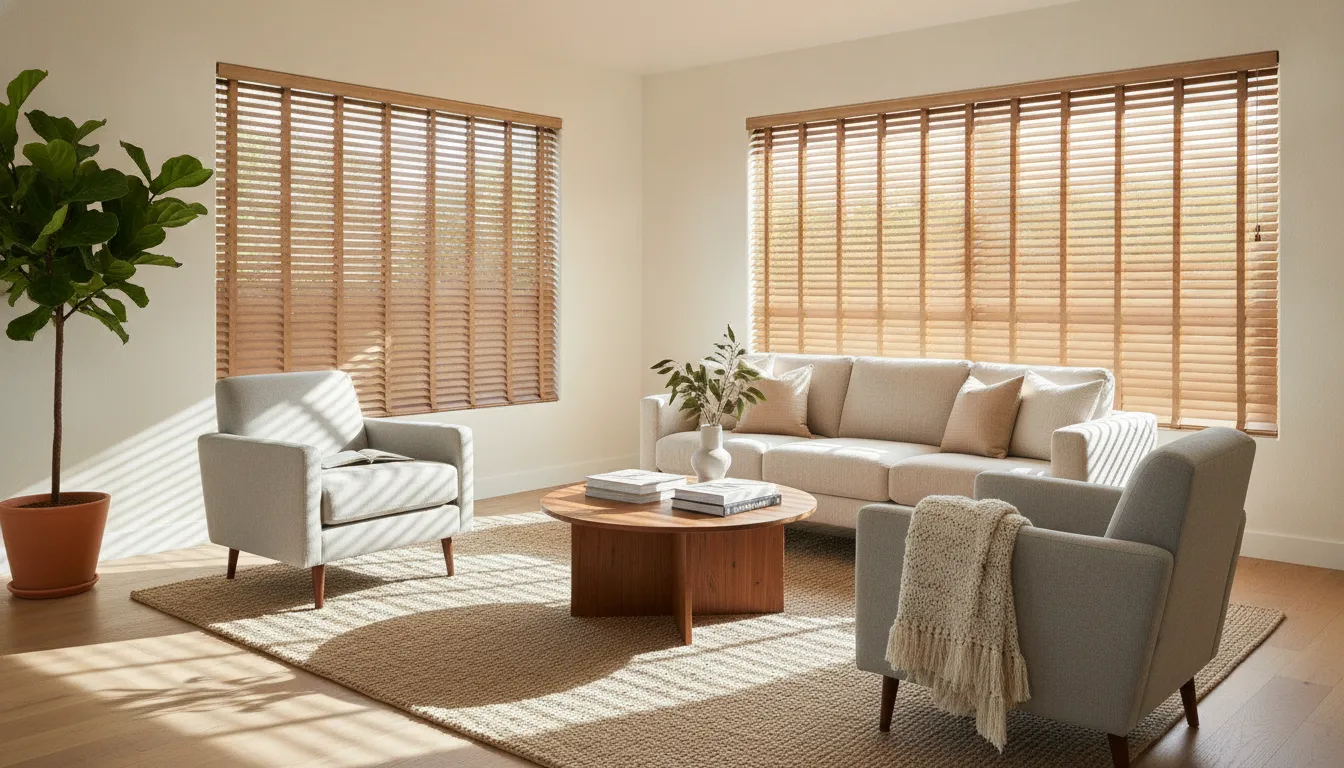
Natural wood blinds bring warmth and texture that composites cannot fully replicate. They are best suited for living rooms, dining rooms, and bedrooms with traditional or rustic decor. Keep in mind that real wood is not ideal for high-moisture areas like bathrooms. It also requires more upkeep, including occasional re-staining.
Vertical Blinds
Vertical blinds are a practical choice for sliding glass doors, wide windows, and patio entrances common in California homes. Their vertical slats tilt for light control and slide aside for full access to doors. They are available in fabric, vinyl, and faux wood materials, making them versatile enough for nearly any room layout.
Aluminum Mini-Blinds
Aluminum mini-blinds remain a budget-friendly option for rental properties, guest rooms, and utility spaces. They are lightweight, easy to install, and available in a range of colors. However, they offer less insulation and durability than faux wood or wood alternatives.
How to Choose a Local Window Blinds Provider
Not all window treatment companies operate the same way. When evaluating providers in your area, look for these qualities:
- Custom fitting - The provider should measure your windows and manufacture or order blinds to those exact dimensions, not sell you a standard size off a rack.
- Showroom alternatives - Whether physical or mobile, the provider should let you see and touch materials before committing. Photos on a website cannot replace seeing a sample in your space.
- Transparent pricing - Look for upfront quotes that include measurement, materials, installation, and any warranty coverage. Hidden fees for "measuring" or "installation" are red flags.
- Local reputation - Read reviews from homeowners in your area, not generic testimonials on the company website. Ask for references if you want extra confidence.
- Warranty and service - A reputable local provider stands behind their work. Ask about manufacturer warranties on the blinds themselves and workmanship guarantees on the installation.
Why a Mobile Showroom Beats a Retail Store Visit
The traditional way of buying blinds involves driving to a store, looking at small samples under fluorescent lights, guessing how they will look in your home, arranging for installation separately, and hoping everything fits. Vineyard Blind & Shutter offers a different approach.
Our mobile showroom brings product samples directly to your home. You see how different slat sizes, colors, and materials look in your actual rooms with your natural lighting. Your measurements are taken on the spot, and you receive a quote before we leave. Installation is scheduled at your convenience and handled by the same team that measured your windows. There is no guesswork, no back-and-forth, and no surprises when the blinds arrive.
What Should Custom Window Blinds Cost?
Pricing varies based on window size, material, features, and quantity. Here are some general ranges for Southern California:
- Aluminum mini-blinds - Most affordable option, typically between $20 and $50 per window for standard sizes. Not ideal for large or unusually shaped windows.
- Faux wood blinds - Mid-range pricing, usually $50 to $150 per window depending on slat size and finish. The most popular value-for-money choice.
- Natural wood blinds - Premium pricing, generally $100 to $300 per window. The natural grain and warmth justify the higher cost for primary living spaces.
- Vertical blinds - Range from $40 to $120 per window, with fabric options on the higher end. Cost depends on the width of the opening and the material chosen.
- Motorization - Adds $50 to $150 per blind for remote or app-controlled operation. A worthwhile upgrade for hard-to-reach windows or smart home integration.
Most local providers offer free estimates, so you can get accurate pricing for your specific windows before committing. Vineyard Blind & Shutter matches any competitor's written quote and offers a price match guarantee.
Window Blinds for Southern California Homes: What Works Best
The Southern California climate presents specific considerations for window blinds. Homes in coastal areas like San Diego and Orange County deal with high sun exposure and salt air. Inland areas like Temecula, Murrieta, and Corona experience intense afternoon heat. Here is how different blind types perform across these conditions:
- Coastal homes - Faux wood blinds resist salt air corrosion and sun fading better than natural wood. Cordless or motorized options eliminate metal components that can corrode.
- Inland valley homes - Faux wood and cellular shades provide the best heat insulation. Light-colored slats reflect sunlight and reduce indoor temperature gain.
- Mountain or rural homes - Natural wood blinds add warmth to interiors and hold up well in cooler, drier conditions.
- Condos and apartments - Vertical blinds and mini-blinds work well for smaller windows and rental situations where budget and flexibility matter most.
Where to Find Window Blinds Near You in Southern California
Vineyard Blind & Shutter serves homeowners across Riverside County, San Diego County, and Orange County with custom window blinds, professional measuring, and expert installation. Our mobile showroom eliminates the need to visit a retail store and guess whether a sample will look right at home.
Every project starts with a free in-home consultation. We bring samples, measure your windows, discuss your style preferences, and provide a detailed quote. There is no obligation, and the consultation typically takes 30 to 45 minutes.
Whether you need faux wood blinds for a kitchen renovation, vertical blinds for a sliding glass door, or motorized blinds for hard-to-reach windows, our team guides you through every decision and handles the installation from start to finish.
Frequently Asked Questions
How long does it take to get custom window blinds installed?
Most custom blind orders are ready within 2 to 4 weeks after your in-home consultation. Stock items and simpler configurations can sometimes be delivered in as little as 3 to 5 business days. Your provider will give you a precise timeline after measuring your windows and finalizing your selections.
Are custom blinds more expensive than big box store blinds?
Not necessarily. While the per-unit price may look higher at first, custom blinds include professional measuring, professional installation, and a warranty that off-the-shelf products do not. When you add up the cost of tools, hardware, and the risk of ordering the wrong size, custom blinds often deliver better value for the same or similar total investment.
Can I get blinds for non-standard window shapes?
Yes. A local provider with custom capabilities can fit arched windows, bay windows, skylights, and other unusual shapes. The in-home consultation allows the installer to measure every angle and provide a solution built specifically for that window, rather than forcing a standard product into an opening it was not designed for.
What is the most durable blind for a busy household?
Faux wood blinds are the top pick for high-traffic homes with kids and pets. They resist moisture, avoid warping, and clean easily with a damp cloth. Their composite construction holds up well to daily use in kitchens, family rooms, and hallways without showing wear as quickly as other materials.
Do window blinds help with energy efficiency?
Yes. Properly fitted blinds reduce heat gain in summer and heat loss in winter by creating a barrier between the window glass and the room. Faux wood and cellular options provide the best insulation, which can lower heating and cooling costs throughout the year.