Wood blinds can bring warmth and light control to a Southern California home. But the best material depends on the room, window exposure, and how much maintenance you want. Kitchens, bathrooms, and sunny windows may call for a different solution than a formal living room.
Schedule a free in-home consultation with Vineyard Blind & Shutter today to compare faux wood and real wood blinds in your own lighting.
In short, faux wood blinds vs real wood blinds comes down to priorities: faux wood resists moisture, warping, and everyday wear, while real wood offers a lighter feel and a naturally premium finish. Call Vineyard Blind & Shutter at (951) 757-4188 for a free consultation today.
Seeing samples in your own lighting makes the choice easier, especially when color, grain, and privacy all matter. Next, compare how the two materials differ in construction, appearance, and everyday performance.
What Sets Faux Wood Blinds vs Real Wood Blinds Apart
The biggest difference is what each blind is made from. Real wood blinds are crafted from natural wood, while faux wood blinds use a synthetic composite material engineered for everyday resilience. Both can create a polished, coordinated look, but the right choice depends on the room, the climate, and how much you value natural character.
Natural wood has distinct grain and warmth
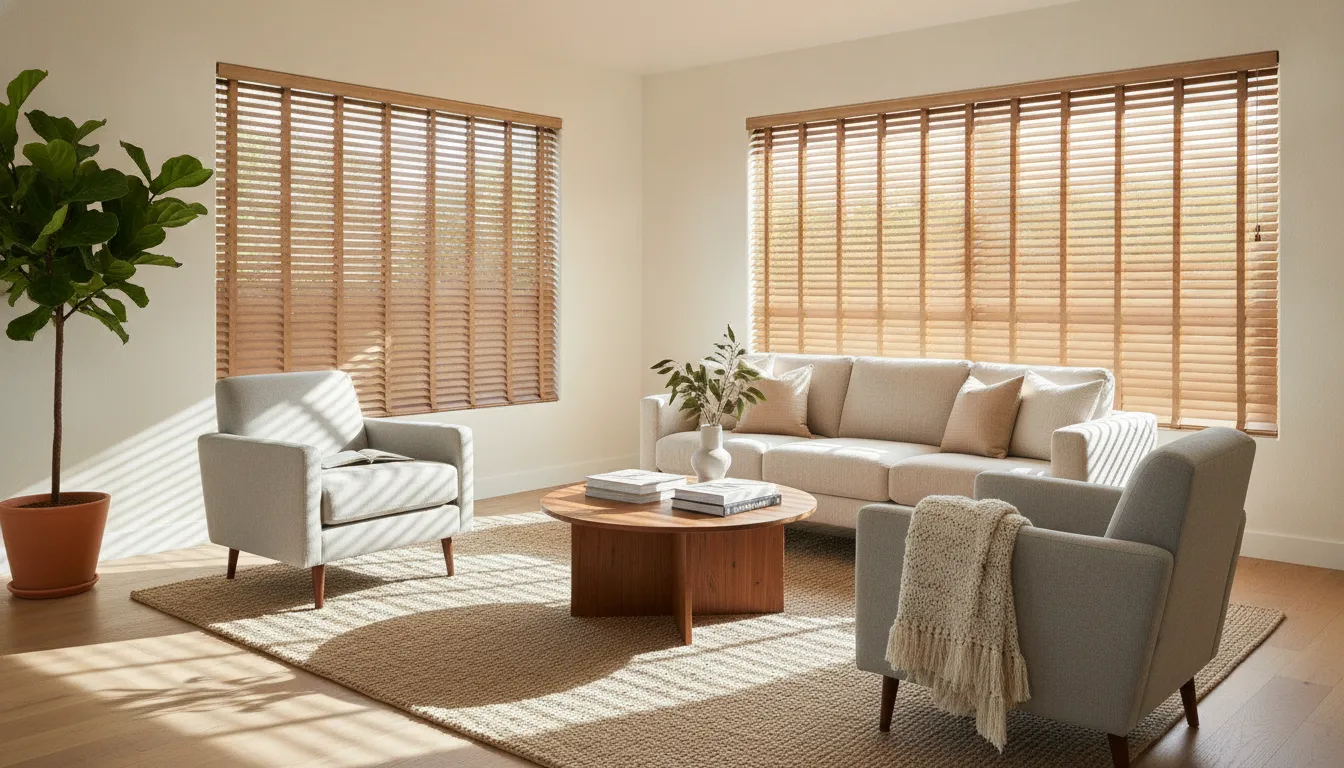
Real wood blinds are available in species such as basswood, oak, and cedar. Each has its own grain pattern, color, and tactile feel, so no two materials look exactly alike. That natural variation gives real wood a warm, premium appearance that works especially well with traditional interiors, existing wood trim, and high-end design projects. Real wood is also lighter than most faux wood materials, which can make larger windows easier to operate.
Because real wood is a natural material, its finish deserves thoughtful care. A dry microfiber cloth is generally preferable to excess moisture. And the surface can be more susceptible to scratches or dents than the durable finish on high-quality faux wood. In rooms with significant humidity or changing temperatures, real wood may also warp.
Faux wood focuses on flexibility and resilience
Faux wood blinds are made from a composite material that resists moisture, warping, and cracking. That makes them a practical option for kitchens, bathrooms, and other areas where humidity is part of daily life. They can also be a strong fit for Southern California windows exposed to intense sunlight. Since faux wood is generally more colorfast and less likely to fade than natural wood.
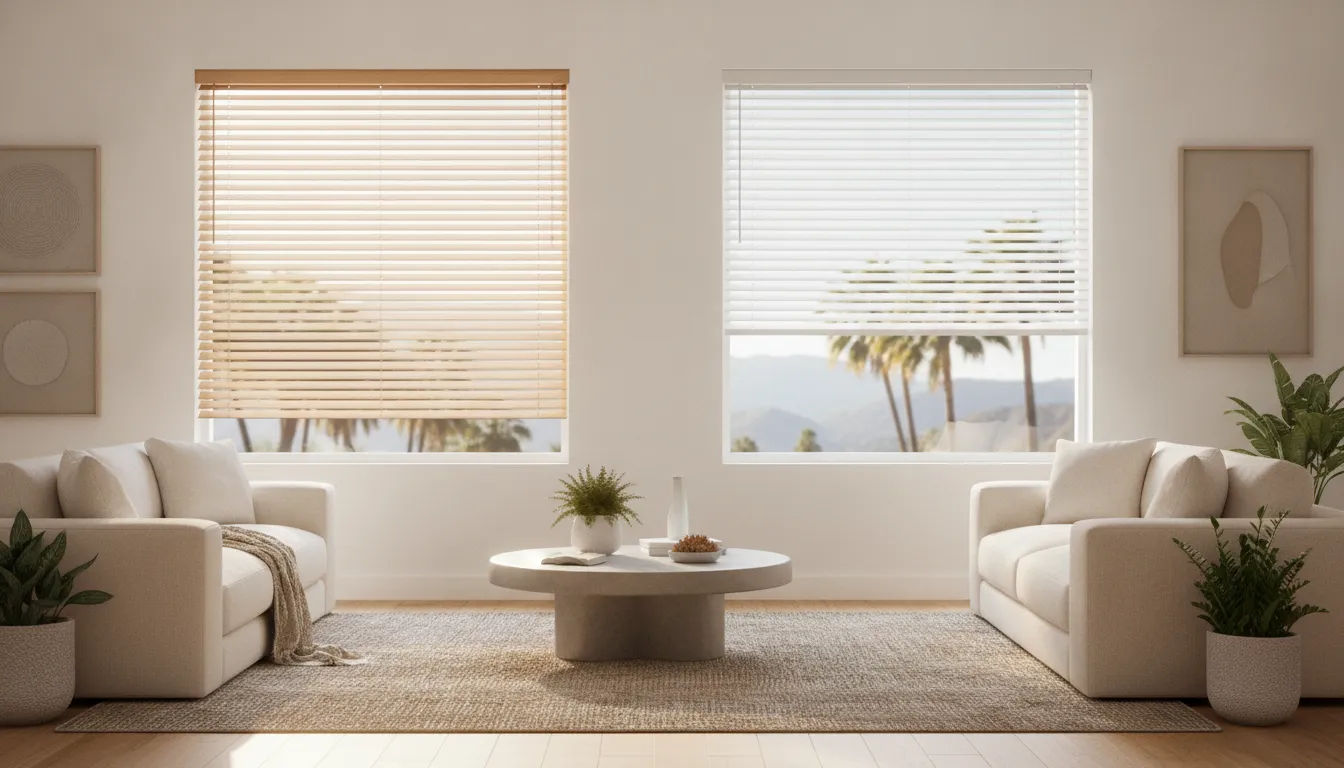
Modern manufacturing has narrowed the visual gap between the two options. High-end faux wood can simulate real wood grain and texture so convincingly that casual observers may have difficulty telling the difference. Faux wood also comes in a broader color range, including multiple shades of white that complement contemporary interiors and bright, clean room designs.
For a closer look at styles, finishes, and operating options, explore our faux wood blinds. If you are weighing appearance, maintenance, and room placement together, our faux wood blinds buyer's guide can help you compare the details before choosing custom window treatments.
Why Moisture and Sunlight Matter in Southern California Homes
Window treatments in Southern California need to handle more than changing decor. Kitchens and bathrooms can produce humidity, while windows exposed to strong afternoon sun can receive years of intense ultraviolet light. Those conditions affect how blind materials hold their shape, color, and finish. Faux wood is a composite material that resists moisture, warping, and cracking, while real wood requires a drier, more stable environment.
| Consideration | Faux wood blinds | Real wood blinds |
|---|---|---|
| Moisture resistance | Resists moisture, warping, and cracking, making it a practical choice for kitchens, bathrooms, and other humid rooms. | Can warp when exposed to high moisture or significant temperature changes, so placement and ventilation matter. |
| Sunlight and UV fade | Generally more colorfast and resistant to fading, which suits bright windows and high-sun exposures. | Offers natural beauty, but its finish and color can be more vulnerable to prolonged direct sunlight. |
| Odor | Does not absorb odors, an advantage in kitchens and homes with pets. | Natural wood and its finish need more careful consideration in spaces where strong odors or cooking residue are common. |
| Maintenance | Typically tolerates routine wiping and damp-cloth cleaning, provided excess water is not left standing. | Usually benefits from dry dusting and a dry microfiber cloth to help protect the finish. |
Material selection also deserves attention when indoor air quality is a priority. The National Institute of Environmental Health Sciences explains that formaldehyde is used to make resins, including adhesives for some pressed wood products. That does not mean every composite blind is unsafe, but it does make product construction and manufacturer specifications worth reviewing. In warm, humid rooms, a purpose-built moisture-resistant option may be a sensible choice. Read more about wood versus composite material durability, and ask which materials are intended for your room conditions.
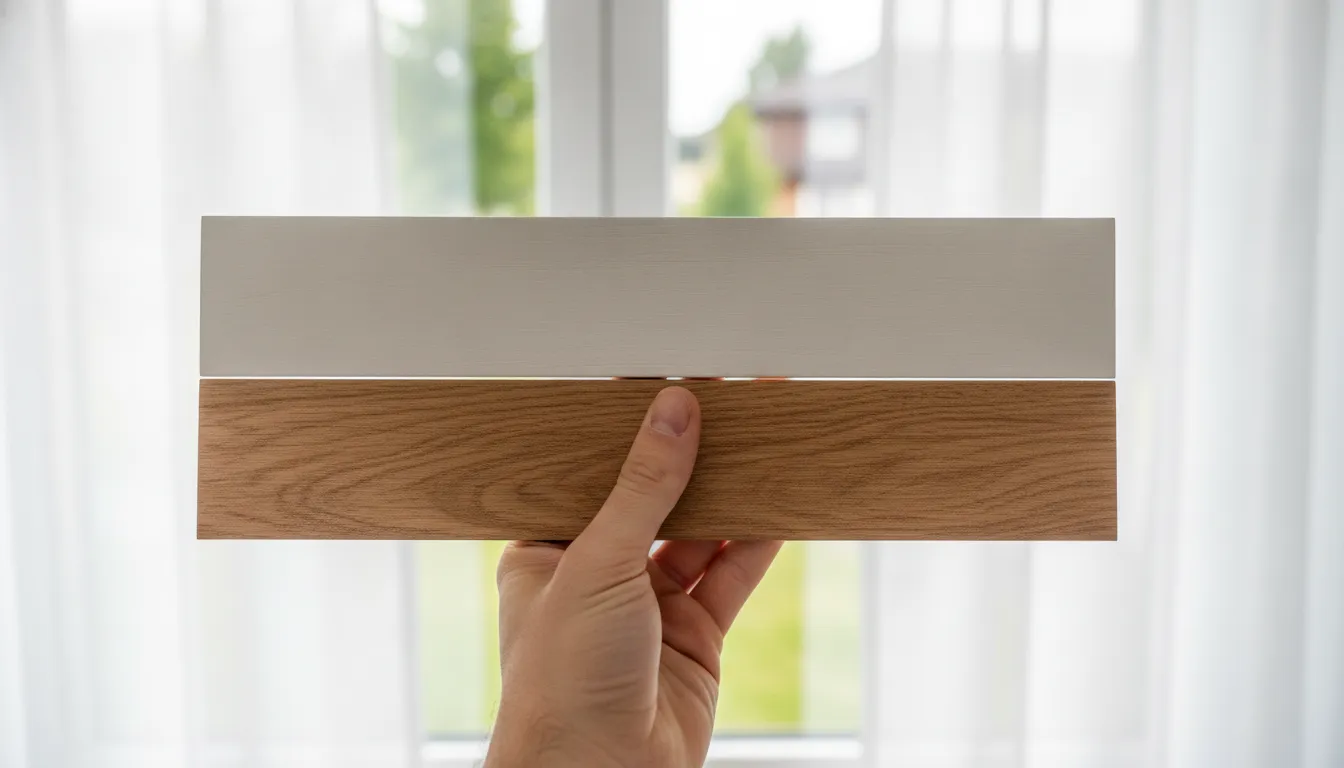
Real wood remains a strong option for dry living rooms, offices, and bedrooms where its natural grain and warm finish are central to the design. Faux wood often makes more practical sense for a sunny kitchen, bathroom, or pet-friendly space. A professional consultation can account for window direction, ventilation, room use, and realistic product pricing. Custom blind costs vary by size, material, and features, so compare complete ranges such as approximately $800-$1,500 rather than relying on a single sample price.
Do Faux Wood Blinds Last as Long as Real Wood Blinds?
For many Southern California homes, high-quality faux wood blinds can last as long as, and sometimes outlast, real wood blinds. The deciding factor is not simply the material. Room conditions, window size, daily use, and maintenance all matter. Faux wood is made from a composite material that resists moisture, warping, and cracking, which gives it a clear durability advantage in kitchens, bathrooms, and other humid rooms. Real wood remains a durable, premium choice, but it needs a drier environment and more careful handling.
Where faux wood has the durability advantage
Moisture is one of the biggest threats to natural wood window treatments. Steam, splashes, and changes in humidity can cause real wood blinds to warp over time. Faux wood avoids that weakness, making it a practical choice near sinks, showers, and laundry areas. It is also generally more resistant to scratches and dents than the finish on real wood. In sunny rooms, faux wood is typically more colorfast and less likely to fade than natural wood exposed to intense direct light.
Maintenance is straightforward. Faux wood blinds often need only a damp cloth for routine cleaning. For a more detailed care routine, see our guide to how to clean window blinds. Faux wood also does not absorb odors, which can help in homes with pets or smokers. Many designs are available with cordless operation, adding a useful child-safety feature without making the blinds harder to coordinate with the room.
When real wood may be the better fit
Real wood is lighter than most faux wood materials, so it can be easier to operate on larger windows. That advantage matters when a wide opening is used frequently or when lifting and lowering the blind should require minimal effort. Real wood also offers natural grain, warmth, and a premium tactile finish that many homeowners value.
The tradeoff is care. Real wood may require dusting with a dry microfiber cloth rather than moisture-based cleaning. Its finish can also scratch or dent more easily than a durable, high-quality faux wood surface. Faux wood is heavier, so very wide windows may require careful product and hardware selection. A professional measurement helps confirm that the chosen blind will operate smoothly and remain properly supported.
- Choose faux wood for moisture-prone rooms, pets, children, or low-maintenance care.
- Choose real wood for large windows, lighter operation, and a natural premium finish.
- Compare the window size and room conditions before deciding on durability alone.
In short, faux wood is often the longer-lasting option where humidity, sunlight, and everyday wear are concerns. Real wood can provide excellent service when installed in a suitable dry room and maintained with the care its finish requires.
How Much More Do Real Wood Blinds Cost?
Faux wood blinds are often the more budget-friendly choice, especially when you are covering many windows at once. Real wood usually carries a higher material and customization premium, but the difference is not a fixed percentage. Wood species, slat width, finish, control style, and the quality of the faux material can all change the final price.
As a realistic planning range, a professionally measured set of faux wood blinds for several average-size windows might total about $800-$1,500. While comparable real wood blinds could fall around $1,200-$2,500 or more. These are market-range estimates, not a quote. A home with four standard windows, for example, will price differently from a home with twelve windows, oversized openings, specialty shapes, or upgraded cordless and motorized controls.
What creates the price difference?
Real wood is made from natural materials and may be available in species such as basswood, oak, or cedar. Each has a distinct grain, color, and finish potential. That natural character is part of the appeal, and it can make real wood a strong choice for formal living rooms, studies, and high-end renovations. Premium finishes and custom stain matching can increase the investment further.
High-quality faux wood can reproduce wood grain convincingly, giving you a polished appearance at a lower starting cost. It is also a practical way to keep a whole-home project within budget while reserving real wood for rooms where its warmth and tactile quality matter most. For additional planning ideas, review these ways to save on wood blinds.
How should you weigh value, not just price?
Real wood blinds can add significant perceived value through their timeless, upscale appearance. They are also made from a renewable resource, which may matter to homeowners who prioritize natural materials and long-term design choices. Faux wood, however, can deliver strong value through its lower initial cost and broad range of finishes. Choosing the right product for each room may provide a better return than installing one material everywhere.
- Choose faux wood when whole-home affordability, moisture resistance, or a durable finish is the priority.
- Choose real wood when natural grain, lighter weight, custom staining, and a premium visual finish justify the added investment.
An in-home consultation helps turn estimates into a useful project plan. Vineyard Blind & Shutter brings samples to your home so you can compare color, grain. And finish in the actual lighting of each room, then accounts for every window, measurement, and customization before you commit.
Which Blinds Belong in Each Room of Your Home?
The right material depends on more than color. Think about moisture, sunlight, cleaning, privacy, and the atmosphere you want to create. A room-by-room plan can help you choose confidently:
- Kitchens and bathrooms: Faux wood blinds are the practical choice for areas where steam, splashes, and changing humidity are part of daily life. Their composite material resists moisture, warping, and cracking, so they can hold their shape better than real wood in these rooms. Faux wood is also easier to wipe clean with a damp cloth, which is useful around cooking residue, bathroom products, and everyday dust.
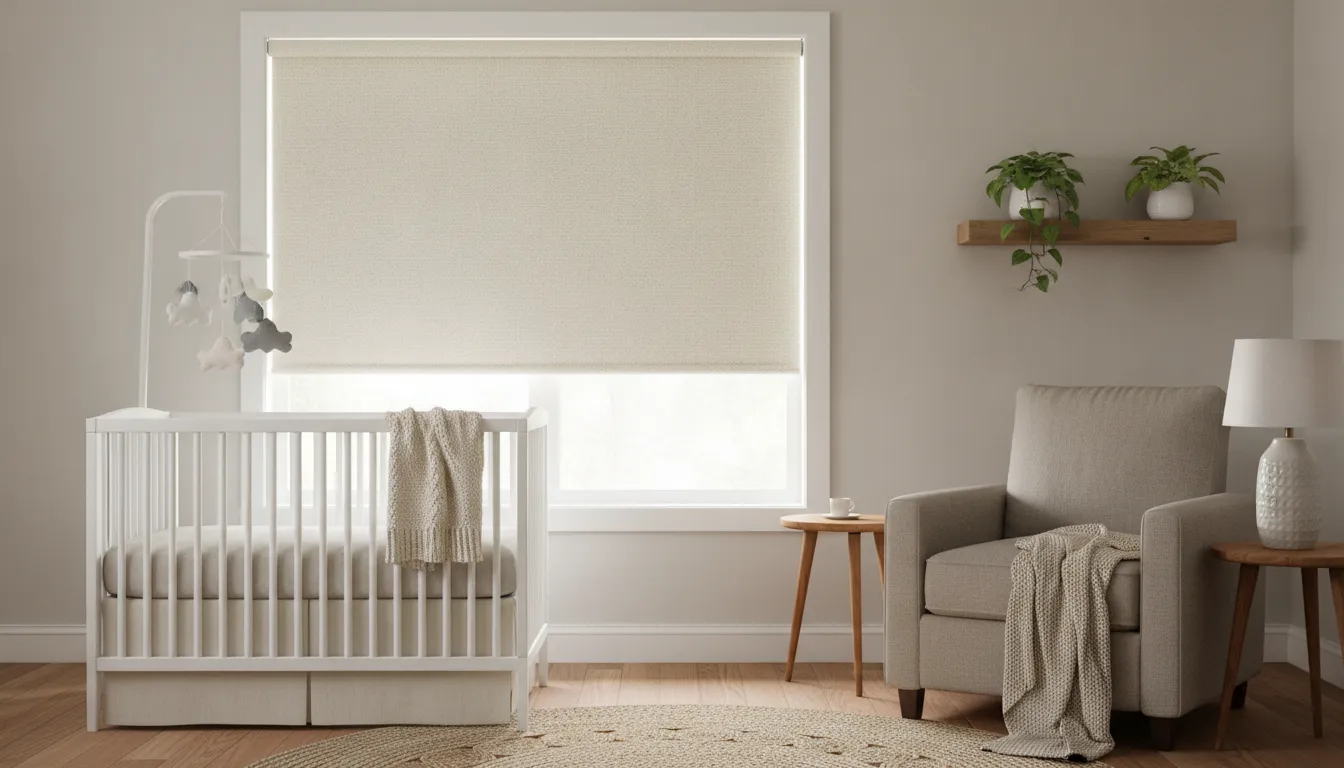
- Children's bedrooms and playrooms: Faux wood offers durability and simple maintenance for spaces where blinds may face fingerprints, toys, and active use. Choose a cordless configuration when available to reduce accessible cords and support a safer window area for children. The durable surface also makes routine cleaning less stressful.
- Living rooms and formal spaces: Real wood blinds bring a classic, warm, natural look that synthetic materials do not perfectly replicate. The grain, finish, and tactile feel can make them a strong design feature in a dining room, sitting room, or carefully furnished living area. Real wood also provides useful insulation, helping rooms stay cooler in summer and warmer in winter.
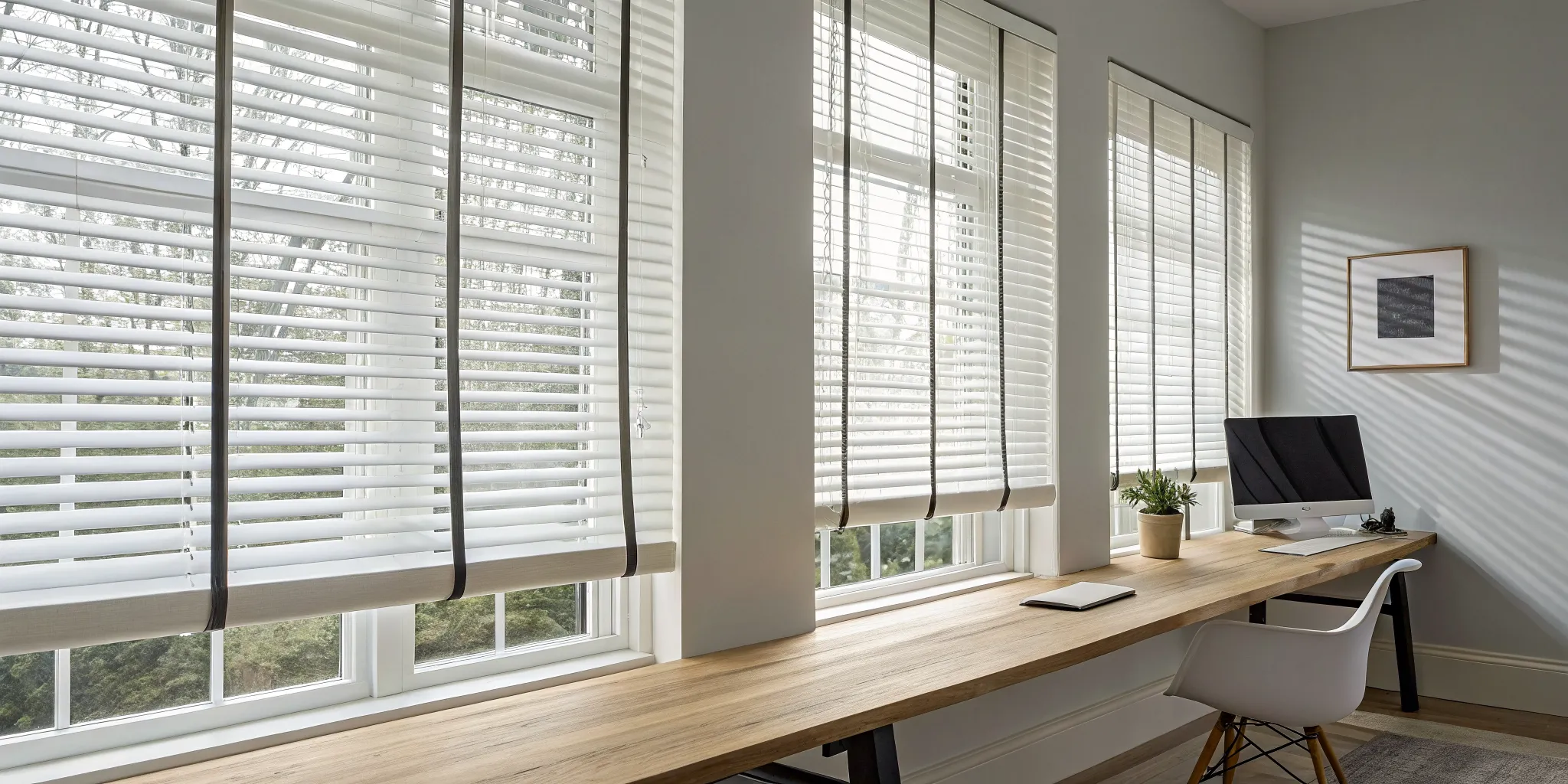
- Bedrooms and home offices: Real wood can be especially appealing where light control and a quieter feel matter. Top-down/bottom-up operation allows you to preserve privacy while admitting daylight from above. Real wood can also help gently dampen sound, making it a thoughtful option for a bedroom, study, or work area that needs a calmer atmosphere.
Real wood performs best in dry, climate-controlled rooms. It can warp when exposed to high moisture or extreme temperature changes, so it is usually better suited to interior spaces away from persistent steam and splashes. Faux wood may also be the better fit for rooms receiving intense Southern California sun. Where its colorfast surface is less likely to fade as quickly as natural wood.
When you are comparing options, the mobile showroom makes the decision more concrete. Vineyard Blind & Shutter can bring samples to your home so you can view the grain, whites, and finishes in the actual lighting of each room. A sample that looks perfect in a showroom may read differently beside your flooring, wall color, and furniture. Seeing both materials at your windows helps you match performance with the way each space is really used. Explore the available faux wood blind options before scheduling your in-home consultation.
Ready to schedule? Call Vineyard Blind & Shutter at (951) 757-4188 for a free in-home consultation.
Ready to Compare Blinds in Your Home?
Seeing faux wood and real wood samples in your own rooms can make the differences in color, texture, and light much easier to judge. Schedule a free in-home consultation to compare both options in your Southern California lighting and discuss which fit your windows and daily routines. Call Vineyard Blind & Shutter at (951) 757-4188 to schedule your consultation.