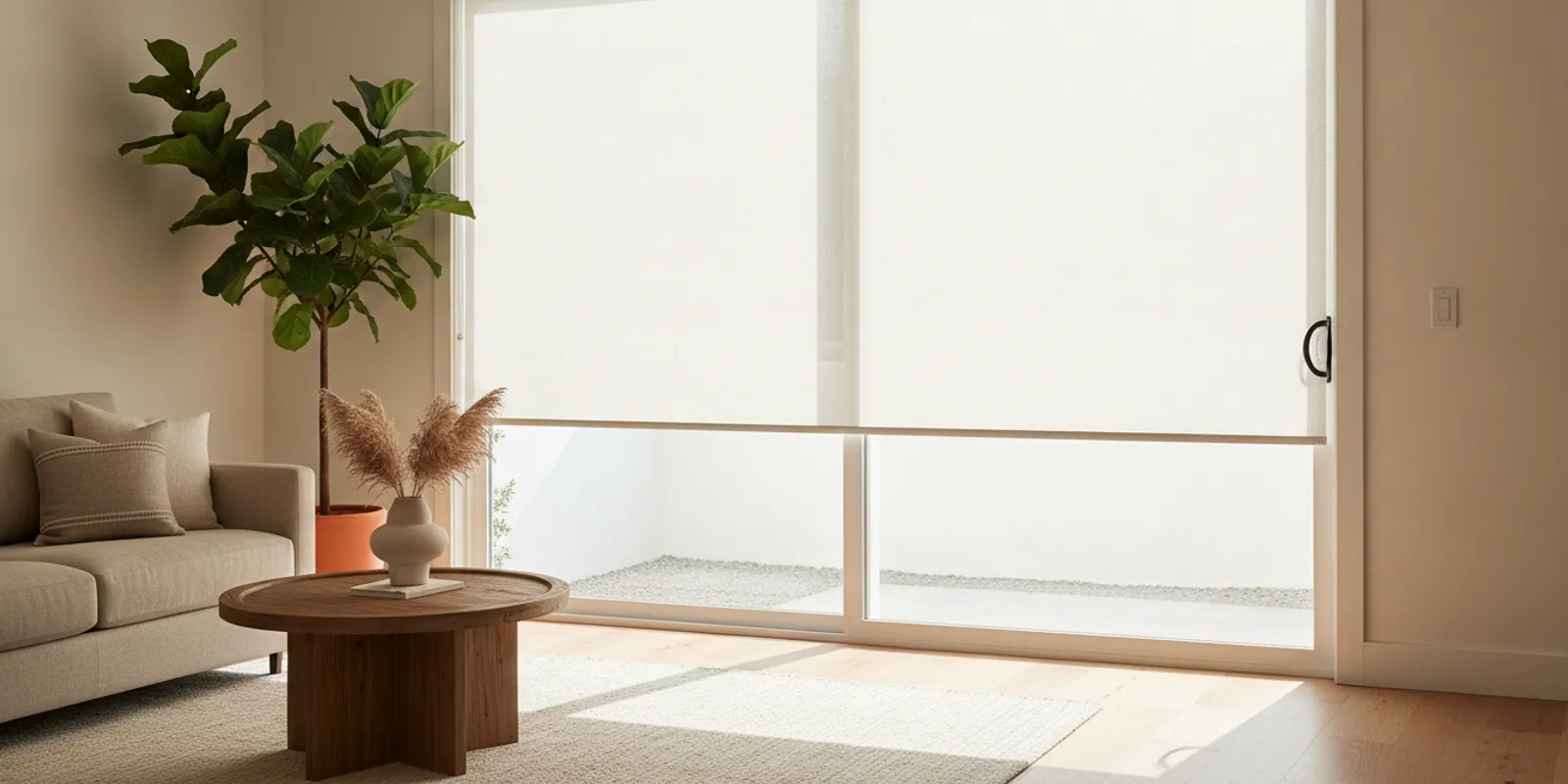
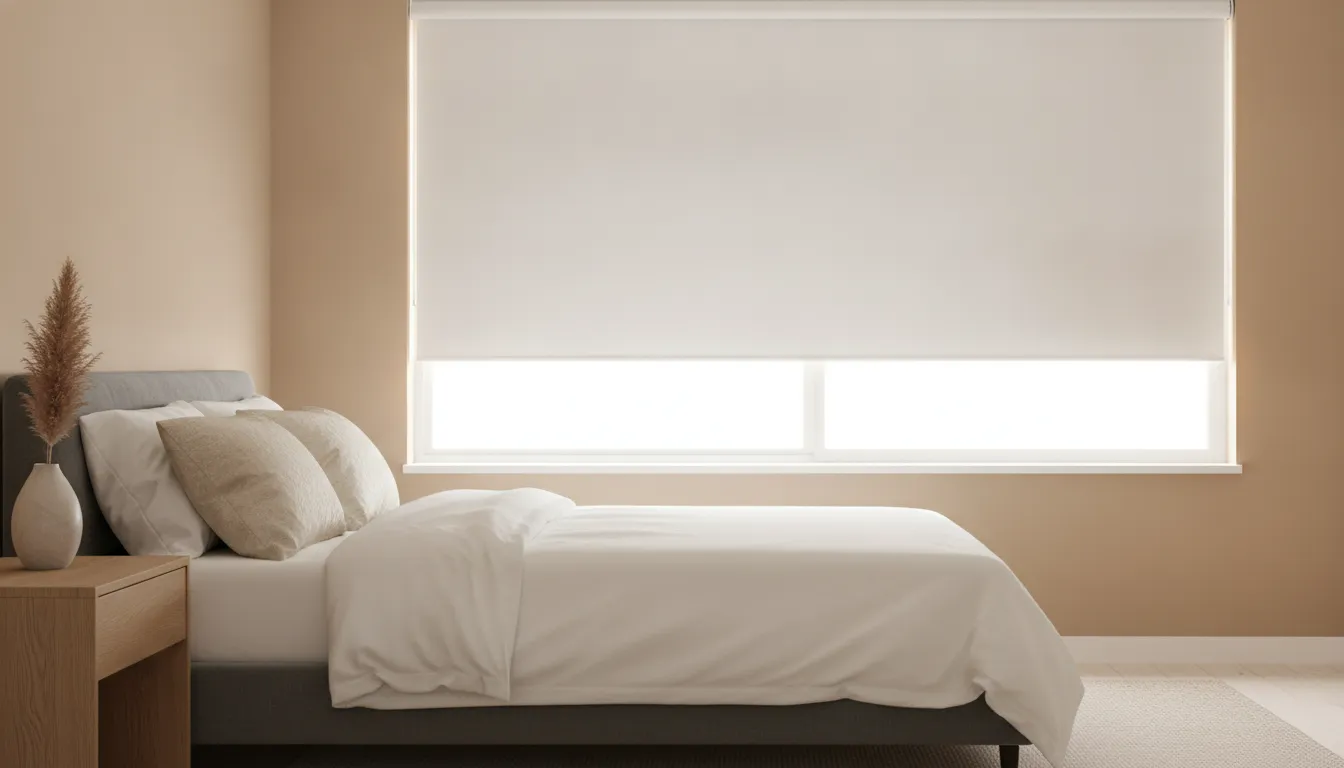
Insulated cellular shades with side tracks reviews can be hard to compare because a convincing product photo does not show how well the edges fit a real window. Tracks can guide a shade along the sides and reduce open gaps, but the result depends on the shade, the window, and careful installation. This guide explains what to assess before choosing a system—and where a standard shade or another treatment may be the simpler choice.
Call Vineyard Blind & Shutter at (951) 757-4188 for a free consultation today.
What do side tracks change on a cellular shade?
A cellular shade uses folded fabric cells that form a honeycomb-like structure. The cells hold air, and the shade can help manage daylight and contribute to a window’s energy performance. The U.S. Department of Energy describes cellular shades as a window-covering option that can boost home energy performance. That general description is not a guarantee of a particular result in every home; the window, product construction, fit, and installation all matter. Read the Department of Energy’s cellular shades fact sheet.
Side tracks are vertical guides mounted along the sides of the window opening. Depending on the design, the shade edges sit or travel within these guides instead of hanging freely. That may limit light escaping around the sides and may improve the seal compared with a shade that has open edges. Some insulated cellular shade systems offer side tracks for this reason; the available design and fit vary by product. Learn about cellular shades and side-track options.
A track is not the same as a promise of total darkness or a measured energy saving. Light can still pass around the top, bottom, or frame. And a shade’s ability to reduce heat transfer depends on its documented construction and installation, not simply on the word “insulated.” Keep those distinctions in mind as you compare reviews.
Q: Do side tracks make cellular shades completely lightproof? A: No. They can reduce light gaps along the sides, but light may still enter at the top, bottom, or other openings.
How should you evaluate insulated cellular shades with side tracks reviews?
Look for reviews that describe the window and the installation, not only a star rating. A useful review explains whether the shade was mounted inside or outside the frame, whether the window was square, how the tracks were attached, and what changed after daily use. Those details help you decide whether a reviewer’s experience is relevant to your room.
Separate three kinds of evidence:
- Product specifications: Cell construction, fabric opacity, operating style, available track design, mounting requirements, and any tested performance details from the manufacturer.
- Installation feedback: Reports about measuring, fitting, alignment, operating the shade, and correcting uneven edges.
- Personal impressions: Opinions about appearance, privacy, perceived comfort, or how much light remains. These are useful, but they are not controlled product tests.
Be cautious when a review makes broad claims without naming a model or describing its test conditions. “Blocks every draft” or “cuts cooling costs by a fixed amount” is not enough information to compare products. Ask what was measured, whether the claim applies to the exact shade and track system, and whether a manufacturer provides supporting documentation.
Also check whether reviews refer to the same configuration you are considering. Cellular shades come in different fabrics, cell designs, opacities, operating systems, and mounting options. A positive review of one configuration does not establish the performance of another. If your priority is insulation, compare the actual product details and installation plan rather than relying on a review headline.
One practical way to sort reviews is to make a small evidence log. Write down the model or configuration, the window type, the mounting method, and the reviewer’s main observation. Then label each observation as a measured specification, an installation issue, or a personal impression. If several reviews describe the same problem—such as a track that catches at one point—look for a specific explanation and whether it was resolved. Repeated vague praise or criticism tells you less than a single detailed account.
Separate the outcome you care about from the review’s language. If you want less visible side light, search for photographs of the installed edges and ask about the top and bottom gaps too. If you want thermal improvement, look for product documentation and installation conditions rather than a reviewer’s sense that a room felt warmer. Reviews are most useful for spotting questions to ask, not for replacing the product specification or fit assessment.
Can side tracks reduce edge gaps and improve insulation?
They can help control the side gap when the tracks are designed for the selected shade and fitted correctly. A conventional shade may leave a visible strip of uncovered glass at each edge. A side-track system can guide the shade closer to the frame, which may reduce direct light leakage through those side openings. The degree of change depends on the dimensions and shape of the opening, track profile, fabric position, and installation.
Tracks do not make every window airtight. Irregular frames, obstructions, hardware, or a shade that does not sit as intended can leave openings. A poor fit may also cause the fabric to rub, bind, or travel unevenly. Before ordering, establish where the tracks will attach and whether trim, handles, or a deep sill will interfere.
For thermal performance, treat side tracks as one part of the assembly—not as a standalone rating. Cellular construction, coverage, window condition, and the fit around the perimeter all matter. A document about cellular shades can support the general point that these shades are used to improve energy performance, but it cannot prove a specific savings figure for your home. For broader comparisons, see this guide to thermal window shade options and the overview of how honeycomb shades are constructed.
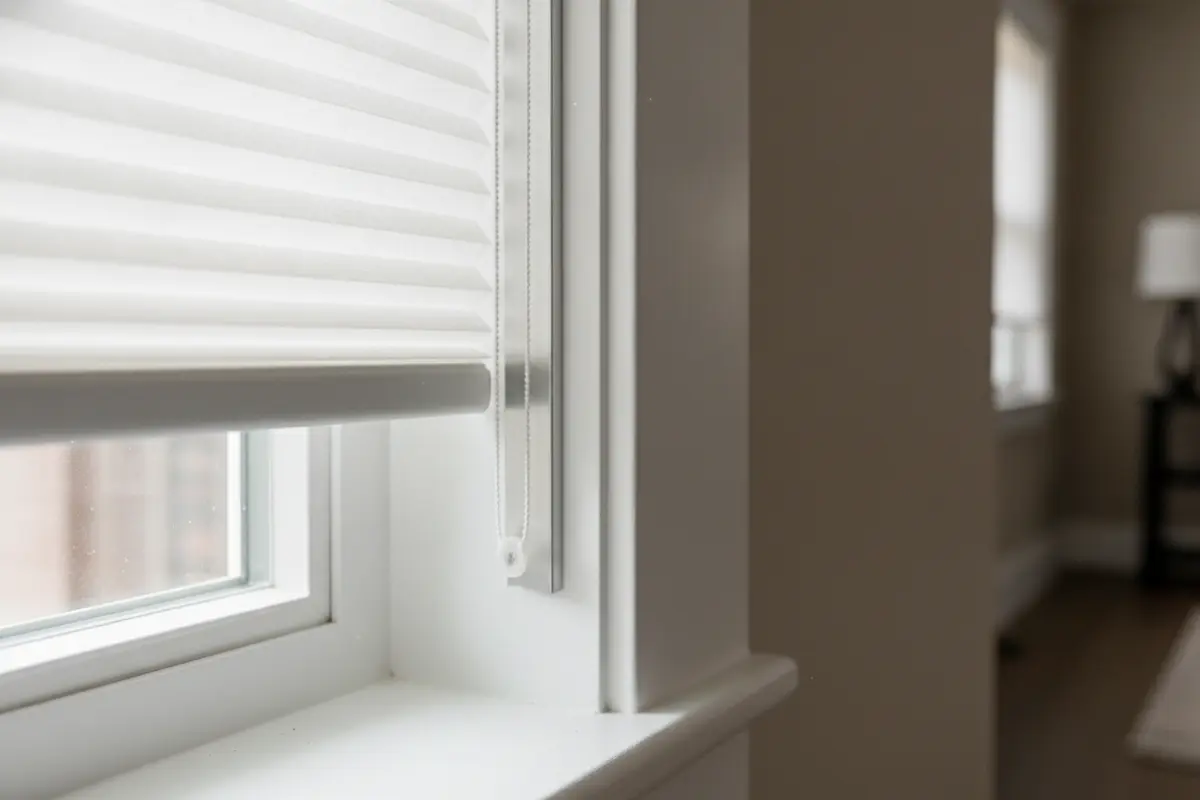
When assessing the gap, inspect the window from more than one angle. Stand in the room during the day and look for bright slivers along both sides. Then check the shade at night with interior lights on, when small openings may be easier to notice from outside. This is a visual check, not a technical test, but it helps you describe the problem clearly. Note whether the gap is even, wider on one side, or concentrated near a handle or frame joint.
If a room has several windows, do not assume the same track layout will perform identically on all of them. One opening may be square and unobstructed, while another has a crank, uneven trim, or a different recess depth. Ask for a window-by-window fit plan and document any exception before comparing proposals. This keeps a good result on one window from disguising a difficult fit elsewhere.
What should you know about measuring and installation?
Side tracks add parts and alignment steps that a simple, freely hanging shade may not need. The installer must account for the opening, mounting surface, track position, and how the shade moves within the guides. Small differences from one side to the other can affect appearance and operation. That makes accurate measuring and a clear installation plan especially important.
Ask these questions before you choose:
- Are the tracks mounted inside the frame, on the trim, or on the wall?
- Will the mounting surface hold the chosen fasteners securely?
- Could a window handle, crank, screen, or sill interfere with the track or shade?
- How much clearance does the system need at the top and bottom?
- Can the shade be removed or adjusted for cleaning or service?
- What happens if the fabric does not travel smoothly or the tracks shift?
These questions are relevant for nonstandard openings, older windows, and windows with limited mounting space. If several windows are involved, compare them individually rather than assuming every opening has the same dimensions. A mobile, in-home consultation can make it easier to review samples and mounting conditions in the actual room. Vineyard’s mobile window treatment service brings the consultation to the home.
A qualified installer should explain the fit and operating steps in plain language. Confirm what the quote includes, how the system will be mounted, and who handles adjustments if the shade binds. Vineyard emphasizes free measurements and free installation; ask for the specific details that apply to your project before proceeding.
Before installation, clear the sill and nearby furniture so the work area is accessible. During the walkthrough, ask the installer to raise and lower the shade several times, pause it at different positions if the design allows, and show how the fabric should sit in the guides. Check that both sides move evenly and that the lower edge rests as intended. If anything looks or feels uneven, describe the exact location while the installer is present. Clear notes make it easier to distinguish a normal operating characteristic from a fit issue that needs attention.
For a group of windows, record the room and opening for each shade. A simple list—bedroom, east-facing window, handle on right, shallow recess—can prevent confusion when discussing options later. Ask whether an inside mount or a surface mount better suits each opening, and request that any trade-off be explained. A small amount of planning can reduce surprises when the tracks and shades are fitted.
How do upkeep and appearance compare?
Tracks create additional surfaces where dust may collect. The amount of upkeep depends on the room, the track design, and the manufacturer’s cleaning instructions. Ask whether the tracks can be wiped in place, whether the shade is removable, and what cleaning methods are safe for the fabric. Avoid assuming that a particular cleaner or tool is suitable unless the product instructions say so.
Think about access, too. A track close to a sink or cooking area may need more frequent attention than one in a rarely used room. In a nursery or bedroom, consider whether the operating controls are easy to reach and use. Keep cords and other operating components in line with the product’s safety instructions, and ask about cordless options when appropriate.
For a realistic maintenance check, ask to see how the shade comes away from the brackets or guides, if removal is allowed, and how it is returned to its normal position. Confirm whether the tracks need to stay aligned after cleaning. Do not pull the fabric sideways to clear dust or force a shade past a point of resistance; follow the product instructions and contact the installer if it binds. These small habits can help protect the fabric and the guiding components.
Visually, side tracks add vertical lines at the window edges. Some people prefer the finished, guided look; others find the added hardware more noticeable than a standard shade. Frame color, track width, trim, and shade fabric influence how prominent the system appears. Review a sample or a clear photo of the specific configuration, and consider how it looks with the shade both raised and lowered.
To compare the trade-offs, use the table as a starting point. It describes typical considerations, not a guarantee for every product.
| Option | Edge coverage | Installation and upkeep | Best fit to consider |
|---|---|---|---|
| Cellular shade with side tracks | Guides can reduce side openings when correctly fitted | More alignment and hardware; clean tracks as directed | When limiting side gaps is a priority and the frame suits the system |
| Cellular shade without tracks | Fabric hangs freely, so side gaps may remain | Simpler appearance and fewer track surfaces | When a straightforward shade is preferred and side light is acceptable |
| Roller shade | Coverage depends on fabric width and mounting | Simple profile; review the chosen fabric and controls | When a clean, minimal look matters more than guided edges |
| Shutters or blinds | Slats or panels provide a different approach to light and privacy | Different materials, cleaning needs, and operating feel | When adjustability, structure, or a distinct room style is important |
Explore the available custom shades or compare the broader categories in this guide to types of window coverings. The best choice is the one that suits your light-control needs, window, daily routine, and preferred look—not necessarily the option with the most hardware.
When might another window treatment be better?
A shade with side tracks is not the automatic answer for every room. A standard cellular shade may be a better fit if you do not mind some side light and want fewer visible components. A roller shade may suit a room where a simple, low-profile look is the main goal. Shutters or blinds may be preferable when adjustable slats, a more substantial appearance, or a different cleaning routine better fits your priorities.
Consider another option if:
- The frame does not offer a suitable mounting surface for tracks.
- Window handles, trim, or other hardware would obstruct movement.
- You want a very minimal appearance and do not need the added edge guidance.
- Ease of access for cleaning or maintenance matters more than reducing side gaps.
- Your main goal requires a specific documented performance level that the proposed shade cannot substantiate.
For a room-by-room decision, note the main concern at each window: glare, privacy, nighttime light, appearance, ease of cleaning, or a documented insulation need. Then compare products against that priority. Vineyard offers custom blinds and custom shutters as alternatives to shades. A sample viewed at home can also help you judge color, texture, and how the treatment works with the frame.
For example, a bedroom where side light is distracting may justify asking about guided edges, while a guest room used occasionally may not need the added hardware. In a living area, the appearance of tracks and the way they relate to existing trim may matter more than small light gaps. In a room where cleaning access is a priority, compare how each system can be reached and maintained. Start with the problem you want to solve, then see whether a track system addresses it without creating a more important drawback.
What should you ask before choosing a system?
Bring a short checklist to a consultation or quote review. Ask for the exact shade and track configuration, the mounting approach, and any product documentation behind performance statements. Confirm how the system operates, what cleaning is recommended, and what support is available if adjustment is needed.
It is also useful to compare the full installed proposal rather than a shade-only figure. Make sure you understand whether measurement, installation, hardware, and any required adjustments are included. If two estimates differ, compare the materials and scope side by side instead of assuming the lower or higher number means better performance.
Vineyard serves customers in San Diego County, Riverside County, and Orange County. You can review the company’s service-area information and discuss the window conditions and treatment options during an in-home consultation.
Before deciding, make sure you can answer four questions in plain terms: What problem should the tracks solve? What evidence supports any insulation statement? How will the exact window be measured and mounted? What upkeep and adjustment steps should you expect? If a proposal does not answer one of these, ask for clarification rather than relying on a broad review claim. A clear scope helps you compare like with like and choose based on the room’s actual needs.
Call Vineyard Blind & Shutter at (951) 757-4188 to discuss your window treatment options.
Frequently Asked Questions
Do side tracks make cellular shades blackout?
No. Tracks may reduce light entering at the shade’s sides, but they do not guarantee darkness. Light can still pass through or around other parts of the installation, and the fabric’s opacity matters.
Are side tracks worth the added installation steps?
They may be worth considering when reducing side gaps is important and the window can accommodate a well-aligned track system. If the extra hardware, installation complexity, or appearance is not a priority for you, a standard shade may be a simpler choice.
Do cellular shades with tracks guarantee lower energy bills?
No. General information about cellular shades is not a promise of a specific energy or cost result. Window condition, shade construction, coverage, installation, and household use all affect performance. Look for documentation for the exact product before relying on a quantified claim.
How can I tell whether a product review is useful?
Look for a review that identifies the product configuration and explains the window, mounting, installation, operation, and upkeep. Personal impressions can help, but they are different from controlled testing or manufacturer documentation.
Comparing the exact product, window fit, and installation plan will give you a more dependable basis for choosing than a broad review score alone.