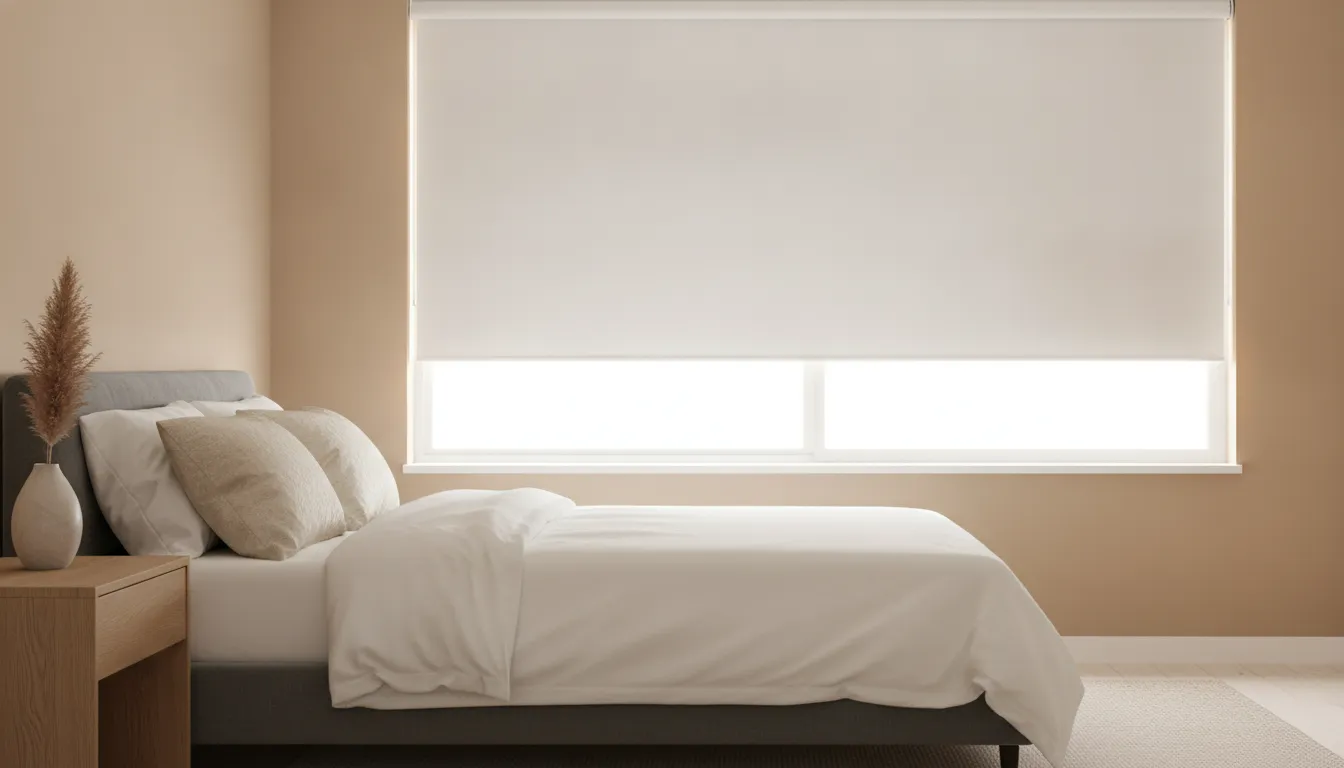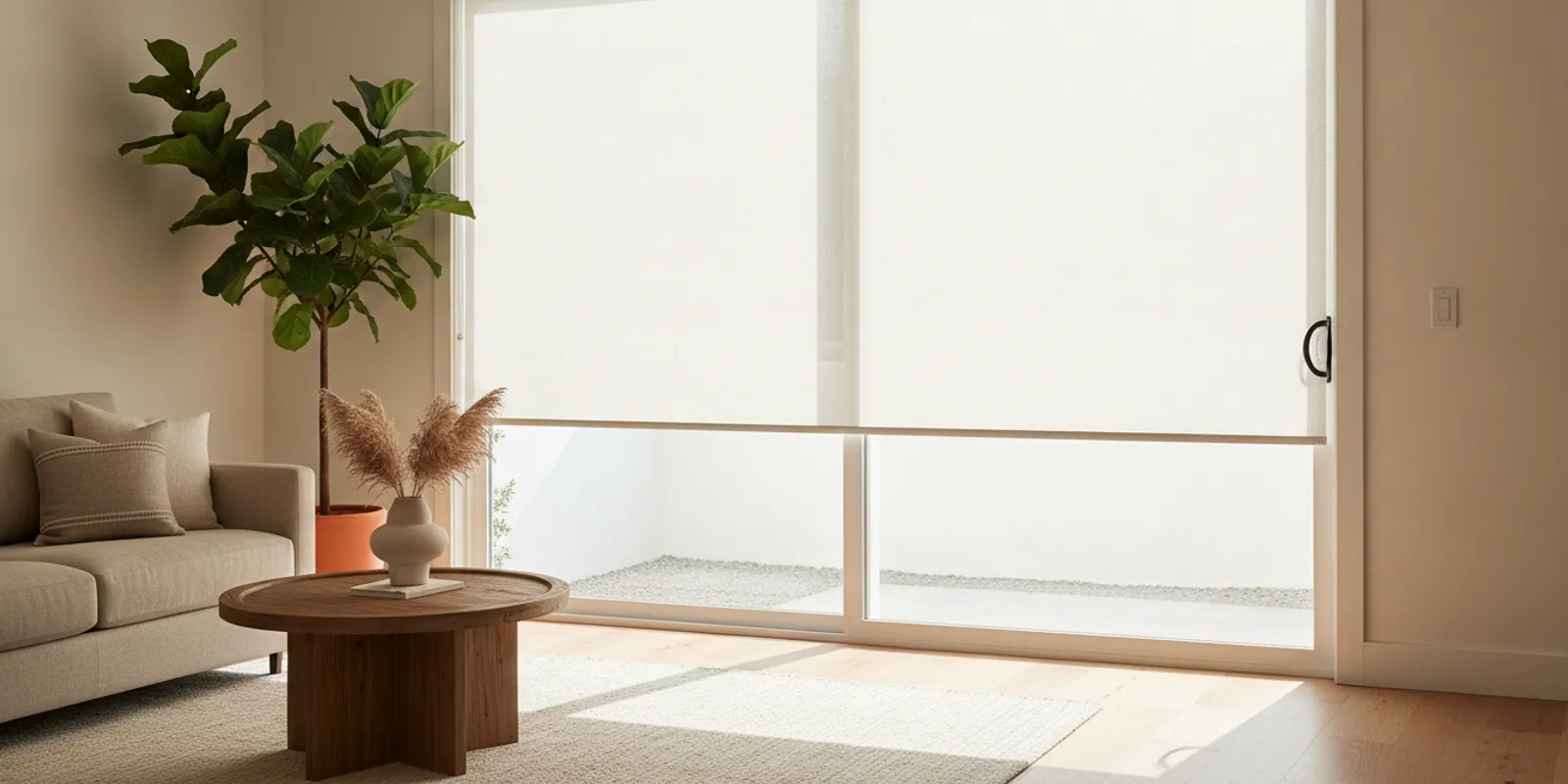
Motorized shades for sliding glass doors can make daily light control easier without putting a cord or wand in the way of a busy doorway. The best fit depends on how often you use the door, how much daylight and privacy you want, and where the shade can be mounted. Compare the options before choosing a style.
Call Vineyard Blind & Shutter at (951) 757-4188 for a free in-home consultation.
Why can a sliding glass door need a different shade plan?
A patio door is both a window and a passage. A treatment that works well on a bedroom window may get in the way when people carry dishes, let a pet outside, or move furniture through the opening. The shade must cover a broad glass area while allowing the door to operate normally.
Motorization can be useful when the shade is wide, high, or opened and closed several times a day. A control lets you raise or lower it without reaching across the glass. It can also make it easier to adjust more than one shade, if your layout calls for a coordinated setup. Motorization does not decide the fabric or mounting style for you, though. Those choices still determine the view, light, privacy, and clearance.
Q: What should you prioritize for a motorized sliding-door shade? A: Choose a shade that clears the door hardware and walking path, then match its light control and privacy to the room.
Which motorized shade styles work well over a patio door?
Start with how the room is used, not with a motor or remote. The table below compares common shade approaches. Exact availability, dimensions, controls, and installation details vary by product and opening, so confirm them for your door before ordering.
| Option | What it does well | Check before choosing |
|---|---|---|
| Roller shade | Provides a simple, clean span of fabric over the glass; fabric choices can range from filtered light to stronger room darkening. | Check the rolled-up size, side gaps, handle clearance, and whether the fabric gives enough privacy after dark. |
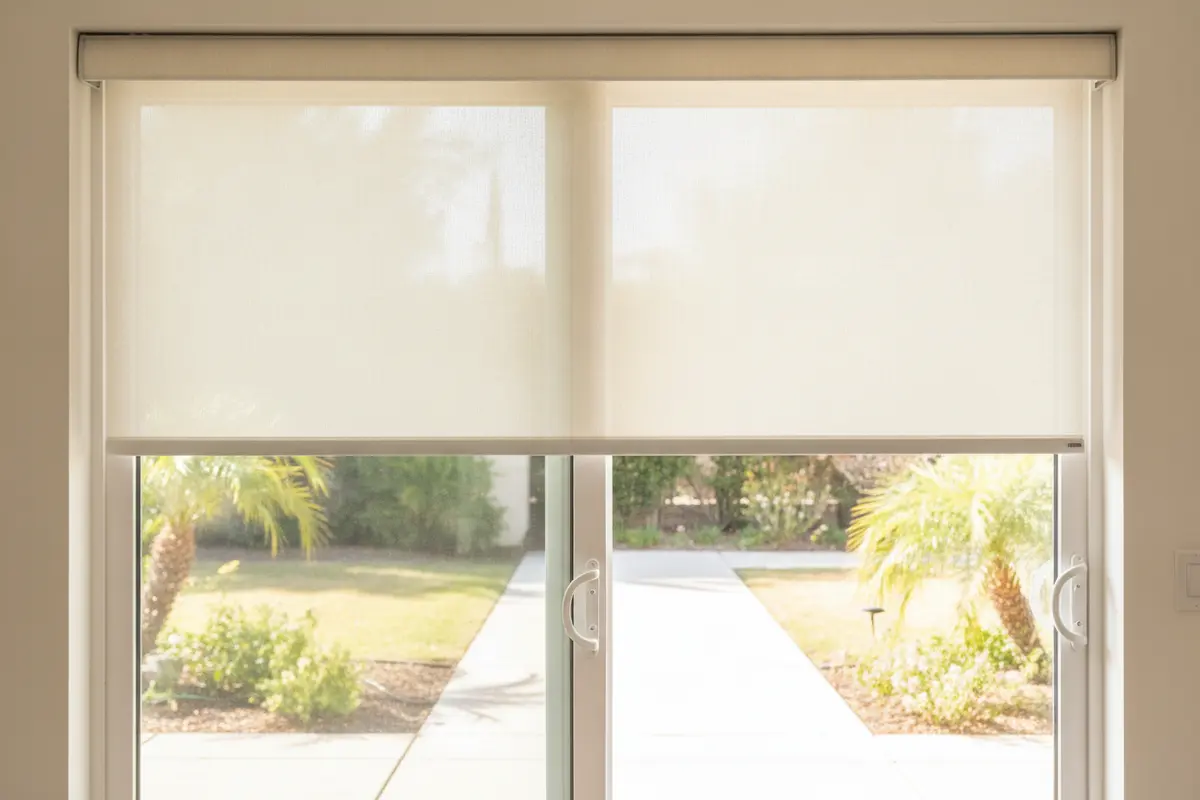
| Solar-style shade fabric | Can soften incoming daylight and reduce direct glare while preserving some outward view, depending on the fabric. | Ask how open the weave is and how the view and privacy change after sunset when interior lights are on. |
| Cellular shade | Offers a structured fabric option and can suit a room where a softer, layered appearance is wanted. | Confirm the width, stack or retracted profile, and whether the particular configuration is practical for frequent door access. |
| Vertical or panel-style treatment | Individual vertical sections can move aside to provide access across a broad opening. | Ask whether the proposed track, stacking direction, and motorized operation suit the door layout and nearby furniture. |
These are starting points, not a ranking. A roller shade may suit a room where a simple, single sweep is the priority. A vertical or panel-style treatment may be worth discussing when people need to pass through the opening often. If you are comparing roller fabrics, Vineyard’s guide to motorized roller shades can help you consider that style in more detail.
How should you choose light control and privacy?
Think about the times of day when the door feels least comfortable. A west-facing room may need help with late-day glare. A room facing a nearby home may need more privacy in the evening. A sunny breakfast area may call for a shade that filters light but does not make the room feel closed in.
Fabric descriptions are not interchangeable. A light-filtering fabric softens daylight but does not create a dark room. A room-darkening or blackout option can limit incoming light when properly selected and fitted, but it should not be assumed to block heat or provide a specific insulation benefit. Ask for product specifications if thermal performance matters to your decision.
- For a view: Ask to see the fabric in the room and compare how much of the outdoors remains visible from inside.
- For daytime privacy: Check the fabric’s openness and test the view from outside in daylight when possible.
- For evening privacy: Consider how the shade looks with interior lights on; an open weave may reveal more at night.
- For glare: Compare filtered-light and more opaque fabrics at the time the sun reaches the glass.
- For sleeping or media rooms: Ask about the actual light gap around the edges as well as the fabric itself.
Look at the door from more than one position. A fabric that appears private when viewed straight on may feel different from a neighboring window or from an angle across the room. Hold samples near the glass at the time you normally notice glare, and compare them both with the shade raised and lowered. Consider whether the view matters more in the morning or evening, and whether you need the same amount of light control throughout the year. If the door opens onto a patio or garden, decide how much of that view you want to preserve while still softening direct sunlight.
Also consider the rest of the room. A shade may need to coordinate with nearby windows, but matching every opening is not the only option. The patio door can use a fabric chosen for its larger span and frequent access, while smaller windows use a complementary treatment. Ask how the color and texture look against your flooring, wall paint, and furniture before committing. A mobile consultation can make it easier to compare actual samples beside the door rather than relying on a screen image.
In a Pacific Northwest National Laboratory evaluation, cellular shades included battery packs and small motors that could raise and lower shades on programmed schedules. That example shows one way automated operation can be set up; it does not establish the performance or compatibility of every motorized shade or patio-door system. Read the PNNL evaluation of cellular shades.
What should you compare in motors and controls?
Motorization is not one single control method. The right setup depends on how you want to operate the shade and what power source is practical at the door. Ask whether the proposed system uses a handheld remote, a wall control, an app, scheduled operation, or a combination. Some systems may support smart-home connections; verify compatibility with the exact motor and devices you already use rather than assuming every option works together.
Battery-powered systems can avoid running a new wire to the shade, but ask how the battery is accessed and what upkeep the manufacturer recommends. A hardwired system may require electrical planning and suitable access to power. Ask about noise, speed, manual operation during an outage, and what happens if the control is misplaced. If you want scheduled movement, confirm how the schedule is set and whether the system can be used simply by remote when that is more convenient.
It can help to imagine a typical day rather than choosing controls by feature count. Would you lower the shade while the afternoon sun is on the glass, then raise it for the evening? Do you want a quick adjustment while seated, or would a wall control near the door be easier for everyone in the household? If different people use the room, ask whether the controls are straightforward for each person and whether a manual option remains available.
Think about whether the shade needs to stop at a particular height. Some households prefer full coverage for privacy; others want the upper portion of the glass uncovered to keep daylight. Ask the provider to explain how the selected control stops and starts the shade and whether you can adjust it in small increments. These details can be more useful in daily life than a long list of smart features. Keep the remote in a predictable place, and make sure anyone who uses the door knows how to operate the shade without reaching across the moving panel.
The PNNL example above is about cellular shades in a lab-home evaluation, not a promise about a specific product. For a broader overview of controls and features, see Vineyard’s guide to automatic window shades and its motorized shades buyer’s guide.
How do mounting and measurements affect the fit?
A shade that covers the glass must still leave room for the sliding panel, handle, locks, and any trim. The mounting surface may be above the door frame, on the frame, or on another suitable surface, depending on the product and the opening. Do not choose a mount based only on a photo or a rough glass measurement.
Before a consultation, note the following details:
- Approximate overall width and height of the opening, including the frame.
- Which panel moves and which direction it slides.
- Where the handle, lock, screen track, and any nearby wall or cabinet sit.
- Whether there is a deep header, crown molding, or another obstruction above the opening.
- Where furniture, plants, or a walk-through path could interfere with a shade or its controls.
- Which side of the room receives direct sun, and what time of day glare is most noticeable.
Use these notes to describe the problem, not to order a custom shade yourself. Accurate measuring and checking the mount are important because a small clearance issue can make access awkward. Vineyard’s mobile window treatment service brings product samples and measuring to the home, so choices can be considered against the actual door, light, and room layout. The company provides service in San Diego County, Riverside County, and Orange County.
How can you keep door access easy and safe?
Stand where you normally enter and exit. Check that the shade’s bottom bar, fabric, and any visible control components will not obstruct the handle or become an obstacle in the traffic path. Think about children, pets, and anyone who may use the door while carrying items. Ask about cordless operation and any safety features included with the selected product. Follow the manufacturer’s instructions for installation, use, and maintenance.
Also decide whether you want the shade fully raised for most of the day or partially lowered to manage glare. A shade that has to be moved every time someone uses the door may not be the most convenient choice for a high-traffic opening. Ask to see how the proposed treatment stacks or rolls when raised and how much of the view it covers in that position.
What should you ask before selecting a system?
Bring your priorities and questions to the product discussion. Ask for a clear explanation of the installed configuration, not just a description of the motor. A useful comparison should cover:
- Which shade style and fabric best suit the door and room?
- How much privacy and light control should you expect by day and by night?
- Will the shade clear the door handle, moving panel, screen, and trim?
- What power source and control choices are available for this specific size?
- How does the shade operate if power is unavailable or the remote is not nearby?
- What maintenance does the motor or power source require?
- What is included in the measurement, quote, and installation?
For a complete product discussion, start with Vineyard’s pages for custom shades and custom blinds. If you are comparing other treatments for the home, the shutter options page explains another broad category, although shutters may not be the most convenient solution for every frequently used patio door.
When are motorized shades a good fit for sliding glass doors?
Motorization is worth considering when reaching the shade is inconvenient, when you want a simple way to adjust a large span of fabric, or when you would value scheduled or remote operation. It may be less important on a door that is rarely used and easy to reach. The fabric, mounting, and clearance still matter more than adding a motor to a setup that does not suit the opening.
One practical approach is to list your top two needs—such as reducing afternoon glare and keeping evening privacy—then compare how each shade style handles them without blocking the doorway. Bring that list, a few room photos, and your control preferences to an in-home appointment. Vineyard Blind & Shutter offers free measurements and free installation; you can also review its service areas before requesting a visit.
Frequently Asked Questions
Can motorized shades be installed over a sliding glass door?
Many shade styles can be considered for a wide glass opening, but the suitable product and mount depend on the door dimensions, trim, handle, and desired clearance. Have the opening measured and the operating path checked before ordering.
Are motorized shades a good choice for a frequently used patio door?
They can be convenient when you want to adjust a wide shade without reaching across it. Compare how the shade retracts and confirm that its fabric and hardware will not interfere with the door or walking path.
Do motorized shades need to be wired?
Power arrangements depend on the particular motor. Some systems use batteries, while others may use a wired power source. Ask about access, upkeep, installation needs, and the available controls for the exact product being considered.
Do blackout shades keep heat out?
Do not assume that blackout or room-darkening fabric provides a particular heat or insulation benefit. Its light-control function is separate from thermal performance. Check documented specifications for the product if reducing heat is a priority.
With the right measurements and a clear idea of how you use the doorway, you can compare motorized shade options on fit, light, privacy, and everyday convenience.