Plantation shutters can look simple once they are on the window, but a lasting installation depends on details you cannot see from across the room. Every opening needs accurate measurements, a level and plumb frame, and secure mounting that allows the panels to operate smoothly. A small mistake can mean gaps, light leakage, damage to the frame, or a warranty problem.
Q: Should you choose professional vs diy plantation shutter installation? A: DIY installation can reduce labor costs and let you work on your own schedule, but professional installation is usually the safer choice for permanent fixtures. Unusual window openings, heavy panels, and homeowners who want the fit and warranty requirements handled correctly.
Call Vineyard Blind & Shutter at (951) 757-4188 for a free consultation.
The right choice becomes clearer when you compare what each path actually involves, from measuring and preparing the opening to making final adjustments. That practical difference is where the real cost, time, and confidence of the project are decided.What Does Professional vs DIY Plantation Shutter Installation Really Involve?
Plantation shutters are not a temporary window covering that you can reposition when the fit is slightly off. They are a permanent fixture, so the installation starts with accurate measurements and a clear understanding of the window opening. The frame must be sized and positioned so the panels open smoothly, sit evenly, and provide the intended light control. That precision is the central difference when comparing professional vs DIY plantation shutter installation.
The professional route begins before the shutters arrive. An installer measures each window, checks the opening and surrounding trim, and helps confirm the right mounting approach. With Vineyard Blind & Shutter, that process includes free in-home measuring and professional installation. You can see materials in your own rooms and lighting through the mobile showroom, then have the finished shutters installed as part of one coordinated service. Professional installation is also warranty-backed, subject to the manufacturer’s terms, giving you a clearer path if a product or fitting issue appears.
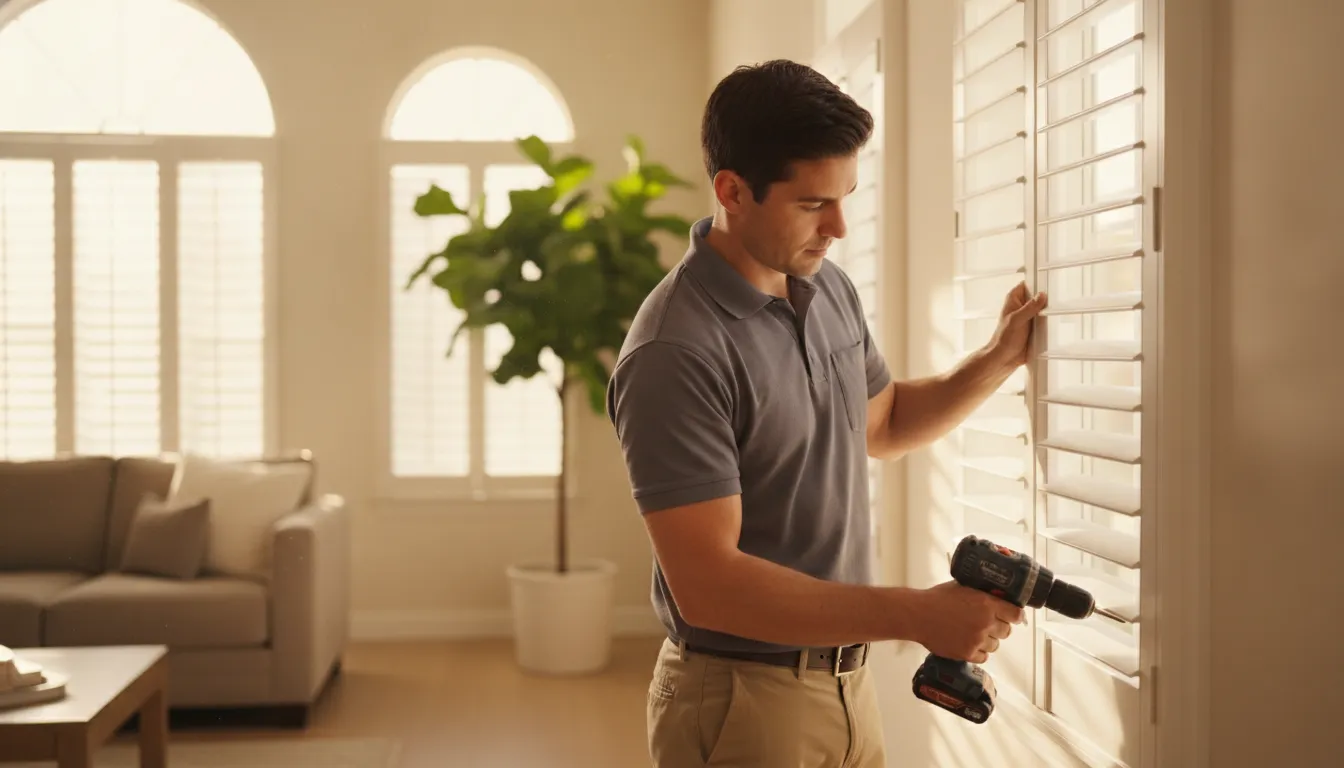
Installation itself involves more than fastening a frame to the wall. Shutter openings need to be assessed for level and plumb. If a window frame is slightly out of square. An experienced installer can scribe the shutter frame to match the opening rather than forcing a rigid frame into place. Professionals also bring specialized tools that are not usually part of a household toolkit. They are trained to position large or heavy panels safely, reducing the chance of damage to the shutters, trim, or home.
The DIY route can be a reasonable choice for a confident homeowner with the right tools, patience, and a straightforward opening. You purchase the shutters, follow the manufacturer’s instructions, measure and mark the mounting points, and complete the installation on your own schedule. Avoiding a labor charge may reduce the project price, and working at your own pace can be convenient. However, the responsibility for every measurement, adjustment, and mounting decision remains with you. A mistake can create gaps or light leakage, damage the product or window frame, or result in incorrect mounting. Some manufacturers may also limit or void warranty coverage when installation does not meet their requirements.
Both paths can produce attractive shutters. The more useful question is whether the upfront DIY savings outweigh the time, tools, precision, and warranty considerations involved. That cost-and-value comparison deserves a closer look.
Is It Worth Paying for Professional Shutter Installation?
DIY plantation shutter installation can look like the cheaper option because you avoid a separate labor charge. It also gives you control over the schedule. If you are comfortable measuring, drilling, leveling, and lifting panels, completing the work at your own pace may reduce the upfront project cost. A general market range often cited for DIY savings is about 20% to 40%. Although your actual savings depend on the shutter design, number of windows, tools you already own, and whether anything needs to be corrected.
Professional installation typically costs more than a do-it-yourself project, but the added cost pays for more than someone putting screws into a frame. It pays for accurate preparation, experienced judgment, and a finished shutter that fits and operates as intended. For cost context, see our guide to how much plantation shutters cost before comparing estimates.
What does the installation fee protect?
Plantation shutters are a permanent fixture, so measuring is not a casual first step. An error can leave gaps, allow unwanted light through, or damage the shutter or window frame. A professional installer checks the opening, confirms the frame is level and plumb, and identifies problems before the product is mounted. If a window is slightly out of square, the installer may be able to scribe the shutter frame so it follows the opening more closely.
The work also involves handling large or heavy panels safely. Specialized tools can improve efficiency and finish quality, while experience helps prevent incorrect mounting. That matters when a shutter has to open without rubbing, close evenly, and maintain consistent sightlines across multiple windows. Rework can quickly erase the savings from a DIY installation, especially if a panel, frame, or section of trim is damaged during the process.
How does professional installation affect warranty coverage?
Warranty terms vary by manufacturer and product. Before choosing the DIY route, read the warranty conditions or ask the supplier whether professional installation is required. Incorrect mounting can void some warranties, leaving you responsible for a repair that would otherwise have been covered. If you hire an installer, ask what workmanship coverage is included and keep the written estimate, product details, and warranty information together.
For additional peace of mind, ask for a detailed quote that explains the product, measuring, installation, and any related charges. North Carolina State University Extension recommends checking contractor insurance and comparing written quotes based on the same project specifications. That same habit makes it easier to compare professional shutter installation with a DIY total honestly, rather than comparing product price alone.
Where DIY Shutter Installation Goes Wrong (and How to Avoid It)
Plantation shutters are a permanent fixture, so an installation mistake can remain visible and inconvenient long after the tools are put away. If you are comparing professional vs DIY plantation shutter installation, the main question is not simply whether you can attach a frame to a wall. It is whether the finished shutters will fit, operate smoothly, protect the window, and remain covered by the manufacturer’s warranty.
- Measuring the opening only once. A small measurement error can affect the entire order. Plantation shutters need precise measurements for proper fit and operation. If the frame is too small, gaps around the edges may allow unwanted light through. If it is too large, forcing the unit into place can damage the shutter or the window frame. Measure each opening carefully at multiple points, record the dimensions clearly, and follow the manufacturer’s measuring instructions. For a more detailed overview, see our DIY plantation shutter installation process.
- Ignoring an uneven or out-of-square frame. A window opening may look straight while still being slightly out of level or plumb. That difference can cause a panel to rub, fail to close evenly, or leave inconsistent gaps. Professional installers use specialized tools to check the opening and can scribe the shutter frame to match a slightly irregular window. A DIY installer who skips those checks may try to correct the problem by shimming or forcing the frame, which can create new alignment issues.
- Choosing the wrong mounting position. Inside-mount and outside-mount installations require different clearances, attachment points, and trim considerations. Mounting brackets in the wrong location can interfere with the panel swing or place stress on weak material. Before drilling, confirm where the frame will sit, how the louvers will open, and whether the fasteners are entering a suitable surface. Do not assume that the same approach works for every window in the home.
- Handling large panels without enough support. Plantation shutter panels can be large and heavy. Trying to hold, align, and fasten one alone increases the chance of dropping it, scratching the wall, damaging the frame, or suffering an injury. Professional installers are trained to handle these panels safely and protect the surrounding home while securing them.
- Mounting the frame without checking operation. Even a frame that looks straight can produce poor results if it is not checked before final tightening. Test the panel swing, hinge movement, louver rotation, and contact points as you go. If the unit binds, stop and correct the alignment rather than tightening more hardware and hoping the issue disappears.
- Overlooking warranty conditions. Incorrect mounting can void a warranty, and some manufacturers make coverage contingent on professional installation. Read the warranty before beginning, not after a problem appears. If the terms are unclear, ask the manufacturer or installer for written guidance. That simple check can prevent a DIY labor decision from becoming an expensive repair or replacement.
DIY can make sense for an experienced homeowner with the right tools, help, and willingness to follow every specification. When the opening is unusual, the panels are substantial, or warranty protection matters, professional measuring and installation remove much of the avoidable risk.
How Professional Shutter Installers Eliminate the Guesswork
Plantation shutters are not simply mounted in front of a window. They become a permanent fixture, so the frame must be measured accurately and installed square, level, and plumb for the panels to open smoothly. Professional installers bring a process that accounts for the conditions they find in the home, rather than assuming every window opening is perfectly uniform.
That process starts with tools that are not typically part of a household toolkit. A professional may need specialized equipment to position, fasten, align, and finish the frame efficiently. The difference is especially important when an opening is slightly out of square. Instead of forcing a standard frame into place, an experienced installer can scribe it to match the window opening. This helps create a closer fit and supports consistent panel operation.
Precision matters because a measuring or mounting error can leave visible gaps, allow unwanted light through, or damage the shutter or window frame. Those problems are difficult to correct after the panels have been cut or permanently attached. A professional measurement also identifies practical issues before installation day, such as limited clearance, uneven trim, or the need for a different mounting approach.
Large plantation shutter panels require care, too. Trained installers know how to move and support heavy panels safely while protecting walls, flooring, trim, and the window itself. Trying to position an oversized panel alone can turn a manageable project into a strained back, a dropped product, or damaged paint. Having the right help is not about avoiding all effort. It is about reducing the risks that are hard to see until something goes wrong.
Warranty terms provide another reason to review the installation plan before choosing the DIY route. Some manufacturers make coverage contingent on professional installation, and incorrect mounting may void protection. Confirm the requirements for your specific product in writing before work begins.
Professional service should also include basic contractor due diligence. North Carolina State University Extension recommends checking that a contractor carries insurance covering public liability, property damage. And workers’ compensation, and advises homeowners to request detailed written quotes based on the same project specifications. Its contractor-selection guidance also recommends clarifying payment terms and not paying in full before satisfactory completion.
For homeowners who want a measured fit, safer handling, and clearer warranty protection, professional installation is the more reliable path. A free in-home measurement can reveal what the window actually requires before you commit to the wrong frame or mounting method.
Comparing Value and Fit in Professional vs DIY Plantation Shutter Installation
The right choice depends on more than the labor line on an estimate. DIY installation can reduce the upfront price and lets you work around your schedule. Professional installation adds skilled measuring, specialized tools, safer handling, and help protecting the fit and warranty of a permanent window fixture.
| Consideration | Professional installation | DIY installation |
|---|---|---|
| Cost | Includes installation labor and can cost about 30% more than a DIY project in market comparisons. | Eliminates the professional labor fee, with potential savings of roughly 20% to 40% depending on the project. |
| Time to complete | A scheduled installer handles the measuring, mounting, adjustment, and cleanup as one coordinated process. | Offers scheduling flexibility, but the project may take longer if measuring, troubleshooting, or adjustments are unfamiliar. |
| Precision measuring | Measures for proper operation and can account for frames that are not perfectly level or plumb. | Requires careful measuring by the homeowner. Errors can create gaps, light leakage, or damage to the shutter or frame. |
| Tooling | Uses specialized tools and can scribe the frame to fit a slightly irregular window opening. | May require borrowing or purchasing tools beyond a standard household toolkit. |
| Warranty protection | Can help satisfy installation requirements, but homeowners should still confirm the manufacturer’s warranty terms. | Incorrect mounting or a warranty requiring professional installation may leave coverage at risk. |
| Risk of rework | Lower risk when an experienced installer handles heavy panels, alignment, and final adjustments. | Higher risk if the panels do not align, operate smoothly, or fit the opening as expected. |
Market ranges are useful for setting expectations, not for judging a specific quote. Window size, frame condition, shutter material, panel configuration, and the number of openings can all change the final price. Ask for a written quote that clearly identifies the same scope of work before comparing installers. North Carolina State University Extension also recommends checking contractor insurance, including public liability, property damage, and workers’ compensation coverage: review its contractor-selection guidance.
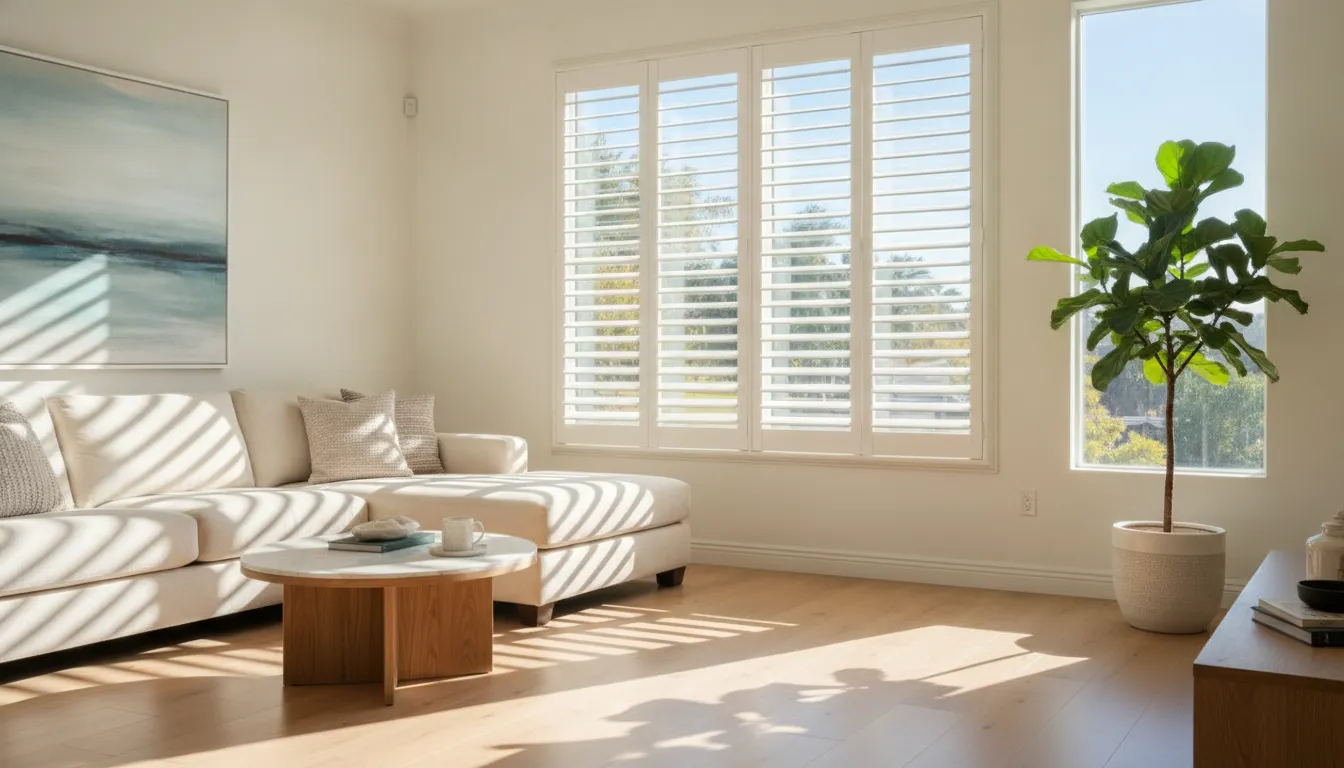
DIY makes sense for a confident homeowner who has verified the manufacturer’s requirements, has the right tools, and accepts responsibility for measuring and rework. Professional help is often the calmer option when windows are unusually shaped, panels are large, or a precise custom fit matters more than minimizing the initial labor cost. Vineyard Blind & Shutter provides custom plantation shutters with in-home measuring and installation for Southern California homeowners.
How to Decide Between DIY and Professional Shutter Installation
The right choice depends less on confidence with a screwdriver and more on the windows, panels, and margin for error involved. A single, standard-size window can be a reasonable DIY project when you have basic tools, enough time, and clear manufacturer instructions. Multiple windows, unusually shaped openings, or large panels make professional installation the safer and more dependable option.
Plantation shutters become a permanent part of the window opening, so measuring and alignment matter from the start. A small error can leave gaps, allow unwanted light through, interfere with operation, or damage the shutter or frame. Before choosing the DIY route, review the product warranty carefully. Some manufacturers may require professional installation for coverage to remain valid.
- Number of windows: One straightforward opening is easier to manage than an entire home with different sizes and configurations.
- Window shape and condition: Older, uneven, deep, or non-square frames favor an installer who can adjust the fit.
- Panel size and weight: Large or heavy shutters can be awkward to lift, position, and secure safely without help.
- Tools and precision: Professionals use specialized tools and can scribe frames when an opening is slightly out of level or plumb.
- Warranty and risk: Confirm whether DIY mounting affects coverage, and consider the cost of correcting a preventable mistake.
- Time and scheduling: DIY offers flexibility, while a professional handles the installation efficiently during a scheduled visit.
If you choose DIY, measure twice, follow the supplied mounting instructions, and avoid forcing a panel into an opening that does not align. Our DIY plantation shutter installation process guide can help you understand the work before ordering. If you would rather remove the uncertainty, Vineyard Blind & Shutter provides free in-home measuring and installation. We bring samples to your home, evaluate the openings, and help you compare custom plantation shutters for a precise fit.
Start with a no-pressure conversation through our free consultation. You can ask about the installation requirements, warranty terms, and the best path for your windows before making a decision.
Call Vineyard Blind & Shutter at (951) 757-4188 to book your free in-home consultation.
Frequently Asked Questions
What is the average cost of plantation shutters installed?
There is no single installed price because the total depends on window size, shutter material, configuration, quantity, and installation conditions. DIY can reduce the project total by removing labor fees, while professional installation adds skilled measuring, fitting, and mounting. Compare written quotes that describe the same products and scope. North Carolina State University Extension recommends getting written quotes from three bidders for the exact same project specifications: NCSU Extension contractor guidance.
Is it hard to install plantation shutters yourself?
It can be challenging, especially when windows are not perfectly square or when panels are large and heavy. Plantation shutters are a permanent fixture, so inaccurate measurements can create gaps, light leakage, operating problems, or damage to the shutter or frame. A professional can use specialized tools and scribe the frame to accommodate a slightly uneven opening.
Should I hire a professional for plantation shutter installation?
Professional installation is usually the safer choice when you want a precise fit, have several windows, or are uncomfortable lifting and securing heavy panels. It also reduces the risk of incorrect mounting. Before deciding, check the manufacturer warranty because some coverage may depend on professional installation. DIY may make sense for an experienced homeowner with suitable tools, time, and a clear understanding of the warranty terms.
Does professional shutter installation include measuring?
It should when the service is presented as an all-inclusive installation package, but confirm the details before ordering. Ask whether measuring, mounting, frame adjustments, cleanup, and warranty requirements are included. Professional measuring is especially valuable because the fit affects panel operation, light control, and the finished appearance.
Ready to Choose the Right Shutter Installation?
A professional consultation can help you compare the fit, tools, warranty considerations, and installation effort before you commit to a DIY project. Vineyard Blind & Shutter can review your windows and help you plan plantation shutters that suit your home. Call Vineyard Blind & Shutter at (951) 757-4188 to book your free in-home plantation shutter consultation and installation estimate.