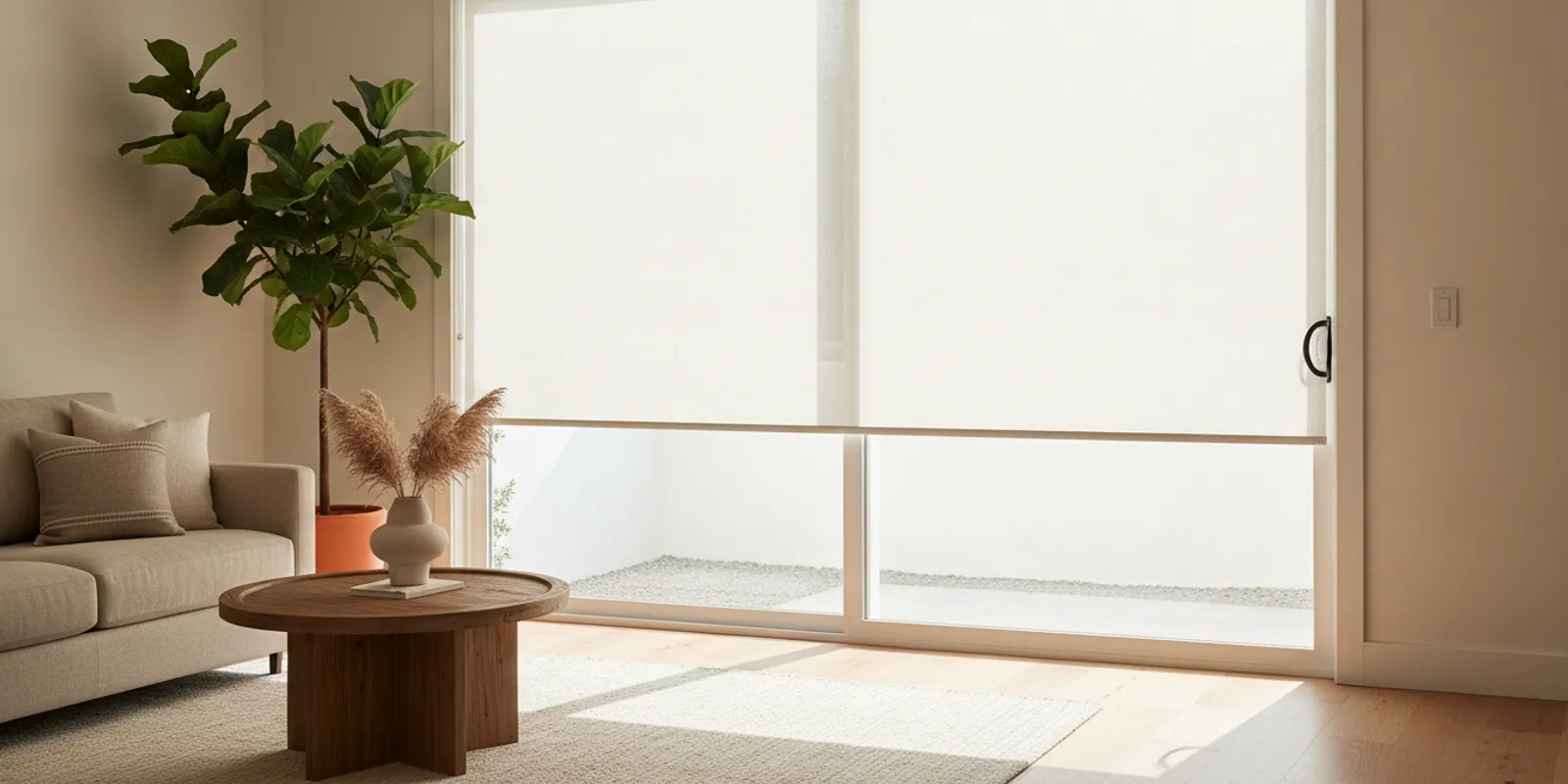
West-facing windows can turn a comfortable Southern California room into a glare-heavy space by late afternoon. The right solar shade is not chosen by color alone. You need to balance how much light reaches the room. How much of the outside view you want to keep, daytime privacy, and how precisely the shade fits the opening.
Call Vineyard Blind & Shutter at (951) 757-4188 for a free in-home consultation.
For solar shades for west facing windows, start with the room’s afternoon glare and your view priorities, then compare openness, fabric performance, privacy, and mounting options. A tighter weave may give stronger light control, but the best choice depends on the window, furnishings, and how you use the room.
Solar shades can help manage visible light, but their heat performance depends on the specific product and installation. Before choosing a fabric, it helps to understand why western exposure is so demanding and how the afternoon sun changes what you see and feel indoors.
Why do west-facing windows feel hardest in the afternoon?
The sun arrives when the room is already in use
West-facing windows receive direct sunlight later in the day, when a living room, home office, or dining area may already be occupied. The lower afternoon sun can shine across the room at a more intrusive angle, creating reflections on screens and bright patches on floors, tables, or upholstery. That experience is different from a room that is simply bright throughout the morning.
Glare, light, and heat are related but not identical
A useful first step is to separate three concerns:
- Glare: Direct brightness or reflections make it harder to see a screen, read, or relax.
- Light control: You want to adjust how much daylight enters without necessarily making the room dark.
- Thermal comfort: Sunlight adds heat at the window and may leave the room feeling uncomfortable.
These problems can overlap, but they do not require the same solution. A solar shade may be evaluated for how it softens visible light and preserves a view. While another treatment may be better suited to stronger light blocking or insulation. Do not assume that a darker fabric or a glare-reducing shade provides a specific temperature change.
Watch the room before choosing a treatment
Solar heat gain is a significant and variable cooling load, and window shading devices can help mitigate it. U.S. Department of Energy shading research notes that solar heat gain can affect comfort during sunny conditions and heatwaves, but that guidance is not a product guarantee for any particular interior shade. Vineyard’s recommendations account for window orientation and Southern California heat, so note when the problem begins. Where the sun lands, and whether the main issue is glare, brightness, or warmth. That observation creates a clearer starting point for comparing solar shades for west facing windows.
Are solar shades for west facing windows a good fit?
Often, yes, especially when your main problem is intense afternoon glare and you still want to see outside. Solar shades use a screen-like fabric that softens incoming light while preserving some view-through. That makes them a practical fit for west-facing living rooms, offices, and dining areas where a fully opaque treatment would feel unnecessarily closed.
What solar shades can improve
The mesh fabric filters daylight and can reduce the harsh contrast that makes screens difficult to read or a room uncomfortable late in the day. It can also help limit ultraviolet exposure that contributes to fading of furnishings and finishes. Openness, fabric color, and window placement all affect the result. So the right selection depends on what you can see from the room and how much glare reaches your eyes.
Solar shades are also worth considering when you want a clean appearance and daylight without giving up the outside view. You can explore custom window shade options designed around the room, window, and control goals rather than choosing a one-size-fits-all fabric.
Where the fit has limits
Glare control and UV filtering are not the same as insulation. Solar shades may change how sunlight enters the room. But they should not be presented as a guaranteed heat-reduction or energy-saving product without specifications for the exact fabric and installation. Research guidance recognizes window shading as a way to mitigate solar heat gain, but generic roller shades do not improve a window’s thermal resistance. The Department of Energy’s guidance also distinguishes interior from exterior shading, with exterior solutions generally providing stronger solar-heat protection.
That distinction matters on a west-facing window. If your priority is keeping a room cooler, ask about the complete window assembly. Mounting position, fabric specifications, and whether another treatment or a layered approach better matches the goal. If your priority is retaining the view while taming afternoon glare, solar shades may be a strong starting point.
How should you choose openness for west-facing afternoon glare?
Start with the exact hour when the west-facing window becomes difficult to use. A fabric that feels comfortable in the morning may still leave a television, monitor, or seating area exposed to harsh late-day brightness. For solar shades for west facing windows, openness is a way to compare how much of the weave remains open, not a promise of one universal glare result.
When a tighter weave makes sense
A tighter weave is worth considering when your main problem is direct afternoon glare and you are willing to accept a softer outdoor view. It places more visual screening between the room and the bright window, which may make the space easier to use for reading, working, or watching television. It does not automatically make the room dark, provide nighttime privacy, or guarantee a particular temperature change. Those outcomes depend on the fabric, color, fit, glass, and the rest of the window assembly.
When a more open weave may be the better trade-off
A more open weave can preserve more of a distant landscape or backyard view while still moderating some direct brightness. It may suit a living room where the view matters more than maximum glare control, or a room used mainly outside the strongest afternoon hours. The trade-off is that more light and visual detail can remain at the window. Openness is a recognized solar-shade selection consideration, but it should be treated as a framework for comparison rather than a product specification.
Test the fabric at the window
Do not choose by percentage alone. Hold samples against the actual west-facing glass during the problem period, then check the view from the normal seating or work position. Look at the screen or surface receiving glare, and compare whether the outside view remains useful. A sample shown in the room’s real lighting is more informative than a catalog image. The right choice is the one that balances afternoon glare, view, and how you use that particular room, rather than the tightest or most open option by default.
What about privacy, views, and light after sunset?
West-facing windows often serve two very different purposes: preserving a daytime view while softening late-afternoon brightness, then protecting privacy when the room is lit after dark. Solar shades can help with the first goal, but they should not be treated as a complete nighttime privacy solution.
Daytime privacy depends on the light balance
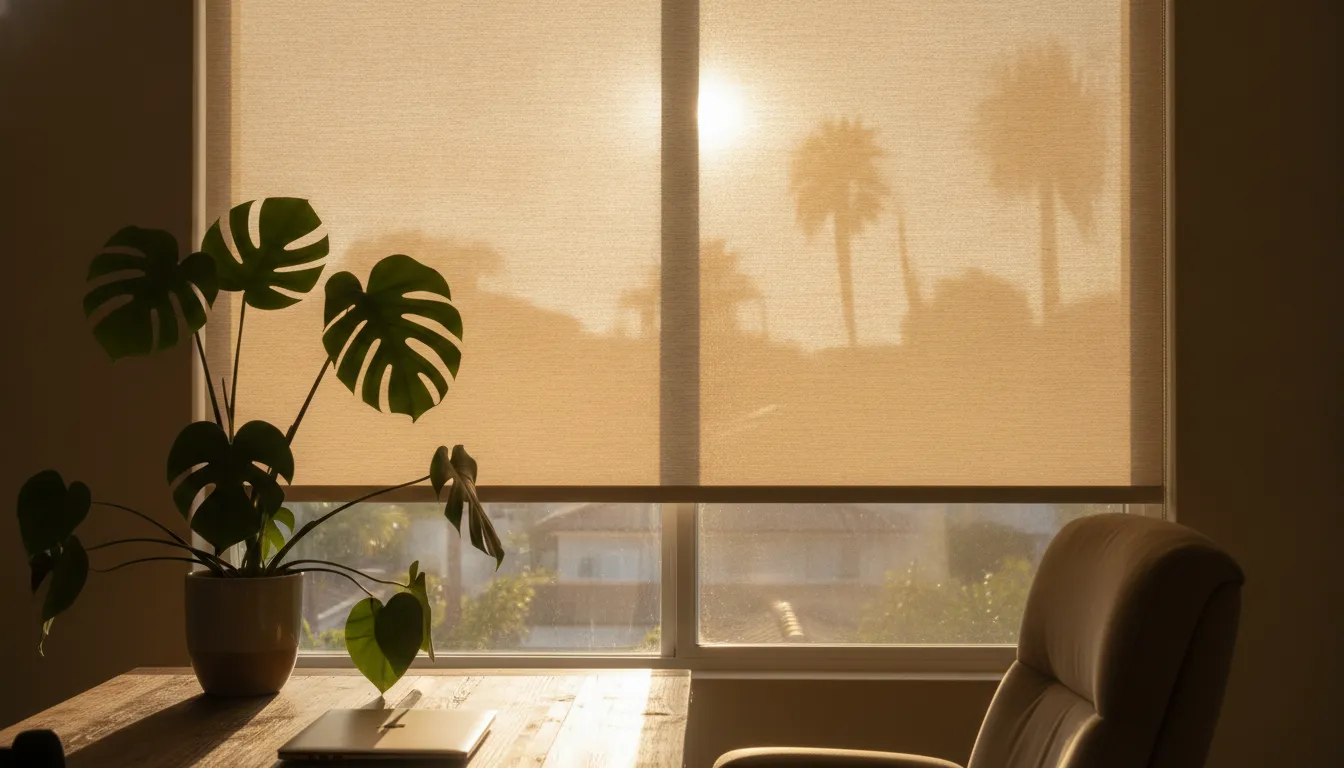
When the outdoors is brighter than the room, a screen-like solar fabric may make it easier to see out than in. That can be useful for a west-facing living room or office where you want to keep some view without facing direct glare. The result still depends on the fabric’s openness, color, window location, and the distance between the glass and nearby observers. Privacy is one of several factors to compare alongside appearance, light control, and fit in the actual room. Openness and privacy should be evaluated together rather than treated as automatic outcomes of the product category.
Test the sample during the afternoon when the window is most difficult. Look toward the outside from the seating or desk area, then check the view toward the room from the sidewalk or neighboring property. This is more useful than assuming a particular fabric will perform identically in every west-facing opening.
Why nighttime privacy is different
After sunset, interior lighting reverses the contrast. People outside may see silhouettes, movement, or room activity through an open-weave shade. A tighter weave may screen more, but solar shades do not automatically provide dependable nighttime privacy. This limitation matters in bedrooms, street-facing rooms, and spaces used for evening entertaining. The specific fabric and complete shade design should be evaluated rather than relying on a general solar-shade label.
When a second layer makes sense
If you want daytime view-through and glare control but also need privacy after dark, layer the treatment. Keep the solar shade as the daytime screen, then close drapery or another privacy-focused treatment when the lights come on. This gives you separate control instead of asking one fabric to preserve the view and block every sightline.
Also keep privacy separate from heat performance. Solar shades may help manage incoming light, but Vineyard does not support a quantified heat-reduction or energy-savings claim without product specifications. For a west-facing window, review the sample in actual afternoon and evening lighting so the choice reflects how you use the room.
Does fit matter as much as fabric for west-facing windows?
Yes. A well-chosen fabric cannot fully solve a shade that leaves too much glass exposed, interferes with the window, or is difficult to operate when the afternoon sun arrives. For west-facing windows, coverage and daily function deserve the same attention as color, openness, and glare control.
Cover the glass, not just the frame
Start by looking at where sunlight enters the room. An inside mount keeps the shade within the window opening and gives a clean appearance, but the frame and operating hardware can leave small side gaps. Those gaps may allow bright bands of light around the fabric when the sun is low. An outside mount can cover more of the opening and may be a better fit when the goal is broader glare control. Provided the wall, trim, and nearby handles allow enough clearance.
The right choice depends on the window’s depth, trim, sill, and surrounding furniture. It also matters whether the shade must clear a crank, screen, sliding panel, or another treatment. These details are easy to overlook when measuring from a quick tape reading, yet they affect both coverage and everyday use.
Plan for smooth operation
Consider how often you will lower the shade, where the control will sit, and whether the window needs to remain accessible. A west-facing office may need the shade lowered before late-day glare reaches a monitor, while a living room may need flexible positioning for changing views. The shade should move without catching on trim or colliding with handles. Its bottom rail should also stop at a useful height rather than blocking more of the view than necessary.
Why professional measuring helps
Professional measuring accounts for the actual opening, mounting surface, hardware, and intended coverage. Vineyard offers free professional measuring, design guidance, and installation, with recommendations that consider window orientation and Southern California heat. The mobile showroom also lets you view samples in your own room lighting, where the fabric’s appearance and visibility are easier to judge than from a screen.
When you are ready to compare coverage, control, and installation details, request help choosing shades. You can also explore window coverings in Southern California for a broader view of custom options and professional support.
When should you layer solar shades or compare another treatment?
Stay with solar shades when the view and glare matter most
Keep solar shades as the primary treatment when your west-facing room is usable except for harsh afternoon glare, screen reflections, or overly bright light. Their woven fabric can soften the exposure while preserving some connection to the outdoors. Choose the openness and color in the actual room, because a more open fabric changes the balance between view and light control. Do not treat a solar shade as a guaranteed heat-reduction product; any thermal claim should be supported by specifications for the exact fabric and installation.
Layer when one treatment cannot cover the full day
Layering makes sense when you want daytime view-through but also need stronger privacy or darkness after sunset. A solar shade can handle the bright part of the afternoon, while an opaque roller shade, drapery, or another secondary layer provides additional control later. This approach is especially useful when the room serves several purposes. It avoids forcing one fabric to deliver both an open daytime view and complete nighttime coverage.
| Your priority | Consider first | Trade-off to review |
|---|---|---|
| View and daytime glare | Solar shade | More openness preserves more view but may allow more light. Heat performance requires product-specific support. |
| View by day, privacy at night | Solar shade with a second layer | Two treatments add cost, hardware, and operating decisions, but provide more flexible coverage. |
| Insulation and temperature comfort | Cellular or honeycomb shade | Generic roller shades and blinds block solar radiation but do not improve window thermal resistance. Review the exact construction and fit. |
| Adjustable light and architectural style | Shutters | Louvers provide control, but the fitted frame changes the window’s appearance and leaves less open view when closed. |
Compare cellular shades or shutters for a different priority
Cellular shades deserve a closer look when insulation is more important than preserving a broad view. Vineyard’s guide to insulated honeycomb blinds explains why their construction is a relevant alternative. DOE-sponsored research has examined cellular shades on north- and west-facing windows while monitoring cooling load. Room temperature, daylight, and glare, but study results should not be presented as a guarantee for every home.
Choose shutters when adjustable louvers, a durable fitted appearance, and control over light direction matter more than a screen-like view. Compare Vineyard’s custom shutters with the room’s furniture, trim, and sightlines. Vineyard’s recommendations account for window orientation and Southern California heat, so the practical choice can be based on the specific opening rather than a universal product winner.
Frequently Asked Questions
Are solar shades a good choice for west-facing windows?
They can be a strong fit when your main problems are intense afternoon glare, difficult screen viewing, and preserving a daytime view. The right fabric and openness level depend on how much light control and privacy you need. Solar shades can help manage the visual impact of sun, but do not assume they provide a specific amount of heat reduction without product specifications.
What openness factor should I choose for afternoon glare?
Openness describes how much the fabric allows you to see through it. A more open fabric generally preserves more of the outdoor view, while a tighter weave can provide more light control and daytime privacy. Because west-facing light changes throughout the afternoon, compare samples in your actual room instead of choosing by a label alone.
Will solar shades provide privacy at night?
Not automatically. Solar shades are often selected for daytime glare control and view-through, but interior lights can change the privacy balance after dark. If nighttime privacy matters, consider how the shade looks with the room illuminated and whether a second layer or another treatment is needed.
Are motorized solar shades useful for west-facing windows?
Motorization can make it easier to adjust shades as the afternoon sun moves, especially on large or hard-to-reach windows. It is an operating convenience, not a substitute for choosing the right fabric, openness, and fit. Your window size, controls, and daily routine should guide the decision.
How do I make sure solar shades fit correctly?
Start with accurate measurements and check the window frame, mounting depth, handles, and nearby trim. Professional measuring can reduce fit and installation problems. Vineyard Blind & Shutter offers free professional measuring and a mobile showroom so you can compare samples in your actual room lighting before choosing.