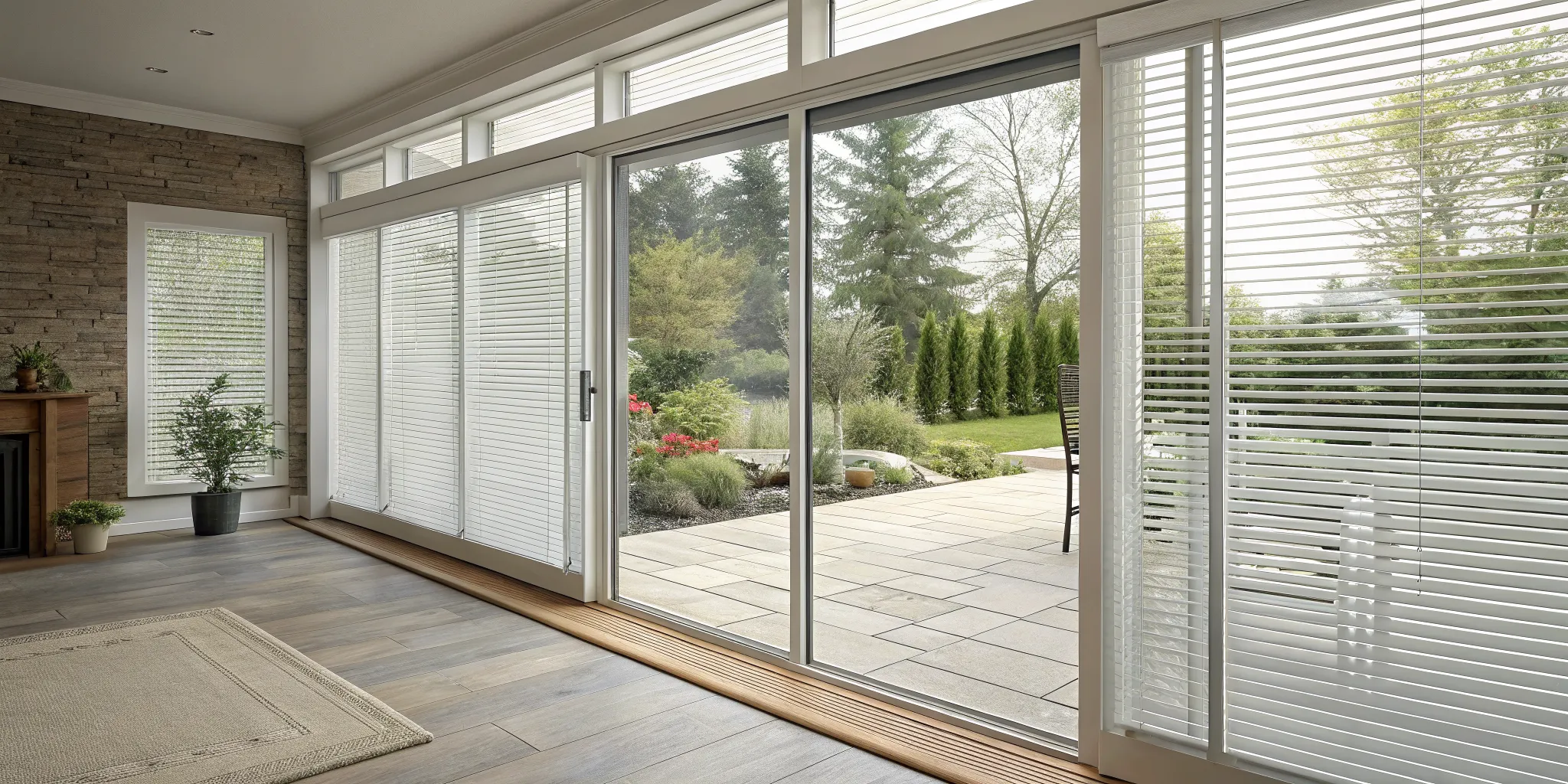
In Southern California, our sliding glass doors are more than just exits; they are gateways to our lifestyle. They lead to backyard barbecues in Riverside, patio gardens in San Diego, and sunny afternoons in Orange County. A feature this important needs a window covering that enhances its use, not hinders it. While you might be tempted to use vinyl horizontal blinds for sliding glass doors to match your other windows, it’s worth pausing to consider the practical side. Imagine having to stop and hoist a heavy, cumbersome blind every single time you want to step outside. It disrupts the easy flow that makes indoor-outdoor living so appealing. This guide explores why that choice can be a daily hassle and introduces you to better, more functional options that complement your home and your active lifestyle.
Key Takeaways
- Think Function, Not Just Uniformity: While matching all your window treatments is tempting, using horizontal blinds on a sliding door creates daily frustration. Their heavy weight and up-and-down operation are impractical for a high-traffic entryway.
- Choose a Treatment That Slides Sideways: The best options for a sliding door are those that open in the same direction it does. Consider vertical blinds, sliding panel tracks, or bypass shutters for effortless access and better functionality.
- A Custom Fit Is Essential for Large Doors: Standard-sized blinds will not provide the seamless coverage a sliding door needs. A professional, custom fit is crucial to eliminate light gaps, ensure privacy, and guarantee smooth, long-lasting operation.
What Are Vinyl Horizontal Blinds?
When you think of window blinds, the classic horizontal style is probably what comes to mind. These blinds feature slats that run from side to side, and you can tilt, raise, or lower them to manage light and privacy. Vinyl is a popular material for these blinds because it’s affordable and easy to clean. While horizontal blinds are a fantastic choice for most standard windows throughout your home, they present some unique challenges when it comes to covering a large opening like a sliding glass door. The very design that makes them perfect for a bedroom window can become a drawback for a door you use every day.
Horizontal vs. Vertical: What's the Difference?
The main difference is right in the name: horizontal blinds have slats that run side-to-side and operate up and down, while vertical blinds have slats that hang top-to-bottom and move from side to side. For a sliding glass door, this operational difference is everything. Vertical blinds are designed to move in the same direction as your door, allowing you to easily open them just enough to walk through. A single horizontal blind wide enough to cover a sliding door would be incredibly heavy and cumbersome to lift every time you wanted to go outside. It would also create a large, obstructive stack at the top of your door frame when fully raised.
A Look at Materials and Quality
Let’s be honest: vinyl blinds sometimes get a bad rap. We’ve all seen the flimsy, off-the-shelf versions that clack in the breeze, feel cheap, and seem to break if you look at them the wrong way. However, quality makes a world of difference. High-quality, custom-fit vinyl is a completely different product. It’s a durable, water-resistant, and budget-friendly material, which makes it an excellent option for high-traffic areas like patio doors. When used for vertical blinds, modern vinyl is sturdy, quiet, and comes in a wide range of textures and colors that can beautifully complement your home’s decor without sacrificing performance.
Can You Use Horizontal Blinds on a Sliding Glass Door?
So, can you put horizontal blinds on a sliding glass door? The short answer is yes, you technically can. But the more important question is, should you? While it might seem like a good way to create a cohesive look by matching the window treatments throughout your home, using horizontal blinds on a large, functional doorway comes with some serious practical challenges. For homeowners in San Diego, Riverside, and Orange counties, where indoor-outdoor living is a way of life, a sliding door needs to be effortless to use. Anything less just gets in the way of enjoying your patio or backyard.
The main issues with horizontal blinds on sliders boil down to three things: their immense size, their heavy weight, and their clunky operation in a high-traffic area. Before you commit to this setup, it’s important to understand why it often leads to frustration and regret. While you might love the crisp, clean look of your faux wood blinds on standard windows, they just don't translate well to the unique demands of a sliding glass door. They weren't designed for that kind of application. Let’s break down exactly why this popular window covering isn't the best choice for your patio entrance and explore some alternatives that work much better.
The Challenge with Sizing and Coverage
The first hurdle is sheer size. A standard sliding glass door is wide, and covering it with a single horizontal blind is nearly impossible. A blind that large would be incredibly heavy and unwieldy. Even if you could find one, imagine trying to lift it; the mechanism would be under constant strain. Plus, when you raise it, the stack of compressed slats at the top would be so thick it would block a significant portion of your doorway and view. The alternative, using two or three separate blinds side-by-side, creates unsightly gaps that let in light and compromise your privacy.
Why Weight and Operation Are an Issue
Let’s talk more about that weight. Horizontal blinds become exponentially heavier as they get wider. This weight makes them cumbersome and difficult to operate. Lifting and lowering them isn't a quick, one-handed task; it’s a daily workout that puts a huge amount of stress on the cords and internal mechanisms. This often leads to premature wear, fraying, and eventual breakage. A sliding door is one of the most used entryways in a home. You need a window treatment that’s smooth and effortless, not one you have to fight with every time you want to step outside. Vertical blinds, by contrast, are designed to glide easily from side to side.
Limitations on Light Control and Privacy
Horizontal blinds create an all-or-nothing situation on a sliding door. To walk through, you have to raise the entire blind, completely exposing your room to the outside world and letting in the full force of the sun. There’s no in-between. This is a major drawback for privacy. Furthermore, the long, dangling slats are prone to clanking against the door frame or getting caught on people as they pass by, which can lead to bent or broken slats. Unlike the elegant light filtering you get with plantation shutters, horizontal blinds on a slider just don't offer the same level of sophisticated control or durability.
Myths About Horizontal Blinds for Sliding Doors
When it comes to window treatments, horizontal blinds are a classic choice for good reason. They’re versatile, familiar, and work beautifully on most standard windows. But when you try to apply that same logic to a large, functional opening like a sliding glass door, some common beliefs about them start to fall apart. Let's clear the air and look at a few myths surrounding the use of horizontal blinds on sliding doors, so you can make a choice you’ll be happy with for years to come.
Myth #1: "They're durable enough for a busy doorway."
It’s easy to assume that if blinds are durable on a window, they’ll be just as tough on a door. The reality is that a sliding glass door isn't just a big window; it's a high-traffic entryway. A single horizontal blind wide enough to cover it would be incredibly heavy and awkward. Imagine having to lift that entire weight every time you want to let the dog out or step onto the patio. This constant, heavy lifting puts immense strain on the cords and lifting mechanisms, leading to frequent repairs and a shorter lifespan. For a busy doorway, you need a solution that moves with the door, like vertical blinds, which are designed for easy side-to-side operation.
Myth #2: "They offer great privacy and light control."
While horizontal blinds give you decent light control on a standard window, they fall short on a sliding glass door. To cover the wide expanse, the slats themselves have to be very long, which can cause them to sag in the middle over time. This creates gaps that let in unwanted light and compromise your privacy. Cheaper vinyl options are especially known for this, often feeling flimsy and failing to close tightly. For homeowners in Riverside County and Orange County who value their privacy, a more robust solution like plantation shutters offers superior light-blocking capabilities and a more secure, polished look without the gaps.
Myth #3: "They're simple to clean and maintain."
Cleaning horizontal blinds is already a task many of us put off, and it only gets more challenging on a larger scale. A horizontal blind for a sliding door has a massive surface area, meaning more slats to collect dust, dirt, and pet hair. Wiping down each one individually can become a major chore. Beyond cleaning, proper function depends on a perfect installation, which is tricky for such a large and heavy treatment. Getting the measurements just right and ensuring the blind operates smoothly isn't a simple DIY project. That’s why our mobile services are so helpful, as we bring the expertise right to your home in San Diego County to ensure a flawless fit from the start.
Horizontal Blinds on Sliding Doors: The Pros and Cons
When you’re creating a cohesive look in your home, it’s natural to want all your window coverings to match. If you have horizontal blinds throughout your house, you might be wondering if you can use them on your sliding glass door, too. The short answer is yes, it’s technically possible. However, it’s not always the most practical solution.
Horizontal blinds are designed to lift up and down, while your sliding door moves from side to side. This fundamental difference in operation creates some challenges. Before you commit to this style for your patio door, it’s important to weigh the benefits against the drawbacks. Let’s walk through the pros and cons to help you decide if this is the right choice for your home in Orange, San Diego, or Riverside County.
Pros
The biggest advantage of using horizontal blinds on a sliding door is achieving a uniform aesthetic. If you love the clean, classic look of blinds and have them in the same room, using them on the door can tie the whole space together beautifully. To make it work, you’ll need to choose the right kind. Opting for wider, 2.5-inch slats can offer better light control and a more substantial look. A reinforced headrail is also essential to support the weight of such a large window covering. Because the measurements must be exact for the blind to function correctly, this is a job best left to professionals who can ensure a perfect custom fit and secure installation.
Cons
Frankly, the list of cons is a bit longer. The primary issue is functionality. Lifting a single, heavy horizontal blind every time you want to step outside is inconvenient and puts a lot of strain on the cords. Alternatively, installing two or more separate blinds side-by-side creates light gaps and a cluttered look. Durability is another concern. Sliding doors are high-traffic areas, and the constant raising and lowering can cause wear and tear, leading to broken slats or malfunctioning cords. For this reason, most experts agree that vertical blinds are the clear winner for sliding doors, as they are designed to open in the same direction as the door, offering effortless access.
Why Vertical Blinds Are a Better Fit for Sliding Doors
When it comes to dressing a sliding glass door, the right window treatment makes all the difference in both function and style. While you technically can use horizontal blinds, it’s often not the most practical choice. Think about it: a sliding door moves side-to-side, so it makes sense to have a window covering that does the same. This is where vertical blinds truly shine.
Vertical blinds are designed to complement the way you use your sliding door. They offer a much smoother experience for daily use, providing effortless access to your patio or backyard. Beyond just function, they give you superior control over light and privacy on a large scale, something that can be tricky with other options. Plus, modern vertical blinds have come a long way from the clunky plastic of the past. With new materials and stylish designs, they are built to last and look great while doing it, making them a smarter, more elegant solution for your home.
Effortless Access and Operation
The biggest advantage of vertical blinds for a sliding door is their intuitive operation. They open from side to side, perfectly matching the door's own movement. This means you can easily part them just enough to slip outside without having to raise an entire, heavy blind. For busy households in Riverside County where the sliding door is a main entry point to the backyard, this easy access is a game-changer. You won't have to wrestle with a cumbersome cord or worry about a heavy stack of slats blocking your way. The smooth glide of vertical blinds makes them a seamless part of your daily routine.
Better Light Control and Privacy
Sliding glass doors let in a wonderful amount of natural light, but sometimes it’s too much of a good thing. Vertical blinds offer fantastic flexibility for managing light and privacy. You can tilt the slats to redirect harsh sun away from your TV screen or furniture while still keeping the room bright and airy. When you need complete privacy, especially in the evening, the slats close tightly to cover the entire glass surface. This level of nuanced control is difficult to achieve with a single large horizontal blind. For homeowners in Orange County and San Diego County, this means you can enjoy your beautiful views without sacrificing comfort or privacy.
Built for Durability and Easy Care
Let's be honest, the area around a sliding door sees a lot of action, from kids and pets to general foot traffic. Durability is key. Modern vertical blinds have shed their outdated reputation and are now available in a range of stylish and resilient materials, including fabric and vinyl, that are built to withstand daily use. These materials are also incredibly easy to clean; a quick wipe-down is usually all it takes to handle dust or fingerprints. And if a single slat gets damaged, it’s often possible to replace just that one piece instead of the entire window covering, making them a cost-effective and practical long-term solution.
Vertical vs. Horizontal: A Quick Comparison
When you put them head-to-head for a sliding door, the winner becomes clear. A single, large horizontal blind would be incredibly heavy and difficult to lift every time you want to open the door. When it is raised, the stacked slats create a bulky block at the top of the doorframe, obstructing your view. In contrast, vertical blinds are designed for this exact application. They part easily to the side, stacking neatly out of the way and preserving your access and view. While horizontal blinds are a great fit for standard windows, vertical blinds are simply the more practical, functional, and user-friendly choice for sliding doors.
Your Best Options for Sliding Glass Doors
Now that we've covered why horizontal blinds aren't the best match for sliding glass doors, let's talk about what does work. Your sliding door is a major feature in your room, connecting your indoor and outdoor living spaces. The right window treatment can make all the difference in both style and function. You need something that allows for easy access, gives you the privacy and light control you want, and holds up to daily use, especially in a busy household. Luckily, there are several fantastic options that are specifically designed to handle the unique demands of a sliding door.
Choosing the right covering isn't just about aesthetics; it's about practicality. Think about how often you use the door. Is it a high-traffic area leading to a patio? Do you need to block out the strong Southern California sun in the afternoon? Or are you looking for something that adds a layer of insulation? The best options move with your door, not against it. From classic blinds to elegant shutters, we'll walk through the top choices to help you find the perfect fit for your home. We'll explore everything from the timeless appeal of vertical blinds to the modern look of panel tracks, ensuring you have all the information you need to make a confident decision for your space in San Diego, Riverside, or Orange County.
Vertical Blinds
When you think of coverings for sliding doors, vertical blinds are probably the first thing that comes to mind, and for good reason. They are the classic, go-to solution because their side-to-side operation perfectly matches the movement of a sliding door, making it effortless to walk in and out. The slats can be tilted to precisely manage light and privacy, or drawn completely to one side for an unobstructed view. Available in a wide variety of materials, from durable vinyl to soft fabrics, vertical blinds are a versatile and budget-friendly choice. They offer a practical and clean look that works well in any room, providing reliable function for high-traffic doorways.
Plantation Shutters
For a truly timeless and upscale look, consider plantation shutters. These beautiful shutters bring a touch of architectural elegance to any space and are incredibly durable. For sliding doors, they are typically installed on a track system that allows them to either fold back accordion-style (bi-fold) or slide past one another (bypass). This gives you easy access to your door while maintaining a sophisticated appearance. Plantation shutters offer superior light control and privacy, and their solid construction provides excellent insulation, helping to keep your home cooler. While they are a bigger investment upfront, their durability and classic style can even add to your home's resale value.
Panel Track Blinds
If you love a clean, contemporary aesthetic, panel track blinds are an excellent modern alternative to vertical blinds. They feature wide, overlapping fabric panels that glide smoothly along a track, creating a sleek and sophisticated look. Think of them as a stylish, updated version of vertical blinds. Because the panels are so wide, they are perfect for large glass doors and can even be used as a room divider. When open, the panels stack neatly to the side, preserving your view. When closed, they offer complete privacy and a beautiful, uniform appearance. Panel track shades come in many different fabrics, colors, and textures, allowing you to make a bold design statement.
Cellular Shades
Cellular shades, also known as honeycomb shades, are a fantastic option if energy efficiency is a top priority. Their unique honeycomb-shaped pockets trap air, creating a layer of insulation that helps regulate your home's temperature and can lower your energy bills. For sliding glass doors, these shades are typically mounted to run vertically, so they open from side to side just like your door. They are lightweight, easy to operate, and offer a soft, diffused light when closed. Available in a range of opacities from light-filtering to blackout, cellular shades give you complete control over your environment while providing a clean, modern look.
How to Choose the Right Blinds for Your Sliding Door
Choosing the right window treatment for a sliding glass door can feel a bit tricky. It’s a high-traffic area that needs to be both functional and beautiful. You want something that gives you privacy and light control without getting in the way every time you want to step outside. Let's walk through the key things to consider so you can find a solution that you’ll love for years to come.
Proper Sizing and Coverage
Sliding glass doors are big, and getting the measurements just right is the first step to a great look. An ill-fitting blind can leave awkward gaps, compromising your privacy and letting in unwanted light. While it might be tempting to grab a standard size from a big-box store, these rarely provide the seamless coverage you need. For a polished finish, custom-fit blinds are the way to go. A professional measurement ensures your blinds will hang perfectly and operate smoothly, which is especially important for the unique dimensions of a sliding door.
Moisture and UV Protection
Your sliding door is your home’s gateway to the outdoors, which means your blinds will be exposed to more humidity and direct sunlight. Choosing the right material is essential for longevity. Materials like vinyl and faux wood are fantastic choices because they are durable and resistant to moisture, so you won't have to worry about warping or damage. In sunny San Diego, Riverside, and Orange County, UV protection is also a major plus. The right window treatment can shield your furniture, floors, and artwork from fading, keeping your home’s interior looking its best.
Smooth and Easy Operation
Think about how often you use your sliding door. Daily, right? Your blinds need to be just as easy to operate. You want to be able to open and close them effortlessly, without a struggle. This is where options designed for side-to-side movement, like vertical blinds, truly shine. They glide along a track, allowing you to quickly access the door with a simple push. Treatments that require you to lift heavy slats up and down can quickly become a daily frustration, so prioritizing smooth operation is key to long-term happiness.
Style and Color Choices
Functionality is important, but you don’t have to sacrifice style. Modern window treatments for sliding doors come in a huge array of colors, textures, and materials to complement any decor. Whether your home has a classic, modern, or coastal vibe, there’s a perfect match waiting for you. You can go for the clean, crisp lines of panel tracks, the timeless elegance of plantation shutters, or the soft, diffused light of cellular shades. The goal is to find a treatment that not only works perfectly but also enhances the overall look and feel of your space.
A Quick Guide to Installing Sliding Door Blinds
If you’re still set on using horizontal blinds for your sliding door, the installation process is where things get tricky. Unlike a standard window, a sliding door has moving parts, a large frame, and a handle that can get in the way. Getting the placement and measurements just right is the key to making it work. While a DIY approach is possible, this is one of those projects where a professional touch makes a world of difference.
The two most important decisions you'll make are choosing the mount type and getting precise measurements. An incorrect measurement can leave you with blinds that don’t cover the glass properly or, worse, prevent the door from opening. Our team provides mobile services throughout Riverside, Orange, and San Diego counties to handle the measuring and installation for you, ensuring a perfect fit every time.
Inside or Outside Mount: Which Is Best?
For a sliding glass door, an outside mount is almost always the best choice. An inside mount fits the blinds within the door frame, but there’s rarely enough depth to accommodate the blinds without obstructing the door’s path. An outside mount involves installing the blinds on the wall above and outside the door frame. This allows the blinds to clear the handle and frame when raised. You will likely need to hang two separate blinds side-by-side to cover the entire span of the door. This requires careful alignment to ensure they look like a single, cohesive unit and operate smoothly without interfering with each other.
How to Measure Your Sliding Door for a Perfect Fit
Accurate measurements are non-negotiable for a clean, functional installation. For an outside mount, start by measuring the width of the door frame, including any trim. Add at least three inches to each side to ensure full coverage and prevent light from seeping in around the edges. Next, measure the height from the floor to at least three inches above the top of the door frame. This extra height provides enough space to mount the headrail so the blinds can be pulled up completely, clearing the doorway for easy access. Because precision is so critical, we always recommend a professional consultation. You can contact us to schedule a free in-home estimate.
Find Your Perfect Fit with Vineyard Blind & Shutter
Choosing the right window coverings for a sliding glass door can feel like a puzzle, especially when you’re trying to balance style, function, and durability. While horizontal blinds might seem like a universal solution, they often create more problems than they solve on a large, high-traffic sliding door. The weight makes them difficult to operate, and their design just doesn’t match the side-to-side motion of the door. This is where getting expert advice makes all the difference.
At Vineyard Blind & Shutter, we help homeowners across Orange County, Riverside County, and San Diego County find solutions that truly work. Our process starts with understanding your needs. Instead of forcing a one-size-fits-all product, we provide a free in-home consultation to measure your space and discuss your options. We know that for sliding doors, vertical blinds are often the most practical choice, but they aren't the only one. We can also show you beautiful and functional alternatives like elegant Plantation Shutters or modern panel track shades.
Our team handles everything from precise measurements to professional installation, ensuring your new window treatments operate smoothly and look seamless. We’re committed to finding a custom fit that you’ll love for years to come. If you’re ready to find a beautiful and practical solution for your sliding glass door, let’s schedule a time to talk.
Related Articles
- 7 Best Contemporary Window Treatments for Sliding Doors
- Vertical Blinds For Sliding Glass Doors - Vineyard Blinds
- 5 Stylish Sliding Glass Door Covering Ideas
Frequently Asked Questions
So, is it ever a good idea to use horizontal blinds on a sliding glass door? While you technically can, it's rarely the most practical choice. The main issue is that horizontal blinds are heavy and have to be lifted completely to use the door, which is inconvenient for a high-traffic area. This constant strain often leads to damage and a shorter lifespan for the blinds, making it a solution that can cause more frustration than it's worth.
What makes vertical blinds a better choice for sliding doors? The biggest advantage is their operation. Vertical blinds move from side to side, just like your door, so you can easily part them to walk through without a fuss. This makes them much more user-friendly for daily access to your patio or backyard. They also offer excellent, nuanced control over light and privacy on such a large glass surface.
I want all the window coverings in my room to match. What should I do for the sliding door? This is a common goal, and you have great options. You can choose a vertical blind in a color or material that closely complements your existing horizontal blinds. Another approach is to select a different type of treatment, like elegant plantation shutters or modern panel track shades, in a coordinating color to create a sophisticated, layered look instead of a perfect match.
Besides vertical blinds, what are some other stylish options for a sliding door? Plantation shutters are a beautiful, durable choice that adds architectural character and can be installed on a track to slide or fold open. For a more modern look, panel track blinds offer wide fabric panels that glide smoothly for a sleek effect. If energy efficiency is your priority, cellular shades that operate vertically are a fantastic option for insulation.
Why is a custom fit so important for sliding door window treatments? A sliding door is a large, functional part of your home, not just a standard window. A custom fit ensures there are no awkward light gaps and that the treatment operates smoothly without hitting the door handle or frame. Professional measuring and installation prevent costly mistakes and guarantee your new window coverings work perfectly from day one.