French doors bring sunlight, character, and an easy connection to a patio or another room, but covering their glass is rarely simple. A treatment that looks perfect on a standard window may block the lever, swing against the glass, or prevent the door from opening fully. The best window treatments for French doors are measured for the exact door, mounted securely, and selected around how your household actually uses the space.
Schedule your free in-home consultation for a precise French door fit.
What makes French doors challenging to cover?
French doors combine narrow mounting surfaces, prominent handles, moving panels, and frequently used walkways. A suitable covering must clear the lever, remain stable as the door swings, and provide privacy without interfering with the latch. Exact measuring matters because even a small projection or alignment error can affect daily operation.
Handles, locks, and limited mounting depth
The handle is usually the first constraint. Many French door levers sit close to the glass and sweep across part of it when turned. A deep headrail, thick shutter frame, or bulky fabric stack can make the handle uncomfortable or impossible to use. The lock, hinges, raised trim, and decorative molding also reduce the available mounting space.
Before selecting a treatment, measure the distance from the glass or trim to the nearest point of the handle. Also note the handle's full turning path. This projection and clearance information determines whether a low-profile shade will work or whether a custom shutter needs a specialty cutout.
Movement, alignment, and stability
A French door covering travels every time the door opens. An unsecured blind or shade can sway, tap the glass, or become caught between the door and frame. Hold-down brackets or other secure bottom attachments keep many shades stable. A professional installer can position these components without compromising normal door operation.
Pairs of doors create another fit issue: both treatments should align when viewed together. Headrails, bottom rails, louver lines, and fabric patterns look best when their heights match. Custom fitting and measuring help create that balanced appearance while accounting for small differences between the two doors.
- Measure the moving parts: Record the lever's rotation, lock location, hinge side, and door swing.
- Check every mounting surface: Raised molding and narrow trim can change which brackets will fit.
- Plan for stable operation: Choose secure mounting and appropriate hold-down hardware for frequently used doors.
- Confirm the open position: Make sure the treatment will not strike a wall, cabinet, or nearby furniture.
Plantation shutters provide a tailored solution
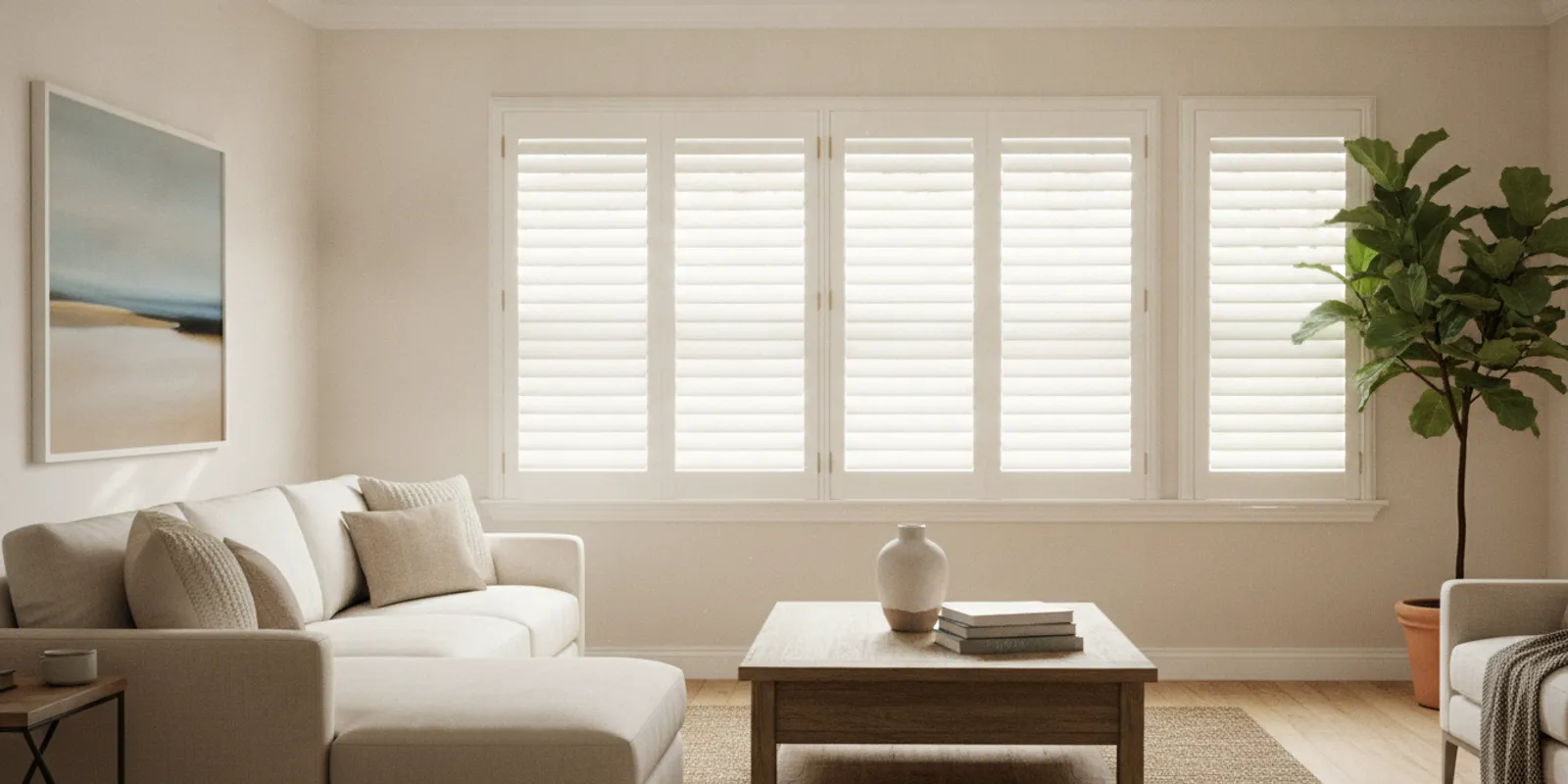
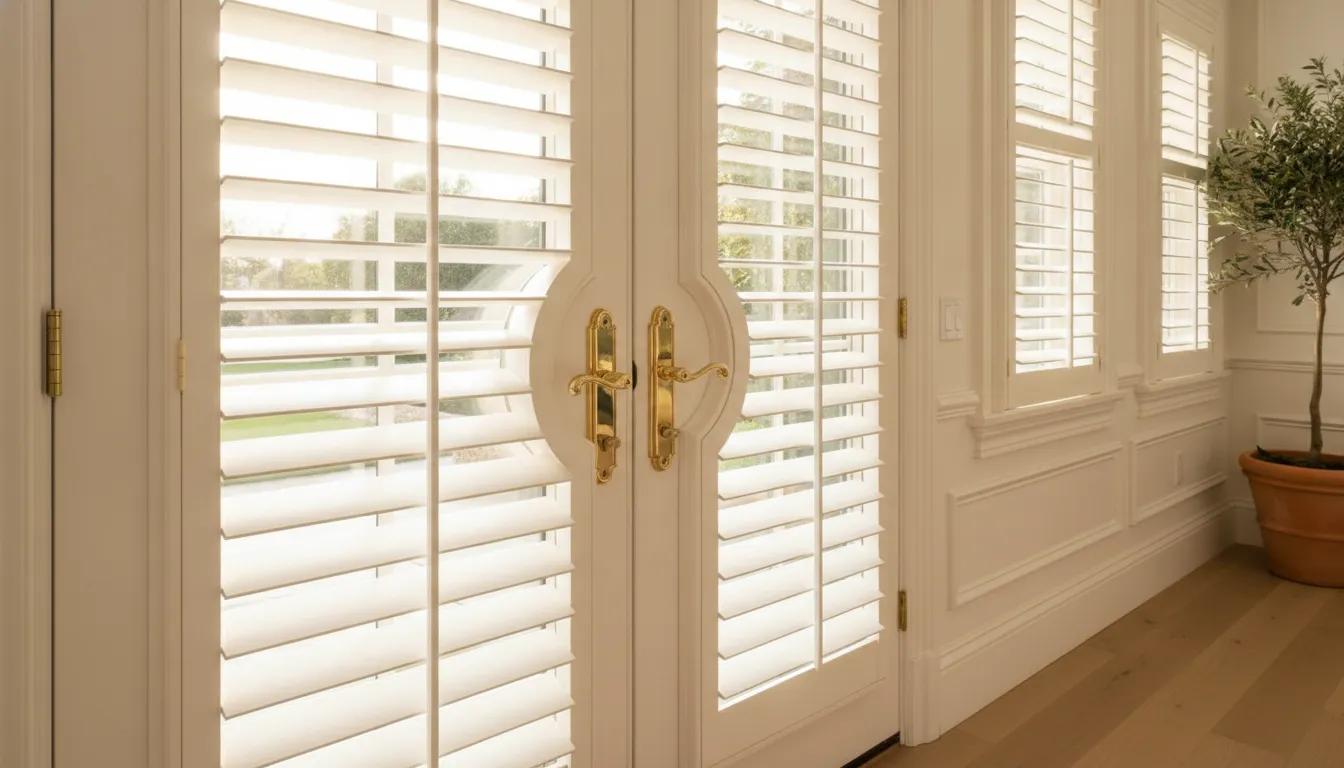
Plantation shutters are an excellent French door option when you want a durable, architectural finish. They mount directly to each door, remain stable during movement, and use adjustable louvers for privacy and light control. Custom frames and handle cutouts solve fit problems that off-the-shelf coverings often cannot address.
Specialty shapes and handle cutouts
French door shutters can be made around distinctive glass shapes, trim profiles, locks, and handles. A specialty cutout leaves functional space around the lever while maintaining a deliberate, finished look. Depending on the hardware and preferred design, that opening may follow a rounded French cut or use a rectangular shape with clean edges.
The details require accurate measurements. A cutout placed too close to the lever may still restrict movement, while one that is unnecessarily large can reduce privacy and look unbalanced. Vineyard Blind & Shutter measures the door, evaluates its hardware, and custom fits the shutter so the handle remains comfortable to use.
Polycore and Lexwood options
Material choice affects appearance, weight, upkeep, and how the shutter feels in the room. Polycore shutters offer a crisp, durable option for homeowners who want an easy-care surface. Lexwood provides the warmth and character associated with wood. Both can be tailored to French doors, including the cutouts and dimensions the installation requires.
Explore Vineyard's custom shutter options if you prefer a treatment that looks integrated with the door. During an in-home appointment, you can compare finishes beside your flooring, wall color, trim. And door hardware instead of trying to judge those details from a small online image.
Which shades work best on French doors?
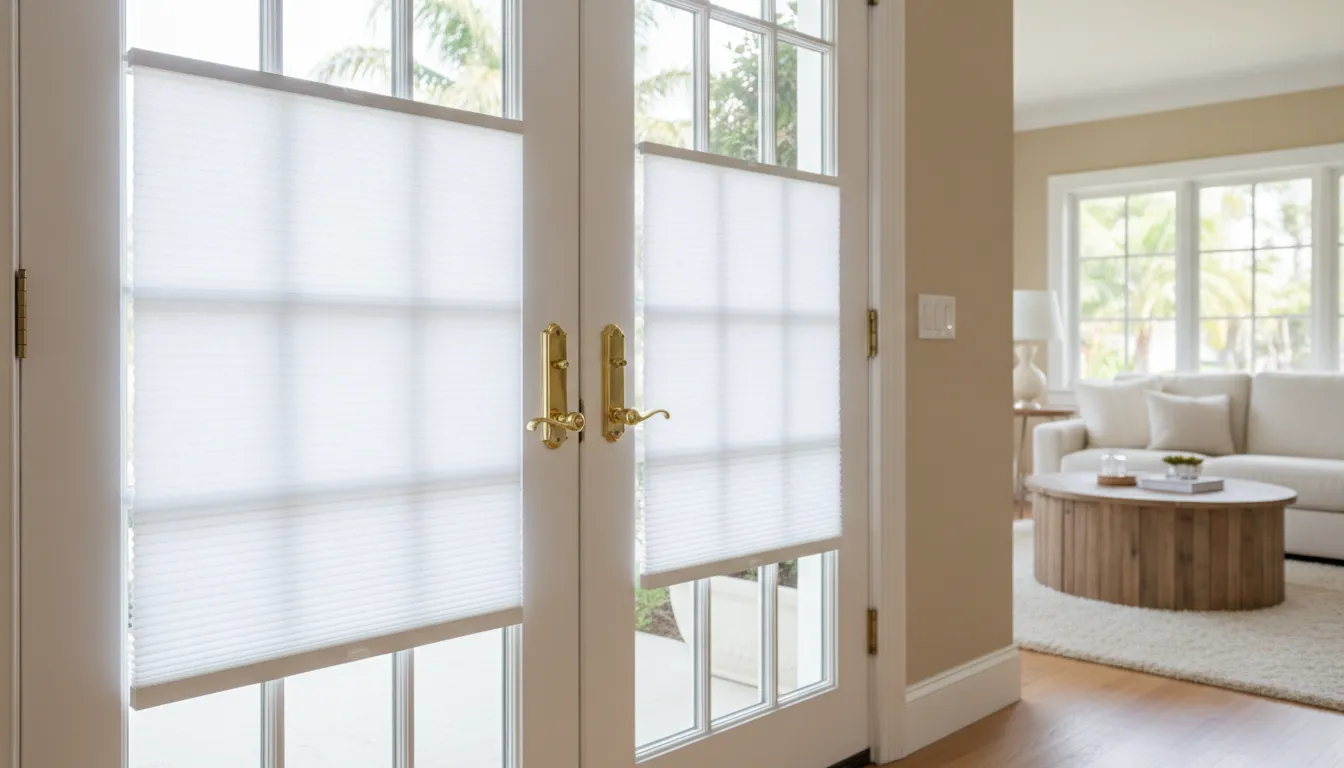
Cellular, roller, and carefully designed Roman shades can all work well on French doors. The right choice has a slim profile, clears the handle, and stays secured near the bottom when the door moves. Fabric opacity, stack height, control style, and mounting hardware should match the room's privacy and light needs.
Cellular shades for a slim, practical fit
Cellular shades are especially useful where handle clearance is tight. Their compact profile sits neatly against the door, and the fabric folds into a relatively small stack when raised. The honeycomb construction also creates an insulating air pocket, which can improve comfort near glass exposed to strong Southern California sun.
Choose the fabric based on the room. Light-filtering cellular material softens glare while preserving daytime brightness. A more opaque option provides stronger privacy for a bedroom, home office, or door facing a nearby property. Hold-down brackets can secure the bottom rail so the shade does not swing each time someone steps outside.
Control and safety considerations
A cordless or otherwise streamlined control avoids long, loose cords near the handle and walkway. Placement matters as much as control type: the shade must remain easy to raise without forcing your hand behind the lever. Vineyard's collection of custom shades for changing light provides options that can be evaluated against your actual door and room.
For paired doors, decide whether both shades will usually operate together or independently. Independent operation can be convenient when one door is used daily and the other remains latched. Matching fabrics and aligned mounting heights preserve a unified look even when the shades are set at different positions.
Roller and Roman shades balance style and function
Roller shades offer a clean, low-profile design, while Roman shades add softer folds and more decorative presence. Both can suit French doors when custom sized and properly secured. Homeowners should compare fabric thickness, raised stack size, handle clearance, and how often the door moves before choosing between them.
Why roller shades suit busy doors
A roller shade uses a simple sheet of fabric that rolls onto a compact tube. That straightforward construction makes it a strong candidate for doors used throughout the day. With the correct mounting position and bottom retention, it stays close to the glass, rolls up cleanly, and avoids adding visual bulk to the door.
Light-filtering roller fabric is useful when glare is the main concern but you still want natural light. More opaque fabric works where nighttime privacy matters. Consider how the selected color looks from both inside and outside because a French door shade is highly visible from either side of the glass.
Where Roman shades fit best
Roman shades introduce fabric folds that can make a dining room, bedroom, or traditional living area feel more finished. However, the fabric stack is thicker than a typical roller or cellular shade. The installer must confirm that the raised shade and mounting hardware will clear the handle and any nearby wall when the door opens.
A Roman shade works best when its decorative effect is important and the door has sufficient clearance. It may be less practical on a door that children, pets, or guests use constantly. Homeowners comparing a broader range of styles can review this guide to types of window coverings before narrowing the choice during an in-home consultation.
Bring the mobile showroom to your home and compare French door options in your own light.
Compare window treatments for French doors
The best treatment depends on clearance, traffic, desired privacy, and the room's design. Shutters deliver a built-in appearance, cellular shades keep a slim profile, roller shades feel streamlined, Roman shades add softness, and curtains create drama. Comparing practical fit before choosing a style prevents daily frustration after installation.
| Treatment | French door strength | Fit issue to check | Best suited for |
|---|---|---|---|
| Plantation shutters | Stable, tailored, adjustable louvers | Custom handle cutout and frame depth | Architectural finish and durability |
| Cellular shades | Slim profile and insulating pockets | Bottom retention and handle clearance | Comfort, privacy, and compact operation |
| Roller shades | Clean design with a compact roll | Tube projection and fabric stability | Modern rooms and frequently used doors |
| Roman shades | Soft, decorative fabric folds | Raised stack thickness | Rooms where fabric style is a priority |
| Curtains | Full-height softness and layering | Door swing, floor space, and fabric control | Less-used doors with wall space nearby |
Match the treatment to the room
Start with the room's most important need. In a bright family room, glare control and easy operation may favor a roller or cellular shade. For a formal dining room, shutters or a carefully fitted Roman shade may better support the decor. For a bedroom, prioritize nighttime privacy and complete, reliable coverage.
Also consider what sits beside the doors. A deep curtain rod or projecting treatment may collide with built-ins, furniture, or a return wall. If French doors lead to a patio, compare them with other practical treatments for patio doors so adjacent openings feel coordinated without forcing every window to use the same product.
When do curtains make sense for French doors?
Curtains make sense when you want softness, full-height coverage, or layered light control and have enough wall space to clear the doorway. They are less convenient on frequently used French doors because fabric can obstruct handles, catch in the closing door, or require constant repositioning before anyone can pass through.
Wall-mounted curtains versus door-mounted panels
Wall-mounted curtains can frame the full pair of doors and make the opening appear larger. They work best when there is enough room on both sides for the panels to stack completely away from the active doorway. A rod placed too close to the opening leaves fabric in the traffic path and can limit how far the doors swing.
Door-mounted fabric panels use rods at the top and bottom to keep fabric against the glass. This approach can provide a traditional look and reduce swinging, but it also adds hardware to each door and may complicate cleaning or access. The panel must be shaped and tensioned carefully so it does not interfere with the handle.
Common curtain fit problems
Long curtains can collect dust near the threshold, move in outdoor airflow, or become caught as the door closes. Heavy fabric may also make a compact room feel crowded. Before choosing curtains, test the full swing of both doors and reserve clear space for the fabric when open. If that space is unavailable, a door-mounted shade or shutter is usually more practical.
Custom measuring turns a good choice into a reliable fit
Custom measuring confirms more than the width and height of the glass. It accounts for handles, locks, trim, hinge direction, projection, mounting depth, and the door's complete swing. These details allow the selected treatment to look balanced, operate smoothly, and remain secure through the repeated movement French doors receive.
What a professional fit assessment covers
A fit assessment begins with how each door is used. The specialist identifies the active door, checks whether the pair opens inward or outward, and notes obstacles around the opening. Measurements then define the usable mounting area and necessary clearances. For shutters, this process also guides the exact size and position of specialty shapes or handle cutouts.
Samples should be viewed in the room where they will be installed. Natural light can change fabric color and opacity throughout the day, while nearby trim and hardware affect which finishes feel cohesive. Vineyard Blind & Shutter brings options to the home, provides custom fitting and measuring, and serves homeowners in San Diego County, Riverside County, and Orange County.
Prepare for your in-home consultation
Before the appointment, note when glare or privacy is most important and which door gets the most traffic. Identify any current problems, such as a handle that hits the existing blind or fabric that moves when the door opens. These details help the specialist recommend a product that solves the actual issue rather than simply covering the glass.
It also helps to decide whether the French doors should match nearby windows exactly or coordinate through color and material. A thoughtful plan can use shutters on the moving doors and complementary shades elsewhere, creating a consistent room without sacrificing function at the doorway.
French door window treatment FAQs
French door projects raise recurring questions about handle clearance, stability, materials, and professional installation. The answers below explain the practical details homeowners should resolve before ordering. Because doors and hardware vary, final product dimensions and mounting decisions should always be based on measurements taken at the specific opening.
Can plantation shutters fit around French door handles?
Yes. Custom plantation shutters can include specialty handle cutouts shaped and positioned around the door's lever or knob. Accurate measuring is essential so the handle can rotate comfortably while the shutter still provides balanced coverage. Polycore and Lexwood shutter options can be evaluated for the door's dimensions, style, and daily use.
How do you stop a shade from swinging when the door opens?
Many French door shades can use hold-down brackets or other bottom retention hardware to keep the lower rail close to the door. Correct sizing and secure installation also reduce movement. The appropriate method depends on the shade design, door material, trim, and how frequently the door is opened.
Are cellular shades a good option for French doors?
Yes. Cellular shades have a slim profile that often fits well near French door handles, and their honeycomb construction adds an insulating air pocket at the glass. They can provide filtered light or stronger privacy depending on fabric selection. Bottom retention helps keep them stable on an active door.
Should both French doors use matching treatments?
Matching treatments usually create the cleanest appearance across a paired opening, especially when headrails, louvers, or folds align. The two coverings can still operate independently, which is useful when one door is active and the other stays latched. Custom measuring accounts for small dimensional differences while preserving visual balance.