
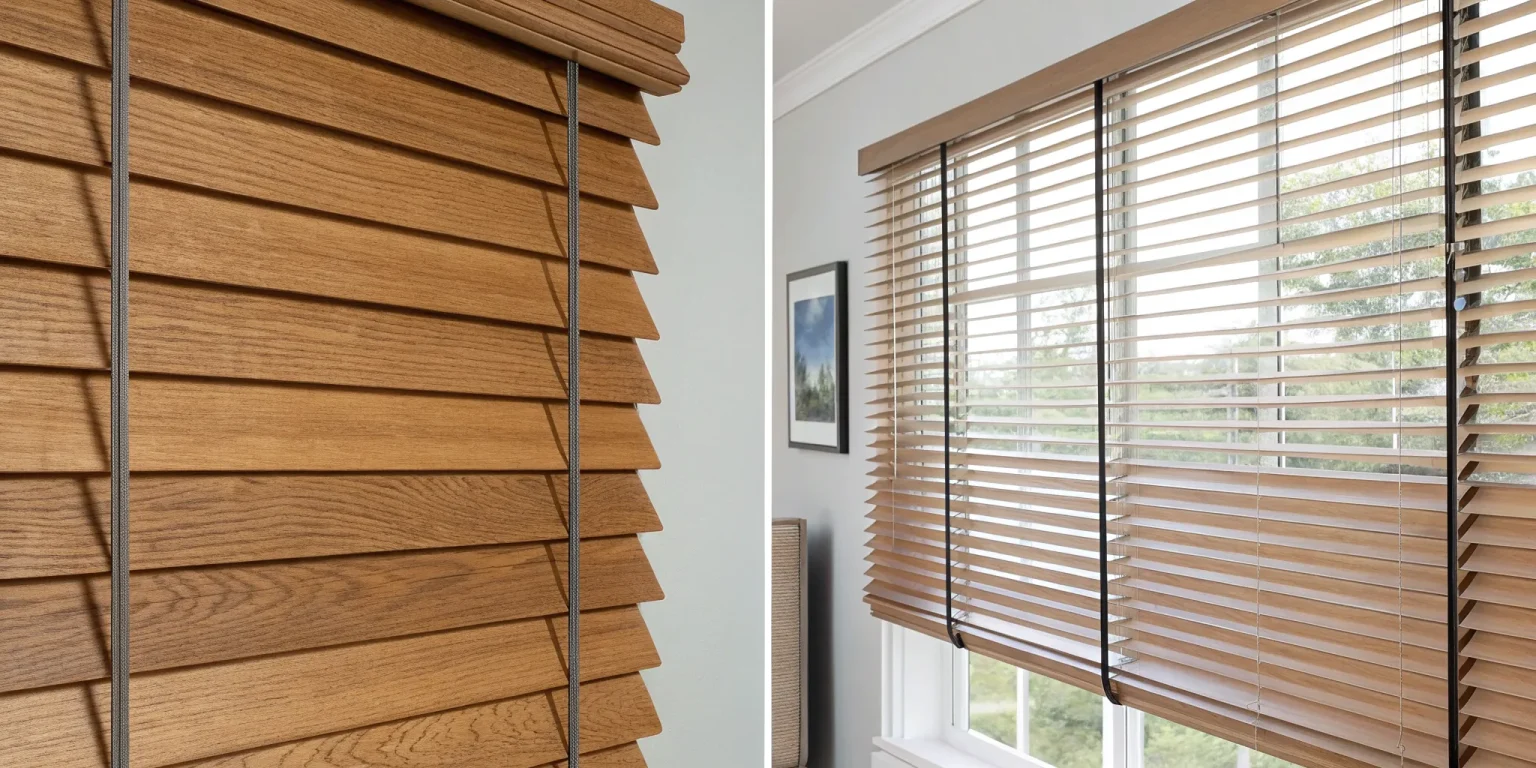
Let’s be honest, when you hear “faux wood,” you might think it sounds like a cheap compromise. On the other hand, “real wood” can bring to mind concerns about warping, moisture damage, and high maintenance. The truth about the real wood blinds vs faux wood decision is that modern materials have made both options incredible choices, but for very different reasons. High-quality faux wood offers a stunningly realistic look with the toughness to handle anything from kitchen steam in your San Diego home to the intense sun in Riverside. Real wood provides an unmatched warmth and elegance that can define a space. This guide is here to clear up the myths and give you the straightforward facts, so you can choose with confidence.
Key Takeaways
- Match the material to the room’s moisture level: Faux wood is the worry-free choice for high-humidity areas like bathrooms and kitchens because it won’t warp, while real wood’s authentic charm is best reserved for dry spaces like living rooms and bedrooms.
- Decide between upfront savings and a long-term investment: Faux wood provides a durable, high-end look at a more accessible price point, while real wood costs more initially but offers timeless elegance and natural insulation that adds lasting value.
- Consider the weight for large windows: Real wood is significantly lighter, making it the more practical choice for oversized windows that you’ll open and close often. The heavier composition of faux wood is better suited for standard-sized windows.
Real Wood vs. Faux Wood Blinds: What’s the Real Difference?
When you’re deciding on new window treatments, the classic look of wood blinds is always a top contender. It’s a timeless style that works with almost any decor. But then comes the question: real wood or faux wood? It can feel like a big decision, but it really comes down to your room, your lifestyle, and your personal style. Both are fantastic options that bring a clean, polished look to any home, whether you’re in Orange County, Riverside County, or down in San Diego. The truth is, you can’t go wrong with either, but they each have unique qualities that might make one a better fit for certain spaces in your home. The main differences boil down to their material, their look and feel, and their overall weight. Getting familiar with these distinctions is the key to picking the perfect blinds for your windows. We want you to feel confident in your choice and love the result for years to come, so let’s break down what really sets them apart.
What They’re Made Of
The most significant difference is right there in the name: the material. Real wood blinds are crafted from natural hardwoods like basswood or bamboo. This gives them an authentic, organic quality that’s hard to replicate. On the other hand, faux wood blinds are made from durable, man-made materials. Typically, this is a composite material or a high-quality PVC, which is engineered to be strong and long-lasting. Think of it as the difference between a solid oak dining table and a beautifully crafted, high-end laminate one—both look great, but their composition gives them different strengths.
How They Look and Feel
Real wood blinds bring a unique warmth and character to a room. Each slat has a distinct grain pattern, so no two blinds are exactly alike. This natural variation adds a touch of elegance and a cozy, inviting feel. Faux wood does an excellent job of mimicking this look, and from a distance, it can be tough to tell them apart. In fact, for darker finishes like an espresso or mahogany stain, real and faux wood can look nearly identical. The main distinction is that up close, real wood has a texture and depth that manufactured materials can’t perfectly copy.
Weight and Ease of Use
You might be surprised to learn that faux wood blinds are actually heavier than their real wood counterparts. The dense PVC material used to make them durable also adds significant weight. Because of this, real wood blinds are often easier to lift and lower, making them a great choice for everyday use. If you have very large windows, which we see a lot of in Riverside and San Diego County homes, the lighter weight of real wood can be a major advantage. The extra weight of faux wood can make it more cumbersome to operate on oversized windows.
The Case for Real Wood Blinds
There’s a reason real wood blinds have been a staple in homes for centuries. They offer a timeless elegance and warmth that’s hard to replicate. If you’re drawn to natural materials and a classic aesthetic, real wood might be the perfect choice for your home. But like any design decision, it comes with its own set of pros and cons to consider before you commit. Let’s walk through what makes real wood
Pro: Unmatched Natural Beauty
You just can’t beat the real thing. The unique grain patterns, rich textures, and natural warmth of genuine hardwood bring an organic, sophisticated feel to any room. Real wood blinds provide a truly refined appearance, offering a sense of quality and craftsmanship that instantly improves your space. Whether you’re aiming for a cozy, rustic vibe in your Temecula home or a polished, traditional look in Orange County, the authentic beauty of wood adds character and value that synthetic materials can only imitate. Each slat is unique, giving your windows a custom look that feels both luxurious and inviting.
Pro: Excellent Insulation
Beyond their good looks, real wood blinds are fantastic insulators. Wood is a natural barrier against temperature transfer, which is a huge plus in the Southern California climate. By trapping heat, wooden blinds help lower your energy costs, keeping your home cooler in the summer and warmer in the winter. This means less reliance on your air conditioner during those hot Riverside County days and a cozier feel when the temperature drops. This natural insulating property not only makes your home more comfortable year-round but also contributes to a more energy-efficient household.
Con: Sensitive to Moisture
The primary drawback of real wood is its relationship with water. Because it’s a natural, porous material, real wood can warp, crack, or even grow mold if it’s exposed to high humidity or direct moisture and isn’t properly sealed. This makes real wood blinds a less-than-ideal choice for rooms like bathrooms, laundry rooms, or even kitchens right above the sink. For these high-humidity spaces, you might want to consider more moisture-resistant options like our custom shades or faux wood alternatives to get the look without the risk.
Con: A Bigger Investment
Quality comes at a price, and real wood blinds are usually more expensive than their faux wood counterparts. The cost reflects the quality of the hardwood and the craftsmanship involved in creating them. While the upfront cost is higher, many homeowners see it as a long-term investment in their home’s style and value. The durability and timeless appeal of real wood mean you won’t need to replace them anytime soon, provided they are cared for properly. Think of them as fine furniture for your windows—a classic choice that will stand the test of time.
The Case for Faux Wood Blinds
If you love the classic, polished look of wood blinds but need something a bit more practical for your busy household, let me introduce you to their incredible counterpart: faux wood blinds. Think of them as the smart, durable, and stylish sibling to real wood. They offer the same timeless aesthetic but are engineered to handle the realities of daily life, especially in places where moisture and humidity are part of the equation.
Made from a resilient polymer material, faux wood blinds are designed to withstand conditions that would make real wood warp or fade. This makes them a fantastic choice for any room in your home, from the sun-drenched living rooms of Temecula to the breezy, salt-aired kitchens in Orange County. Plus, they are incredibly versatile in style and much friendlier on the wallet. Let’s look at what makes faux wood a go-to option for so many Southern California homeowners.
Pro: Durable and Moisture-Resistant
Here’s where faux wood blinds truly shine. Because they’re made from a composite material instead of natural wood, they are completely resistant to moisture. This is a game-changer for high-humidity areas like bathrooms, laundry rooms, and kitchens. You can install them above your kitchen sink without ever worrying about steam from the dishwasher causing them to warp or crack. This durability makes them a worry-free, long-lasting solution for some of the most challenging windows in a home.
Pro: Budget-Friendly and Low-Maintenance
Getting a high-end look without the high-end price tag is always a win. Faux wood blinds give you the rich appearance of real wood at a more accessible price point. This allows you to outfit more windows or even your entire home with beautiful, cohesive window treatments. On top of the initial savings, they’re also incredibly easy to care for. Unlike real wood, they don’t require special cleaners. A simple wipe-down with a damp cloth is all it takes to keep them looking brand new.
Con: Heavier Than Real Wood
It’s important to know that faux wood blinds are heavier than their real wood counterparts. The composite material is denser, which adds to their weight. For most standard-sized windows, this isn’t a major issue. However, on very large or wide windows, the added weight can make them a bit more challenging to lift and lower. It’s a practical consideration to keep in mind, especially if you plan on adjusting your blinds frequently throughout the day.
Pro: A Wide Range of Custom Colors
Don’t let the “faux” part fool you—these blinds are style chameleons. They come in a huge variety of colors, finishes, and textures, allowing you to perfectly match your home’s decor. Whether you want a crisp, clean white to brighten up a room, a warm off-white for a cozier feel, or a realistic wood-grain finish that mimics oak or cherry, there’s an option for you. This versatility ensures you can get a truly custom fit for both your windows and your personal style.
Which Blinds Are Right for Your Room?
Choosing between real and faux wood often comes down to where the blinds will live. Each room has different needs when it comes to light, humidity, and style, so let’s match the right material to the right space. Thinking about the room’s function first is the best way to make a choice you’ll be happy with for years to come.
For High-Humidity Spaces like Kitchens & Bathrooms
When it comes to rooms with a lot of moisture, like your kitchen, laundry room, or bathroom, the choice is pretty clear. You’ll want to go with faux wood blinds. Because they’re made from a durable composite material, they are completely moisture-resistant. This means you won’t have to worry about the steam from a hot shower or humidity from a boiling pot of pasta causing them to warp, crack, or fade over time. They give you the classic look of wood without any of the stress, making them a practical and stylish solution for the hardest-working rooms in your home. They’re also incredibly easy to wipe clean, which is always a plus.
For Living Rooms & Bedrooms
In spaces designed for comfort and relaxation, like your living room or bedroom, the warm, natural beauty of real wood blinds is hard to beat. They bring an authentic, upscale feel to a room that synthetic materials can’t quite replicate. The natural grain and rich tones of hardwood add a layer of texture and sophistication, creating a cozy and inviting atmosphere. Real wood also provides excellent light control, allowing you to easily adjust the ambiance from bright and airy to dim and private. If you’re looking to create a refined look in your main living areas, choosing real blinds made from quality hardwood is a fantastic investment in your home’s aesthetic.
For Extra-Large Windows
If you have a large picture window or wide sliding glass doors, the weight of your blinds becomes a really important factor. Faux wood blinds are noticeably heavier than their real wood counterparts. While this isn’t an issue for standard-sized windows, the extra weight can put a lot of strain on the lifting mechanisms of a very large blind, making it difficult to raise and lower. For these expansive windows, real wood is often the more practical choice. Its lighter weight makes for smoother operation and ensures the hardware will last. Our mobile services team can come to you to get precise measurements and help you decide on the best, most functional option for your biggest windows.
Considering the Southern California Climate
Living in Southern California means enjoying plenty of sunshine, but that intense sun can be tough on home interiors. Faux wood blinds are an excellent, durable choice for homes across Orange, Riverside, and San Diego Counties. They are built to withstand UV exposure without fading or yellowing, keeping them looking fresh for years. Plus, their resistance to humidity makes them a great fit for our coastal climate. While real wood is beautiful, the durability and lower maintenance of faux wood blinds make them an incredibly practical and budget-friendly option for handling the SoCal lifestyle. You get a timeless look that’s tough enough to handle our sunny days with ease.
Comparing Maintenance and Lifespan
When you invest in new window treatments, you want them to look great for years to come. The amount of upkeep you’re willing to do and how long you expect your blinds to last are huge factors in your decision. Real wood and faux wood blinds have different needs and lifespans, so let’s break down what you can expect from each. This will help you figure out which option is the most practical for your home and lifestyle.
Your Daily Cleaning Routine
If a low-maintenance cleaning routine is high on your priority list, you’ll love faux wood blinds. Because they’re made from a durable composite material, they are incredibly easy to care for. A quick wipe-down with a damp cloth is usually all it takes to handle dust and minor smudges. They resist stains and dirt well, which is a lifesaver in busy households. Real wood blinds require a bit more care. You’ll want to use a dry cloth or a specialized wood cleaner to avoid damaging the finish, as moisture can cause issues over time.
Long-Term Durability Against Warping
Here in Southern California, from the coastal air in Orange County to the dry heat of Riverside County, humidity can be a concern. This is where faux wood blinds really shine. They are built to handle moisture and won’t warp, crack, or mildew, making them the perfect choice for bathrooms, kitchens, and laundry rooms. While real wood is sturdy, it doesn’t love moisture. Consistent exposure to humidity can cause real wood slats to warp or even grow mold if they aren’t properly sealed, which can shorten their lifespan significantly in the wrong environment.
How Long You Can Expect Them to Last
With the right care, both types of blinds can be a lasting addition to your home. In ideal conditions—like a bedroom or living room—real wood blinds can last for 10 to 15 years, or even longer. Their longevity makes them a true long-term investment. However, in a high-humidity room, that lifespan could drop to just a few years. Faux wood blinds typically have a lifespan of about 5 to 7 years, but their advantage is consistency. They’ll hold up just as well in a steamy bathroom as they will in a dry, sunny living room.
The True Cost Over Time
It’s no secret that faux wood blinds are generally more affordable upfront. For homeowners in San Diego County looking to outfit multiple rooms without a huge initial investment, they are an excellent choice. Real wood blinds cost more to start, but their extended lifespan in the right rooms can make them a worthwhile investment. Think about the room’s function and your long-term plans. Faux wood offers a fantastic look for less and holds up better to daily wear and tear, while real blinds made of wood offer timeless beauty that can last for over a decade with proper care.
Related Articles
- The Ultimate Guide to Window Shades Wood
- Why Cordless Faux Wood Blinds Might Be The Choice For You – Vineyard Blinds
- Faux Wood Blinds in San Diego, CA | Vineyard Blind & Shutter
- Solid Blinds 101: Your Complete Buyer’s Guide
Frequently Asked Questions
Can people really tell the difference between real and faux wood blinds? From the curb, it’s nearly impossible to tell them apart. Both offer that clean, classic slat look that finishes a window beautifully. The difference becomes more apparent up close. Real wood has unique, natural grain patterns and a subtle texture that you can see and feel, while faux wood has a smoother, more uniform appearance. For darker stains, they can look almost identical even from inside the room.
Which type of blind holds up better against the intense Southern California sun? This is a great question for us here in SoCal. Faux wood blinds are specifically engineered to handle sun exposure. The durable composite material is UV-resistant, which means it won’t yellow or fade over time, even in the sunniest rooms of your Riverside or San Diego County home. While real wood is durable, it can be more susceptible to fading from prolonged, direct sunlight if not properly treated.
Is the extra weight of faux wood blinds a big deal for everyday use? For most standard-sized windows in your home, you likely won’t notice a significant difference in the effort it takes to lift the blinds. The weight becomes a more practical consideration for very large or wide windows. On these bigger windows, the lighter nature of real wood makes for a much smoother and easier lift, putting less strain on you and the internal mechanisms.
Can I get faux wood blinds in a custom color to match my trim? Absolutely. One of the biggest advantages of faux wood is the incredible range of available colors and finishes. They come in various shades of white and off-white, which makes it simple to find a perfect match for your existing trim, cabinetry, or wall color. This versatility allows you to create a seamless, fully integrated look throughout your home.
Do real wood blinds add more value to my home than faux wood? Many people view real wood blinds as a premium, long-term investment, similar to hardwood flooring. Their natural beauty and craftsmanship can be an attractive feature for potential buyers. However, high-quality faux wood blinds provide a very similar upscale look for a lower initial cost, which also adds to your home’s appeal. The best choice depends on your budget and the specific needs of each room.
