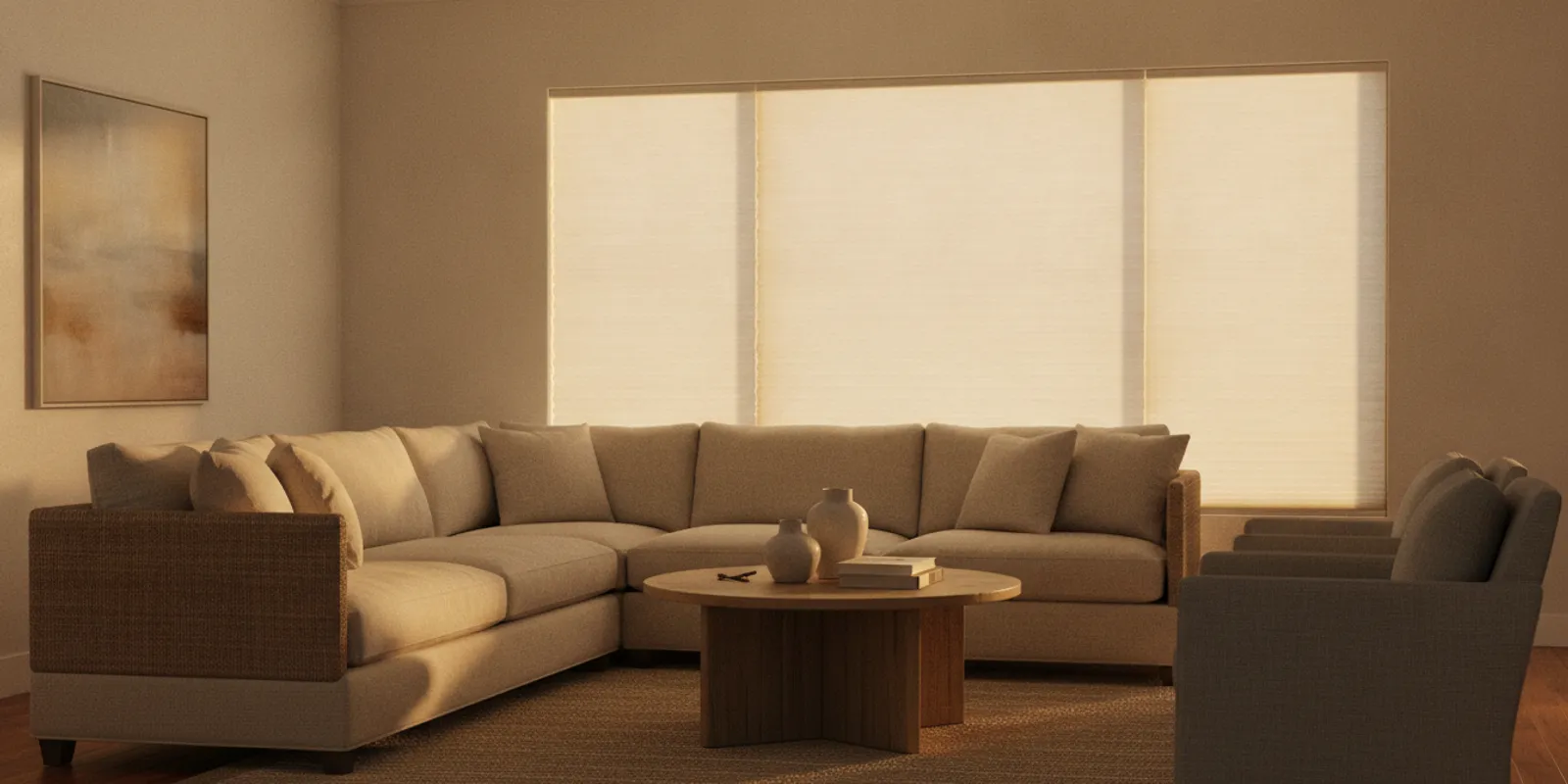
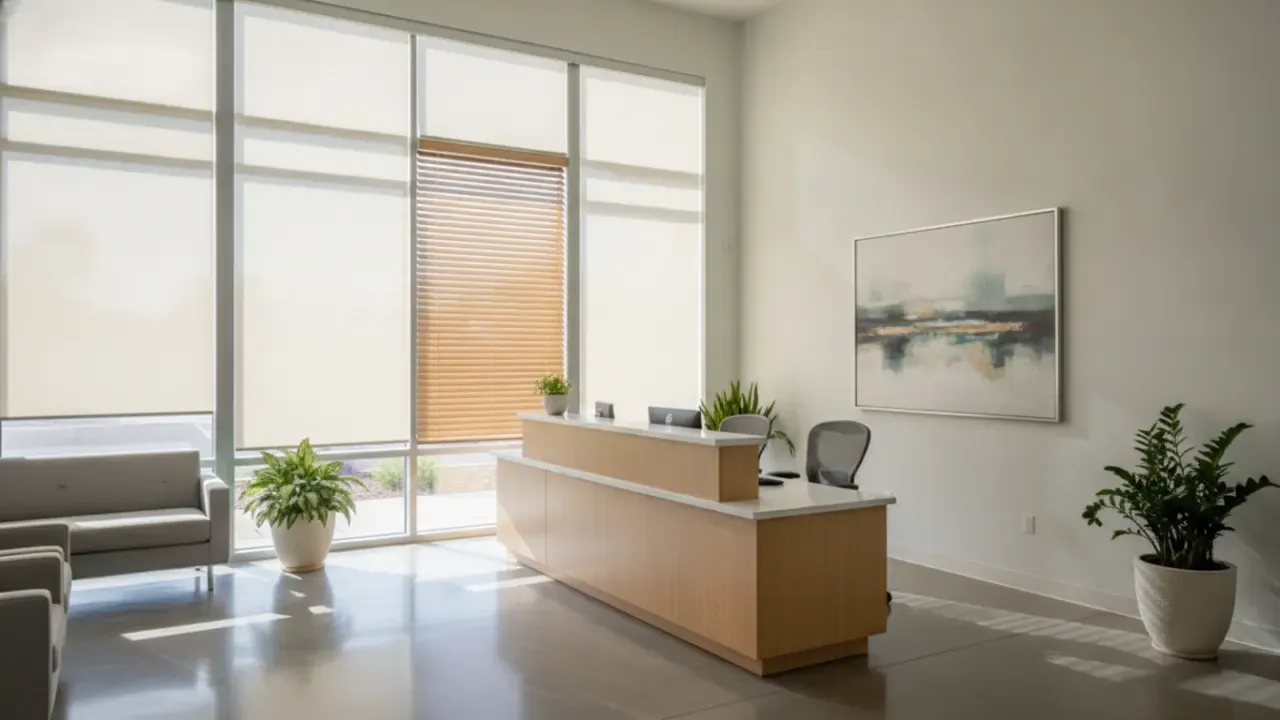
A beautiful wall of glass can quickly become the hardest-working surface in a room. It welcomes sunlight and a wide view, but it may also create glare, afternoon heat, privacy concerns, and an opening that feels impossible to cover. The best window treatments for large windows solve those practical problems without making the glass look heavy or becoming difficult to operate.
Vertical blinds and panel tracks usually work best for sliding doors because they move side to side. Roller, solar, and cellular shades suit many fixed picture windows. Bypass shutters add a durable architectural finish, while motorized shades make tall or hard-to-reach glass easy to control. The right choice depends on how the opening functions, where the treatment can stack, and which problem matters most in the room.
Schedule a free in-home consultation to compare custom-sized options in your own lighting.
Why large windows need a purpose-built treatment
An oversized window is not simply a standard window with a larger shade. Additional width and height change the weight of the treatment, the strain on its hardware, and the amount of room it needs when open. A product that works smoothly on a bedroom window may sag, bow, or become difficult to lift across a broad span.
Movement should match the opening
Start with the way the glass is used. A sliding glass door needs a side-moving treatment that clears the active door panel. A fixed picture window can use a treatment that rolls or gathers at the top. For a wall of several windows, separate coordinated shades can be more practical than one exceptionally wide unit.
Stacking space affects the view
Every treatment occupies space when open. Vertical vanes and panel tracks stack at one or both sides. Roller and solar shades gather inside a compact roll above the glass. Shutter panels overlap on their track. Planning the stack prevents a treatment from blocking a doorway or reducing the view more than expected.
Sun exposure changes the priority
A west-facing living room may need strong glare and heat control during the afternoon. A shaded north-facing window may benefit from a lighter fabric that preserves daylight. In Southern California homes, evaluating the treatment in the room's actual light makes color, opacity, and outward visibility easier to judge.
Window treatments for large windows compared
There is no single winner for every oversized opening. Use this comparison to narrow the options according to the glass, the room, and the way the treatment needs to move.
| Treatment | Best for | Key advantage | Plan for |
|---|---|---|---|
| Vertical blinds | Sliding doors and extra-wide windows | Easy side access and adjustable vanes | A durable track and vane material |
| Panel track systems | Broad glass walls and contemporary rooms | Clean, large-scale fabric panels | Space for panels to overlap and stack |
| Bypass shutters | Doors and windows needing an architectural finish | Durable panels with adjustable louvers | Track depth and panel overlap |
| Roller or solar shades | Large fixed windows and view-focused rooms | Compact roll and multiple opacity choices | Using multiple shades on very wide glass |
| Cellular shades | Large windows where insulation matters | Honeycomb cells create an insulating air layer | Product-specific size and lift limits |
| Motorized shades | Tall, high, or hard-to-reach windows | Convenient control without manual lifting | Power source and control placement |
The strongest shortlist often becomes clear after answering two questions: Does the treatment need to clear a frequently used door, and should it preserve the view when open? Those answers separate side-moving products from top-stacking shades.
Which treatments work best for sliding glass doors?
Window coverings for sliding glass doors should move in the same direction as the door and stay out of the main traffic path. Vertical blinds and panel tracks meet those requirements especially well. Bypass shutters can also work when homeowners prefer a more substantial, built-in appearance.
Vertical blinds keep access simple
Vertical blinds are a practical choice for busy doorways and extra-wide windows. The vanes rotate for light and privacy, then draw to the side for access. Fabric vanes create a softer appearance, while vinyl and faux wood options are easy to maintain. A properly sized track helps the vanes travel smoothly and clear the floor.
See the dedicated guide to vertical blinds for sliding glass doors for a closer look at materials, operation, and fit.
Panel tracks provide a streamlined alternative
Panel track systems use broad fabric panels that glide across a track. Their larger scale looks proportional beside expansive glass and creates a clean, contemporary surface when closed. Depending on the layout, the panels can gather at one side or split to both sides.
The active door panel should determine where the stack rests. A stack on the wrong side can make daily access frustrating. Homeowners comparing doorway-specific choices can also explore these window treatments for patio doors.
When are bypass shutters the right choice?
Bypass shutters are ideal when a large-window treatment should feel like part of the architecture. Instead of swinging into the room, shutter panels slide past each other on a track. This movement works for wide doors and windows where hinged panels would require too much clearance.
They offer precise light and privacy control
Adjustable louvers let homeowners change daylight and privacy without moving the full panel. The louvers can angle light upward while reducing direct glare, or close for greater privacy. This flexibility is helpful in living rooms and street-facing spaces that need different settings throughout the day.
They require careful clearance planning
Bypass panels overlap and need sufficient depth for the track. Door handles, baseboards, nearby furniture, and the direction of travel all affect the final design. Professional measuring helps determine the number of panels and where they will rest when open. Compare materials and configurations on Vineyard's custom shutters page.
What works best on a large fixed window?
A fixed picture window does not need to accommodate foot traffic, so a treatment can stack at the top and preserve the full width of the view. Roller, solar, and cellular shades are strong candidates. On very broad glass, two or more aligned shades may operate more reliably than one oversized shade.
Roller and solar shades protect the view
Roller shades create a simple plane of fabric and roll into a compact profile. Solar shades are designed to reduce glare while maintaining some outward visibility, making them useful in bright rooms where the view is part of the appeal. Openness, fabric color, and sun exposure influence how much glare and privacy the shade provides.
For sunny rooms, review how solar shades help manage heat and glare before selecting an opacity.
Cellular shades support comfort and privacy
Cellular shades use honeycomb-shaped pockets that create a layer between the room and the glass. They are useful when insulation and a softer appearance matter. Light-filtering material brightens a room while reducing direct views, and room-darkening material provides greater light control. Learn more in the guide to the best cellular shades for windows.
Request an in-home comparison to see how solar, roller, and cellular materials look against your large window.
Are motorized treatments worth it for large windows?
Motorization is particularly valuable for tall, wide, or hard-to-reach shades. Instead of lifting a heavy treatment by hand, a homeowner can adjust it with the selected control. Multiple shades may also operate together, helping a wall of windows look coordinated rather than uneven.
Motorization solves everyday access problems
Consider motorized shades when windows sit above a stairwell, bathtub, or tall furniture, or when several large shades should move together. They also simplify frequent glare adjustments and maintain a clean, cordless appearance. The convenience matters most when it encourages homeowners to use the treatment throughout the day instead of leaving it in one position.
Power and sizing should be planned before ordering
The selected shade's size, fabric weight, mounting surface, and expected use influence the right setup. Depending on the product, power may come from batteries or a wired connection. Reviewing those details early prevents a visible power solution or inconvenient control placement. This automatic window shades guide explains additional planning considerations.
How to choose the right option for your room
Begin with function, then refine the choice around light, view, and design. This order keeps appearance from overshadowing the practical demands of a large opening.
- Identify the active area. Mark which door panel opens and where people walk. The treatment should not interfere with everyday access.
- Choose a stacking direction. Decide whether the treatment should gather at the side, split in the center, or roll to the top.
- Name the main problem. Prioritize glare, privacy, insulation, preserving a view, or simple operation.
- Coordinate nearby windows. Treatments do not need to match exactly, but aligned top lines, complementary colors, and related materials create a unified room.
- Confirm custom measurements. Large openings leave little room for error. Measure the glass, mounting surface, handle clearance, floor clearance, and stacking space.
A large fixed window that frames a view may favor solar shades. A frequently used sliding door may favor vertical blinds or panel tracks. A tall bank of windows may justify motorization. A room that needs lasting architectural character may benefit from bypass shutters.
Why custom sizing matters for oversized glass
Large windows often vary slightly in width, height, and squareness, even within the same room. Ready-made products rarely account for those differences or for the exact location where a treatment needs to stack. Custom sizing helps the finished treatment align with the opening, move correctly, and provide the intended coverage.
Vineyard Blind & Shutter brings a mobile showroom to homes throughout San Diego County, Riverside County, and Orange County. Viewing materials in the room makes it easier to compare opacity, texture, color, and coordination with existing finishes. Professional measuring and installation also remove the guesswork from wide, tall, and frequently used openings.
Book a free in-home consultation for recommendations based on your glass, layout, and daily routine.
Frequently asked questions
What is the best window treatment for a very wide window?
The best choice depends on whether the window opens and where the treatment can stack. Roller, solar, and cellular shades suit many fixed windows. Vertical blinds and panel tracks are strong choices when an extra-wide opening benefits from side-to-side movement.
What window covering is best for a sliding glass door?
Vertical blinds and panel track systems are among the most practical options because they move in the same direction as the door. Bypass shutters also work well when the goal is a durable architectural treatment with adjustable louvers.
Can one shade cover a large window?
Sometimes, but every product has size and weight limits. Multiple coordinated shades may be easier to operate, reduce stress on the hardware, and still preserve a unified appearance across the glass.
How do you cover a high window?
A motorized shade is usually the most convenient solution for a high or hard-to-reach window. It can be adjusted without a long manual cord, and multiple shades may operate together.
Should large windows have inside- or outside-mounted treatments?
The answer depends on the available mounting depth, trim, desired coverage, and treatment type. An inside mount can look streamlined when sufficient depth exists. An outside mount may provide more coverage or accommodate hardware when the opening is shallow.
Find the right treatment for your large windows
The best large-window solution should look proportional, move smoothly, and make the room more comfortable every day. Vineyard Blind & Shutter can help you compare vertical blinds, panel tracks, bypass shutters, solar shades, cellular shades, and motorized options in your own home.
Schedule a free in-home consultation to explore custom window treatments for large windows and sliding doors.