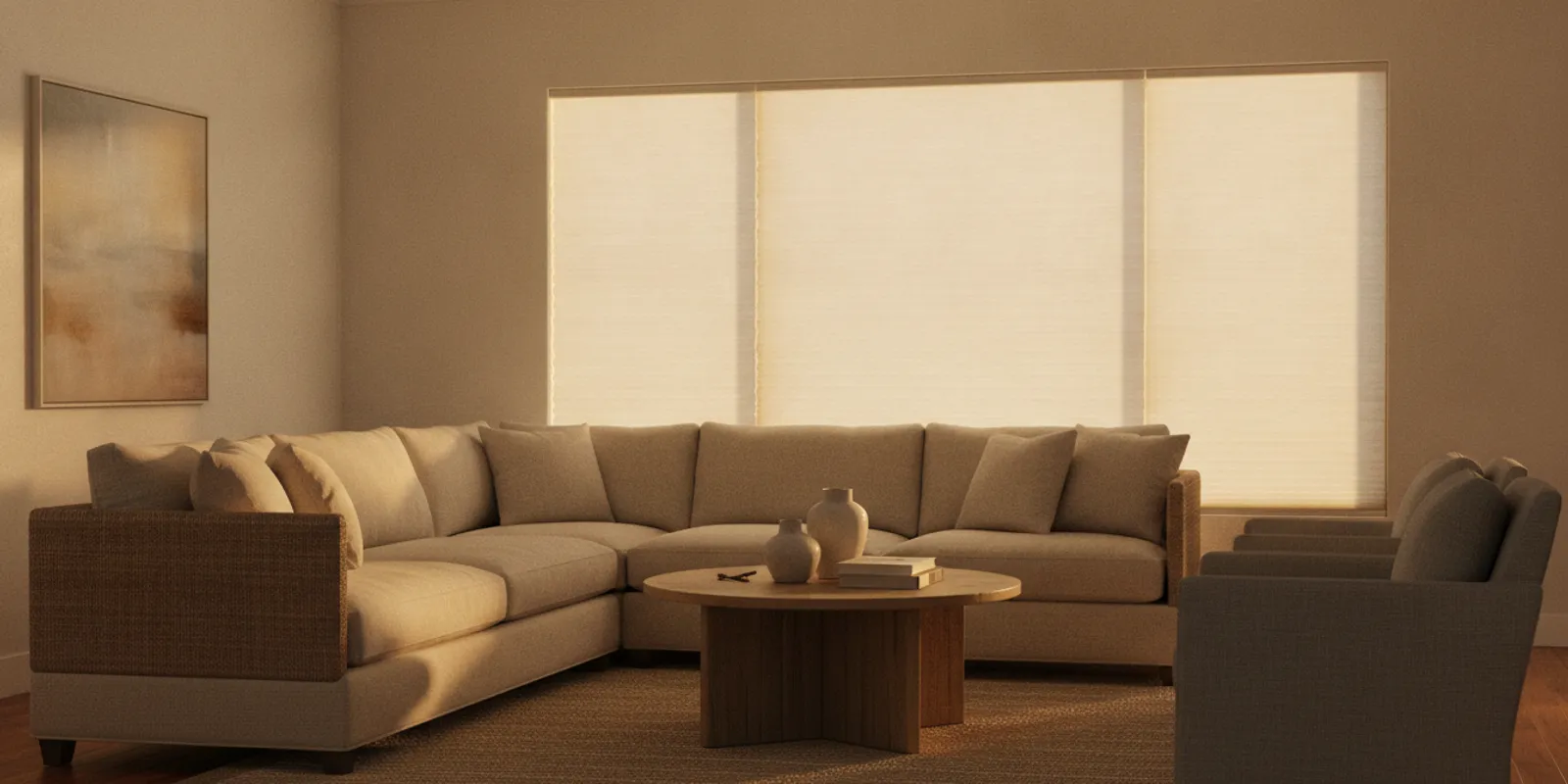
What are the best thermal window shades for Southern California? Cellular or honeycomb shades are usually the first option to compare when air-trapping insulation is the priority. Plantation or Polycore shutters offer a durable, custom-fit alternative with strong privacy and light control, while thermal-lined curtains can add a flexible layer. For mild winter nights, the best choice depends on the window, room orientation, desired light, and fit. No covering guarantees a specific temperature or energy result, so compare product specifications and measurement details rather than relying on the word “thermal” alone.
Q: What are the best thermal window shades? A: Cellular or honeycomb shades are often the strongest starting point when air-trapping insulation is the priority. Shutters provide a durable barrier with privacy and light control, while thermal-lined curtains add a flexible layer. The best fit depends on the window, room, light goals, and measurement.
How Do Thermal Window Coverings Help Southern California Homes?
Glass can feel noticeably cooler than the surrounding wall on a winter night. A window covering adds another layer between the room and the glass, helping slow air movement and heat transfer around the window. The result is not a guaranteed temperature or utility-bill change. It is a practical way to improve comfort, light control, and privacy while making the room easier to manage.
Southern California homes also need a seasonal approach. A covering that helps a bedroom feel more comfortable on a cool night may also help manage glare and direct sunlight during a warm afternoon. The best design depends on the window's orientation, the amount of glass, the room's use, and whether you need light filtering, room darkening, or an unobstructed view.
Cellular shades use honeycomb-shaped cells to create air pockets. The U.S. Department of Energy factsheet on cellular shades explains this insulating design and notes that performance depends on the product and installation. Use the factsheet as general product information, not as a promise of a specific result in a particular home.
Which Thermal Window Shades Are Best for Winter?
There is no single best treatment for every room. Compare the four options below by the way they handle air movement, light, privacy, view, and daily use.
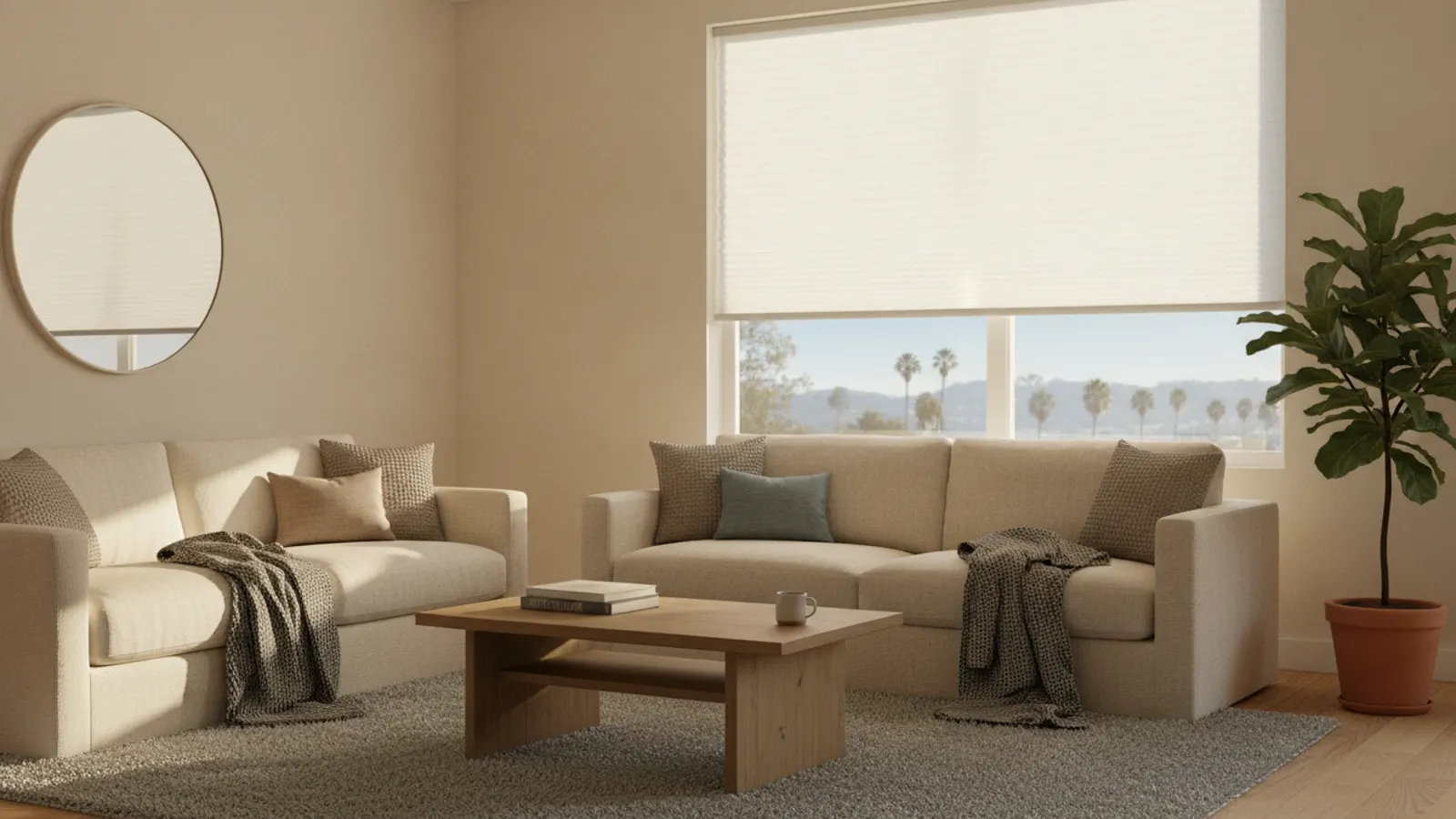
- Cellular shades: Choose these when air-trapping insulation, a clean profile, and adjustable light control are important.
- Plantation or Polycore shutters: Choose these when you want a durable, custom-fit treatment with strong privacy and light control.
- Thermal-lined curtains: Choose these when you want a soft look, flexible coverage, or an additional layer over an existing treatment.
- Roller shades, solar shades, and window film: Choose these when glare, view preservation, or solar control matters more than adding a deep insulating layer.
Cellular or honeycomb shades
Cellular shades are often the first product to compare for winter comfort because their cells trap air between the room and the glass. Different cell sizes, fabrics, and operating styles can change the experience. Light-filtering fabric can keep a room bright, while a room-darkening option can reduce light for a bedroom. Blackout is a light-control description, not proof of thermal performance, so review the product specifications separately.
Cellular shades also work well when the window needs a streamlined appearance. Top-down or bottom-up operation can provide privacy while leaving part of the glass open to daylight. For a larger window, a professional can discuss how the shade will be divided, mounted, and operated. The shades collection is a useful place to compare styles before a consultation.
Plantation or Polycore shutters
Shutters create a solid, structured layer over the window. Their louvers can be adjusted for daylight and privacy, and the treatment stays in place rather than moving like a curtain. Custom measurement helps the frame and panels align with the window, while the material affects appearance, maintenance, and feel.
Plantation shutters suit homeowners who want a permanent architectural look. Polycore shutters can be a practical option where moisture resistance and easy care are important. Neither product should be described as a guaranteed insulation solution, but both can support a comfortable room when properly selected and fitted. Explore custom shutters to compare available styles and materials.
Thermal-lined curtains and drapes
Thermal-lined curtains add a flexible fabric layer and can be opened during the day or closed when the room needs more privacy and light control. For the best chance of reducing drafts around the treatment, use panels that are wide enough to cover the window and long enough to limit gaps at the sides and bottom. A curtain that barely covers the glass will not perform like a full layer.
Layering is one of the most adaptable approaches. A thermal-lined curtain over an existing shade can add another barrier without replacing the treatment you already like. It can also soften the look of shutters or blinds. Ask how the fabric, lining, rod placement, and clearance will work together before ordering.
Roller shades, solar shades, and window film
Roller shades and solar shades can be a good fit when a clean profile and glare control are the main goals. Solar fabrics preserve more of the view while filtering light, but openness and fabric choice affect privacy and solar control. A roller shade can provide more privacy when closed, with fabric options that change the amount of light entering the room.
Window film stays on the glass and preserves the view. It can be worth comparing where glare and solar exposure are concerns, although the result depends on the film, glass, orientation, and installation. Treat film as a product-specific decision rather than assuming every film adds winter insulation.
Are Cellular Shades or Shutters Better for Insulation?
Cellular shades are usually the better starting point when the specific goal is air-trapping insulation. Their honeycomb construction is designed to create pockets between the room and the window. Shutters are usually the better starting point when durability, privacy, adjustable light, and a permanent design are equally important. A shutter's solid structure can create a useful barrier, but the window, frame, mounting, and material still affect the result.
The right comparison is room by room. A nursery or bedroom may benefit from cellular fabric and flexible light control. A high-use living room may favor the easy operation and durable feel of shutters. A rental, seasonal room, or home that already has blinds may be a better candidate for layered curtains. A professional measurement can reveal whether the window has unusual depth, trim, or operating constraints.
Remember that comfort is not only about insulation. A covering can change glare, privacy, daylight, and how often a room feels exposed. Consider those needs together instead of choosing a product from one performance label.
What Should You Check Before Choosing a Thermal Covering?
A good product comparison starts with the window, not the brochure. Take notes on the room's orientation, when the sun enters, the type of glass, and how the room is used. Then consider these questions:
- How much light should enter? Decide whether you want filtered daylight, privacy, room darkening, or full blackout. Do not use blackout as a substitute for a thermal specification.
- How important is the view? Solar shades and film preserve more of the view, while cellular shades and shutters provide more physical coverage when closed.
- Does the window need frequent access? Sliding doors, tall windows, and windows above furniture may need a particular operating style.
- Will moisture or cleaning affect the choice? Kitchens and bathrooms need materials and finishes suited to the room. Ask about care before selecting fabric or wood.
- How will the treatment fit? Inside and outside mounts change coverage, trim clearance, and the way the treatment operates. Measure carefully and confirm the mounting plan.
- What does the warranty and product specification say? Compare documented features rather than relying on a broad claim about savings, temperature, or durability.
Custom measurement is especially useful for windows with uneven trim, deep sills, wide glass, or several adjacent panels. It can help reduce gaps and make the treatment easier to operate. A professional fit does not guarantee a particular energy result, but it supports the product's intended function.
It is also worth comparing the treatment with the way the room is used. A home office may need daylight and glare control during work hours, while a bedroom may need privacy at night and a softer light level in the morning. A living room with a large window may need a coordinated treatment across several panels so the room does not look mismatched. These priorities can point to different products even when the windows are in the same home.
Blinds remain a practical option when adjustable slats, easy cleaning, and a broad range of styles matter most. They may not provide the same air-trapping construction as cellular shades, but they can be part of a layered approach with curtains or another covering. Review the custom blinds options alongside shades and shutters rather than assuming that one material will work best in every room.
Ask for a clear explanation of what the product is designed to do. A useful consultation should cover the fabric or material, cell or slat construction, mounting position, operating method, light control, privacy, cleaning, and expected lead time. It should also distinguish a documented product feature from a general comfort claim. This makes it easier to compare an off-the-shelf purchase with a custom treatment on equal terms.
Finally, consider how the treatment will look when it is open and closed. A product that is difficult to operate may stay open when you want coverage, while a treatment that stacks neatly may be used more consistently. Thermal performance is only one part of a successful installation. The best winter covering is one that fits the window, suits the room, and is convenient enough to use throughout the year. That combination supports comfort without overpromising a specific savings result.
How Should Southern California Homeowners Use Thermal Coverings?
Winter use is often about closing the treatment after sunset, when the glass feels cold and the room is occupied. During the day, opening or adjusting the covering can bring in daylight when that is comfortable. In warmer seasons, the same window may need glare and solar control instead. This is why an adjustable treatment can be more useful than a product selected only for a single month.
Pay attention to daily habits, too. If you leave for work early, a scheduled or easy-to-operate treatment may be more useful than one that requires several manual steps. If you spend evenings in a room with a large glass door, coverage and safe operation may matter more than a small difference in fabric construction. A consultation can help match the operating style to the way the room is actually used.
For homes and businesses in San Diego County, Riverside County, and Orange County, the right choice can vary with the room and exposure. A west-facing office may prioritize afternoon glare. A street-facing bedroom may prioritize privacy. A living room with a wide view may need a treatment that balances filtered light and coverage. The areas we serve page provides more information about local service coverage.
Vineyard Blind & Shutter provides mobile consultations, custom measuring, and installation. A specialist can bring samples, review the window, and compare cellular shades, shutters, blinds, and other options in the room where they will be used. Competitive pricing and a free consultation make it easier to compare a custom solution with a ready-made treatment. Visit the contact page to request an appointment.
Frequently Asked Questions About Thermal Window Coverings
The questions below cover common winter decisions, including whether thermal treatments make sense in a mild climate, how cellular shades compare with shutters, and why a custom fit matters. Review the product specifications for the treatment you choose, and ask for a room-specific recommendation when the window has unusual size, depth, or exposure.
Call Vineyard Blind & Shutter at (951) 757-4188 to compare thermal window coverings for your home.